
Modi Urges Putin to End Ukraine War at SCO Summit as Moscow Signals Escalation
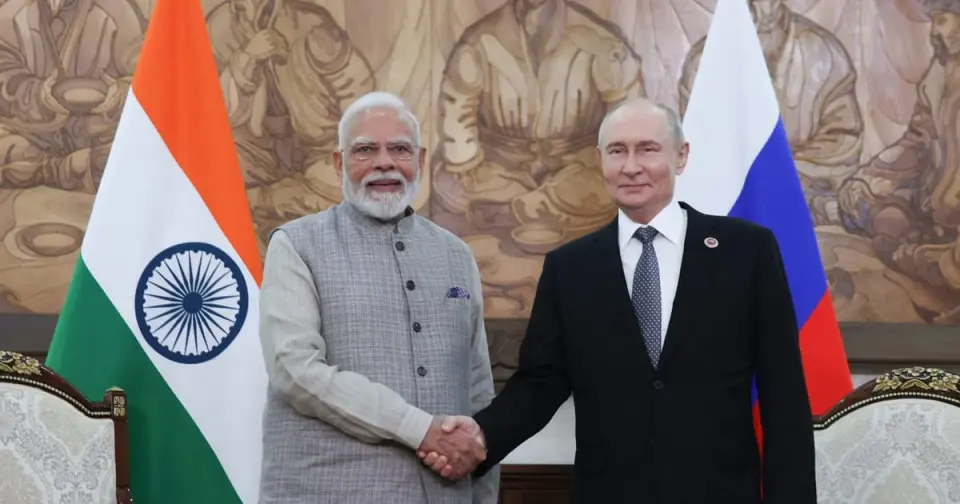
Indian Prime Minister Narendra Modi directly urged Russian President Vladimir Putin to end the war in Ukraine during a meeting in Bishkek, Kyrgyzstan, on August 31, 2026. The encounter occurred on the sidelines of the Shanghai Cooperation Organisation (SCO) summit, marking its 25th anniversary. While Modi called for a cessation of hostilities for the sake of humanity, Putin appeared visibly uncomfortable and offered only a vague assurance that Moscow was moving forward on the path to resolution. This diplomatic push coincides with reports of intensified Russian military preparations, including potential mass mobilization, and ongoing tensions between India and Western allies over New Delhi’s continued purchase of Russian oil.
Key points
- Modi told Putin that every day of continued war sets humanity back, urging a shift from endless conflict to peace.
- Putin responded that Russia is moving forward along the path to resolution but did not specify concrete steps or timelines.
- Modi praised economic progress between India and Russia, particularly in energy, while avoiding using trade leverage to pressure Moscow.
- Putin and Xi Jinping reaffirmed their strategic alliance, describing bilateral ties as 'more solid' despite global uncertainty.
- The SCO summit in Bishkek brought together over a dozen heads of state, including leaders from China, Russia, India, Iran, and Pakistan.
Background
This meeting takes place against the backdrop of the SCO’s 25th anniversary, a platform long used by Beijing and Moscow to promote a multipolar world order. Previous coverage noted that the summit aims to deepen Global South cooperation while balancing India’s strategic autonomy. Additionally, recent reports indicate Putin is planning a massive mobilization of up to 400,000 troops to break the stalemate in Ukraine, a move that contrasts sharply with Modi’s public plea for peace. India’s position remains complex, as it maintains significant trade ties with Russia, particularly in oil, while facing diplomatic friction with the US and EU over these purchases.
How outlets are covering it
POLITICO emphasizes the directness of Modi’s appeal, noting Putin’s visible discomfort and the lack of concrete commitments from Moscow. It highlights the tension between India’s diplomatic stance and its continued role as a major buyer of Russian oil, which has strained relations with Washington and Brussels. AP News provides a broader overview of the SCO summit, focusing on the attendance of major world leaders and the general atmosphere of the event, though its text was largely obscured by technical code in the provided source. Al Jazeera focuses on the reaffirmation of the Russia-China strategic alliance, with Xi Jinping describing ties as 'more solid' despite global unpredictability. It notes that Kremlin spokesman Dmitry Peskov downplayed the discussion of the Ukraine war, claiming it was only touched upon 'in passing,' contrasting with the public pressure applied by Modi. Al Jazeera also highlights the presence of Iranian President Masoud Pezeshkian, who expressed a desire for peace in the region, underscoring the complex web of alliances among sanctioned states.
Why it matters
The direct appeal by Modi signals a potential shift in India’s diplomatic posture, moving from neutral mediation to explicit pressure on Moscow. However, the lack of concrete response from Putin, combined with reports of planned Russian mobilization, suggests that the war may continue to escalate despite diplomatic overtures. The event also highlights the growing divergence between Western expectations for Russia to end the war and the reality of deepening ties between Beijing, Moscow, and other Global South powers. India’s balancing act between maintaining energy imports from Russia and managing relations with the US and EU remains a critical factor in the global geopolitical landscape.
What to watch
Putin is scheduled to attend the BRICS summit in Delhi on September 12-13, where further discussions on energy and trade may occur. Modi is also expected to meet with EU leaders in December, potentially addressing the friction over Russian oil purchases. The outcome of the stalled US-brokered peace talks, including recent visits by CIA Director John Ratcliffe to Moscow, will be closely watched for any signs of progress. Additionally, the SCO summit’s plenary session, chaired by Kyrgyz President Sadyr Japarov, may yield statements on economic integration and security cooperation among member states.
- Modi implores tense Putin to end Ukraine war politico.eu
- Leaders of China, Russia and India are among heads of state meeting to counter US influence AP News
- Putin and Xi affirm strategic alliance amid ‘unpredictable’ world Al Jazeera
- Amid Setbacks, Putin Looks To Restore Russia's Standing At Bishkek SCO Summit Radio Free Europe/Radio Liberty
- Putin Turns Again to China’s Xi as Russia’s Clout Crumbles WSJ
Want the full story? Read the original reporting
Read on politico.eu