
Modi’s Public Plea to Putin for Peace Faces Vague Response at SCO Summit
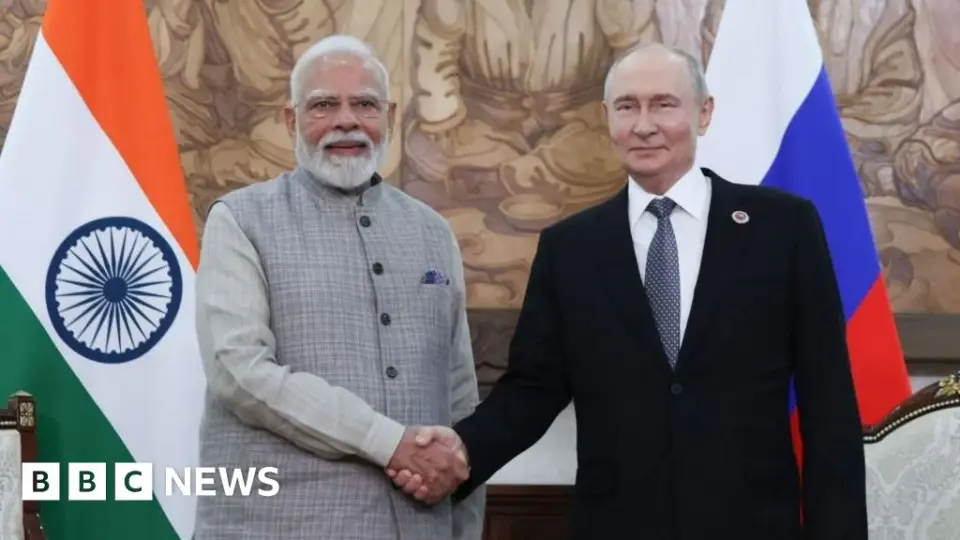
Indian Prime Minister Narendra Modi publicly urged Russian President Vladimir Putin to end the war in Ukraine during the Shanghai Cooperation Organisation (SCO) summit in Bishkek, Kyrgyzstan. While Modi framed the call as a humanitarian imperative, Putin’s response was non-committal, stating Moscow was 'moving forward' on the path to peace without specifying terms or timelines. Analysts note this reflects India’s consistent policy of strategic neutrality rather than a tactical shift, as New Delhi balances its reliance on Russian energy and defense imports with growing ties to Western powers. The meeting occurred alongside reaffirmed Russia-China strategic ties, highlighting the complex diplomatic landscape of the Global South.
Key points
- Modi told Putin at the SCO summit in Bishkek that 'every day spent in war pushes humanity back,' urging an end to hostilities.
- Putin responded politely but vaguely, stating 'We are moving forward along this path,' without elaborating on conditions or timelines.
- BBC analysts argue Modi’s statement is consistent with India’s long-standing neutral stance and does not signal a change in foreign policy.
- India’s economy relies heavily on discounted Russian oil, and Russia supplies approximately 40% of India’s defense imports, complicating any sharp diplomatic break.
- The SCO summit marked the 25th anniversary of the bloc, with leaders including Xi Jinping and Iran’s president also present to discuss multipolar global order.
Background
This follows earlier coverage from August 2026, where Modi similarly pressed Putin at the SCO summit, with Moscow insisting any settlement must be on its terms. India has maintained a neutral stance since the 2022 invasion, balancing its role in the Quad and BRICS groups. Recent tensions include U.S. discussions on tariffs for Russian oil buyers and ongoing Russian strikes on Ukrainian infrastructure.
How outlets are covering it
BBC emphasizes that Modi’s plea is a routine expression of India’s strategic autonomy and does not indicate a rift with Moscow, noting that Western capitals have long pushed India for a clearer stance but continue to court New Delhi due to its economic size. Al Jazeera highlights the broader SCO context, noting Putin and Xi reaffirmed their strategic alliance despite global uncertainty, while Kremlin spokesman Dmitry Peskov stated the leaders discussed the Ukraine war only 'in passing.' The Daily Beast frames the interaction as a 'humiliating dressing down' for Putin, suggesting the public nature of Modi’s plea was a diplomatic rebuke, though this interpretation is not supported by the other sources which view the statement as standard diplomatic rhetoric. CNA provided no substantive content due to a page error.
Why it matters
The interaction underscores the limits of diplomatic pressure from non-Western powers on Russia’s war strategy. For India, it tests the balance between maintaining energy and defense supply lines from Russia and managing relations with Western allies. For the broader Global South, it highlights the divergence in approaches to the Ukraine conflict, with some nations prioritizing economic ties over moral condemnation.
What to watch
Analysts expect no immediate change in Russia’s military operations, as Putin’s vague response suggests no shift in strategy. India will likely continue its neutral stance, balancing its energy needs with diplomatic engagements. The SCO summit may yield limited substantive breakthroughs, focusing instead on signaling multipolar cooperation. Future U.S. tariff proposals on Russian oil buyers could further complicate India’s energy imports.
- Ukraine war: What to make of Modi's plea to Putin to end conflict BBC
- Putin, Xi reaffirm Russia-China ties amid ‘unpredictable’ world aljazeera.com
- Putin Hit With Humiliating Dressing Down on World Stage The Daily Beast
- Leaders of Russia, China, Iran to attend summit in Kyrgyzstan CNA
- Why did Modi urge Putin to end Ukraine war - and will he listen? Yahoo
Want the full story? Read the original reporting
Read on BBC