
Moscow Threatens Nuclear Retaliation if NATO Blocks Kaliningrad Access
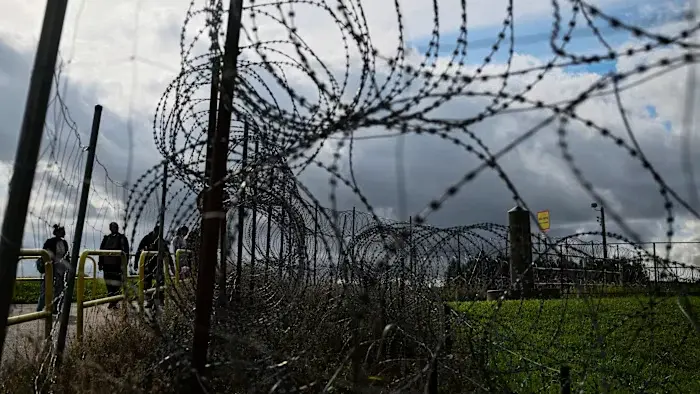
Russia issued a formal warning to NATO, threatening to use nuclear weapons if the alliance attempts to blockade its Kaliningrad exclave. Moscow accused NATO of preparing military operations to isolate the region, citing recent exercises and the Baltic Sentry mission. NATO rejected the claims, labeling the rhetoric 'irresponsible' and affirming that its activities pose no threat to Russian territory. The tension coincides with intensified Russian drone strikes on Kyiv and warnings from NATO commanders that hybrid threats now extend across all of Europe.
Key points
- Russia sent a non-paper to NATO warning it would deploy its 'entire arsenal,' including nuclear weapons, to defend Kaliningrad if the alliance attempts to isolate the exclave.
- Moscow accused NATO of a 'dangerous and reckless course,' linking its threats to recent military exercises and the Baltic Sentry mission protecting undersea infrastructure.
- NATO spokesperson Allison Hart condemned the threats as 'irresponsible nuclear rhetoric,' stating that NATO is a defensive alliance and its activities pose no risk to Russia.
- The diplomatic standoff occurred alongside intensified Russian daytime drone strikes on Kyiv, including attacks on data centers, a university, and a school in Sumy.
- NATO Supreme Allied Commander Europe Gen. Alexus Grynkewich warned that drone threats now affect the entire alliance, not just the eastern flank, citing recent sabotage incidents in Germany and Estonia.
Background
This escalation follows a pattern of rising tensions in the Baltic region. In August, Russian Foreign Minister Sergey Lavrov warned that NATO's Arctic expansion posed a direct threat. In September, Poland urged high-intensity NATO drills near Kaliningrad to exploit Russian troop depletion. Earlier this month, NATO had already rejected Moscow's nuclear threats over the exclave amid intensified strikes on Kyiv. The current crisis reflects a broader shift where hybrid warfare and nuclear rhetoric are used to deter NATO expansion and support Russia's war effort in Ukraine.
How outlets are covering it
The Financial Times highlights the specific diplomatic channel, noting that Russia sent a formal non-paper to NATO, while The Guardian emphasizes the immediate military context of intensified strikes on Kyiv. Stars and Stripes provides a strategic perspective, with Gen. Grynkewich arguing that the threat is no longer limited to the eastern flank but extends across Europe due to drone capabilities. The Independent focuses on the diplomatic response, framing the event as a direct reaction to Putin's threats. All sources agree on the core facts of the threat and NATO's rejection but differ in emphasis: FT and The Independent focus on the diplomatic exchange, The Guardian on the concurrent war in Ukraine, and Stars and Stripes on the broader security implications for the alliance.
Why it matters
The explicit threat of nuclear use in a diplomatic communication marks a significant escalation in the Russia-NATO confrontation. It signals that Moscow is willing to link its nuclear arsenal to conventional military activities in the Baltic region, potentially raising the risk of miscalculation. The simultaneous intensification of strikes on Kyiv and hybrid attacks across Europe suggests a coordinated strategy to pressure NATO and Ukraine simultaneously, testing the alliance's cohesion and resolve.
What to watch
NATO is expected to continue its defensive posture while publicly attributing hybrid attacks to Russia, as urged by Gen. Grynkewich. Russia may further escalate its hybrid campaign, including more drone incursions and sabotage, to test NATO's response. The diplomatic channel remains open, but the threat of nuclear retaliation creates a high-risk environment for any miscalculation. The situation in Ukraine will likely remain a focal point, with Russia using the Kaliningrad issue to justify its actions and deter NATO support for Kyiv.
- Russia threatens nuclear strikes on Nato countries over Kaliningrad ft.com
- Russia issues nuclear warning to NATO as tensions rise in the Baltic Reuters
- Ukraine war briefing: Nato condemns Moscow’s ‘irresponsible nuclear rhetoric’ as strikes on Kyiv intensify The Guardian
- NATO’s front line now stretches across Europe, top commander warns stripes.com
- Ukraine-Russia war latest: Nato responds to Putin’s nuclear weapon threat against member nations The Independent
Want the full story? Read the original reporting
Read on ft.com