
Putin Signals Peace Chance While NATO Warns of Escalation
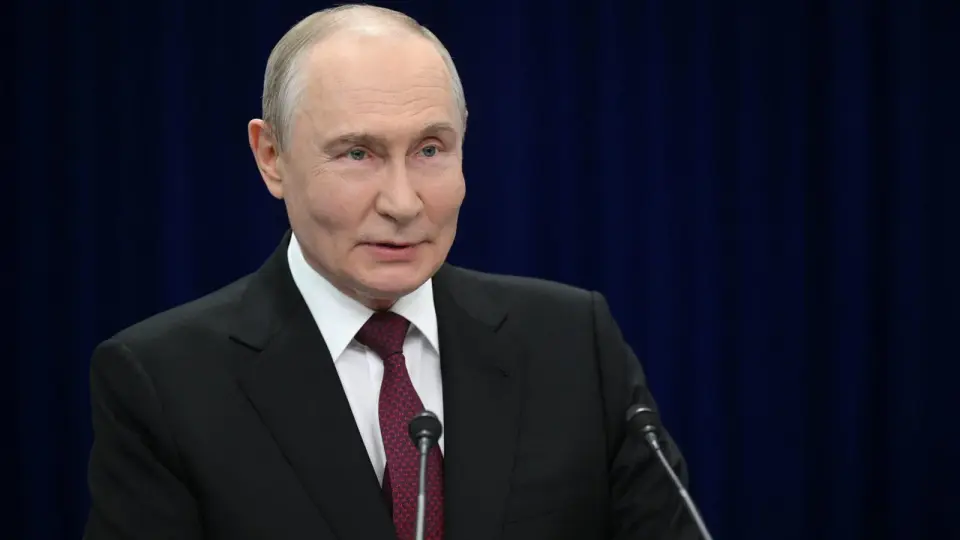
Vladimir Putin suggested a 'chance' for peace at the Eastern Economic Forum, insisting Russia and Ukraine must negotiate directly, while NATO Secretary General Mark Rutte warned that Russia is becoming 'increasingly reckless.' This diplomatic signal contrasts with ongoing military escalation, including Russian claims of territorial gains in Donetsk and Ukrainian drone strikes on Russian infrastructure.
Key points
- Putin stated at the Eastern Economic Forum in Vladivostok that there is a 'chance' for peace, but emphasized that the conflict must be resolved primarily by Russia and Ukraine, with other nations playing a supporting role.
- NATO Secretary General Mark Rutte warned that Russia is becoming 'increasingly reckless,' citing missile and drone activity along Europe's eastern flank and an alleged hybrid attack at Germany's Leipzig airport.
- Ukrainian President Volodymyr Zelenskyy warned airlines to avoid Russian airspace due to the presence of Ukrainian drones, a move Putin labeled 'state terrorism.'
- Putin claimed Russian forces captured 270 square kilometers of Donetsk region in August and surrounded some Ukrainian troops, though Reuters noted these claims could not be independently verified.
- Putin expressed openness to negotiations involving U.S. special envoy Steve Witkoff and Jared Kushner, while dismissing concerns about Russian mobilization as 'total BS.'
Background
This development follows stalled peace efforts over the past four years, where U.S. and European mediation has failed to yield a settlement due to disagreements over territory and security guarantees. Recent background indicates rising tensions, including U.S. intelligence warnings that Russia might test NATO unity through limited strikes, and a recent CIA Director visit to Moscow that reportedly ended without a direct meeting with Putin. The current situation reflects a pattern of alternating diplomatic signals with military escalation, as seen in previous months where Russian economic pressures and drone incursions into NATO borders raised concerns about broader instability.
How outlets are covering it
CNBC highlights the contrast between Putin's conditional openness to peace and NATO's stark warnings about Russian recklessness, emphasizing the stalled diplomatic track. CNN focuses on Putin's aggressive rhetoric, using his 'shark' analogy to suggest a hardline stance that undermines Trump administration peace hopes, while noting his preference for negotiating through Witkoff and Kushner. Ukrainian Pravda underscores Putin's insistence on direct bilateral negotiations, framing it as a rejection of third-party mediation, and highlights Ukraine's official notification to the International Civil Aviation Organization regarding unsafe Russian airspace. U.S. News & World Report reports on Putin's military claims of advancing in Donetsk, providing a factual counterpoint to the diplomatic rhetoric by noting the lack of independent verification for these territorial gains. The outlets differ in emphasis: CNBC and CNN focus on the diplomatic and rhetorical clash, while Pravda and U.S. News highlight the procedural and military realities, respectively.
Why it matters
The juxtaposition of Putin's peace signals with NATO's warnings of recklessness indicates a high-risk environment where diplomatic overtures may not prevent further military escalation. The dispute over airspace safety and the alleged Leipzig attack could trigger broader European security incidents, while the preference for specific U.S. envoits may influence the trajectory of future negotiations. The inability to verify military claims adds uncertainty to the conflict's status, potentially affecting international support for Ukraine and the stability of the region.
What to watch
Observers will watch for any concrete diplomatic moves involving Witkoff and Kushner, as well as NATO's response to further Russian hybrid or military actions along its eastern flank. Ukraine's continued drone strikes on Russian infrastructure and Russia's potential escalation against Ukrainian energy sites will likely define the next phase of the conflict. The outcome of upcoming parliamentary elections in Russia and any shifts in U.S. policy under the Trump administration will also be critical in determining whether peace talks gain traction or if the conflict intensifies.
- Putin floats 'chance' at peace with Ukraine as NATO chief warns Russia is becoming 'increasingly reckless' CNBC
- It’s always Shark Week in Putin’s world. That doesn’t bode well for Trump’s Ukraine peace hopes CNN
- Putin says Russia is winning on battlefield, will not negotiate with 'terrorists' Reuters
- Putin: Ukraine and Russia should be first to negotiate an end to war Українська правда
- Putin Says Russia Has Advanced in Donetsk Region, Surrounded Some Ukrainian Troops U.S. News & World Report
Want the full story? Read the original reporting
Read on CNBC