
Fact-Check: Putin's Kharkiv Victory Claims Debunked by Ukrainian Commanders and Analysts
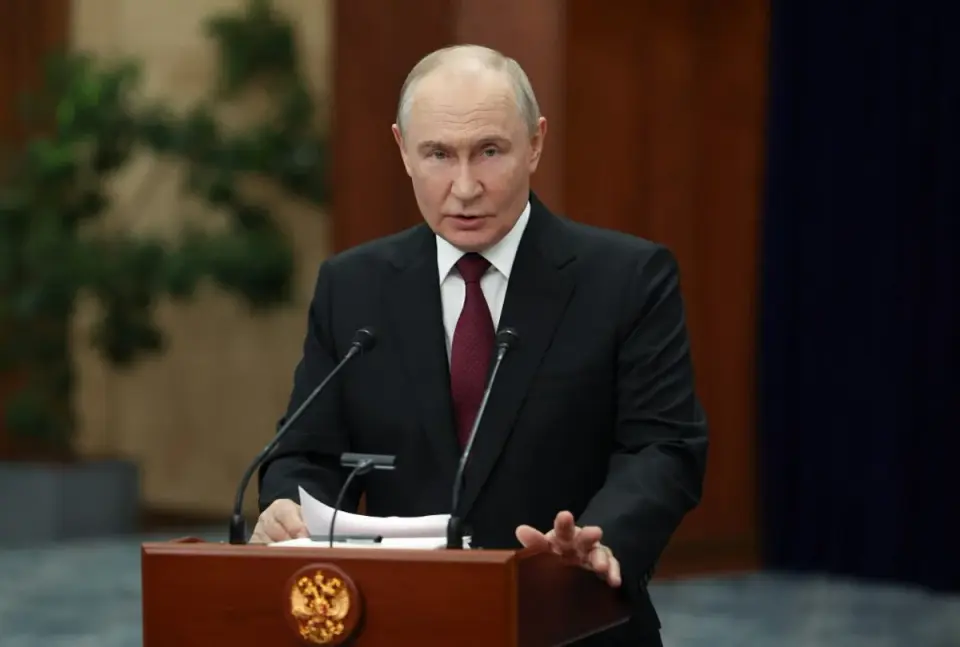
Vladimir Putin’s September 1 claims of major Russian advances in Kharkiv and Donetsk regions, including the capture of Sviatohirsk and a large encirclement, were fact-checked and found to be false by Kyiv Post and the Institute for the Study of War (ISW).
Key points
- Putin claimed Russian forces captured Sviatohirsk and encircled 2,000 Ukrainian troops in a 460-square-kilometer pocket, but Ukrainian Brigadier General Andriy Biletsky confirmed Sviatohirsk remains under Ukrainian control with no Russian presence nearby.
- ISW and independent Russian milbloggers, including Mikhail Zvinchuk, dismissed the 'Vovchansk Cauldron' encirclement as baseless, noting stable frontlines and no evidence of the claimed pocket.
- Kyiv Post verified that utilities and businesses in Sviatohirsk and nearby Prykolotne remain operational, contradicting Putin’s narrative of Russian control.
- Putin rejected a broader frontline ceasefire proposed by Ukraine during US envoy visits, while agreeing only to a temporary halt of long-range strikes on Kyiv and Moscow cities.
Background
This follows earlier reports in August 2026 where ISW noted Putin’s claims of rapid gains in Donetsk Oblast were inconsistent with actual battlefield progress, which saw only about 90 square kilometers of territory seized or consolidated. Ukraine’s long-range strike campaign against Russian infrastructure has continued, while Russia has struggled with air defense shortages and manpower issues.
How outlets are covering it
Kyiv Post and ISW both emphasize the lack of evidence for Putin’s claims, with Kyiv Post providing on-the-ground verification from Ukrainian commanders and ISW analyzing frontline stability. Independent Russian milbloggers, such as Zvinchuk, also challenged the Kremlin’s narrative, highlighting the disconnect between official claims and battlefield realities. SPARTANAT noted Putin’s refusal to compromise in peace negotiations, attributing it to distorted battlefield perceptions.
Why it matters
The discrepancy between Putin’s public claims and verified battlefield realities underscores the role of cognitive warfare in sustaining domestic support and influencing peace negotiations. It highlights the challenges in achieving a ceasefire when one side relies on inflated military narratives.
What to watch
US envoys Steve Witkoff and Jared Kushner are expected to continue discussions in Kyiv and Moscow, with Ukraine adhering to a temporary ceasefire on long-range strikes until September 7. The broader frontline ceasefire proposed by Ukraine remains unresolved, and Russia’s refusal to compromise may prolong the conflict.
- Fact-Checking Putin on His Latest Claims of Big Russian Successes kyivpost.com
- Russian Offensive Campaign Assessment, September 5, 2026 understandingwar.org
- Putin announced battlefield encirclements that the evidence doesn’t show, but Russia’s real offensive is accelerating elsewhere Meduza
- Putin says Russia has advanced in Donetsk region, surrounded some Ukrainian troops Reuters
- The situation 1629 – September 6, 2026 SPARTANAT.com
Want the full story? Read the original reporting
Read on kyivpost.com