
Saudi Arabia Urges Turkish and Pakistani Chiefs to Riyadh as Houthi Strikes Intensify
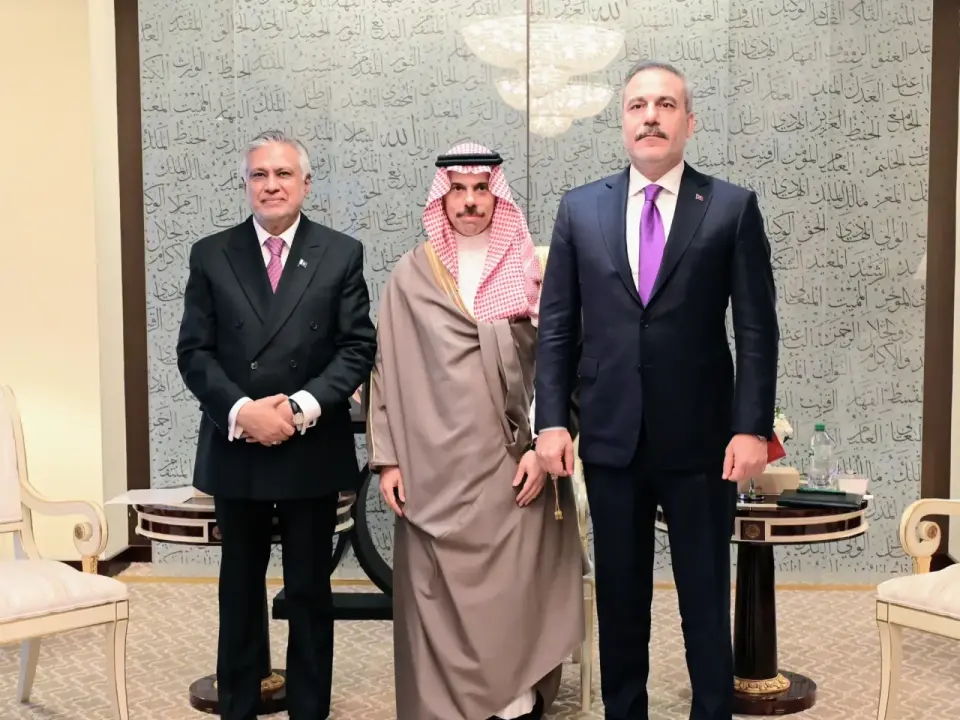
Saudi Arabia has summoned the military chiefs of Turkey and Pakistan to Riyadh to discuss implementing the Mecca Joint Defence Agreement amid escalating Houthi missile and drone strikes. While Saudi officials frame the crisis as an existential threat requiring immediate collective defense, Ankara and Islamabad have maintained cautious diplomatic tones, emphasizing technical support rather than direct troop deployment. The Houthis have issued direct warnings against their allies, and Turkey’s parliament has not yet ratified the pact, complicating immediate military commitments.
Key points
- Turkish Chief of General Staff Selcuk Bayraktaroglu and Pakistani Field Marshal Asim Munir are traveling to Riyadh for urgent talks on the Mecca Joint Defence Agreement.
- Houthis claimed strikes on Riyadh and Yanbu, while Saudi authorities reported intercepting six ballistic missiles and issuing emergency alerts for Mecca and Jeddah.
- The Mecca Joint Defence Agreement, signed in August, stipulates that an attack on one signatory is an attack on all three, but Turkey has not yet ratified it in parliament.
- Houthi political bureau member Mohammed al-Bukhaiti warned that Pakistan and Turkey would face an 'iron fist' if they joined the war.
- Pakistan appointed retired Lieutenant General Nauman Mahmood as the pact’s first secretary general, though analysts note the army is stretched thin by conflicts in Afghanistan and India.
Background
This escalation follows weeks of Houthi advances in Yemen, including the seizure of the port city of Mocha and control of the Bab al-Mandeb strait. Previous coverage noted Pakistan’s attempts to balance its defense pact with Saudi Arabia against its ties with Iran, including recent diplomatic efforts to urge Tehran to curb Houthi actions. The current crisis marks a shift from diplomatic caution to urgent military coordination, driven by direct strikes on Saudi civilian and economic infrastructure.
How outlets are covering it
Al Jazeera highlights the divergence in diplomatic messaging: Saudi Arabia’s foreign ministry and religious authorities framed the New York meeting as a condemnation of attacks and a call for defense, while Pakistan and Turkey described it as a technical review of institutional structures, omitting references to Houthi strikes. The Detroit News provides broader context, noting that the military talks occur alongside US secondary sanctions that have curtailed Iranian flights and oil exports, framing the Saudi-Turkey-Pakistan coordination as part of a wider effort to isolate Iran and its proxies. Both sources agree on the urgency in Riyadh but differ on the immediate military implications, with Al Jazeera emphasizing the lack of troop commitment due to domestic and regional constraints, while The Detroit News focuses on the economic and diplomatic fallout of the broader Middle East conflict.
Why it matters
The activation of the Mecca Joint Defence Agreement could mark the first significant military integration between Saudi Arabia, Turkey, and Pakistan, potentially altering the balance of power in the Red Sea and Gulf. However, the lack of parliamentary ratification in Turkey and the stretched military resources in Pakistan suggest that immediate ground intervention is unlikely, with support likely limited to technical and logistical assistance. The Houthi warnings and Saudi religious mobilization indicate a high risk of prolonged conflict, with potential spillover effects on global energy markets and regional stability.
What to watch
Watch for the outcome of the Riyadh meeting between the three military chiefs, which may define the scope of support under the Mecca pact. Monitor Turkey’s parliamentary proceedings in October for ratification of the agreement, and track Houthi responses to any Saudi-Turkey-Pakistan coordination. Additionally, observe the impact of US secondary sanctions on Iranian air and oil flows, which may influence Tehran’s support for the Houthis.
- Pakistan, Turkiye edge closer towards joining Saudi war against Houthis Al Jazeera
- Iran war live: Yemeni government claims advances as allies head to Riyadh Al Jazeera
- Allies unite behind Saudi Arabia as more Iranian flights curtailed The Detroit News
- Pact with Saudi and Pakistan could expand to Muslim world, Iran, Turkish speaker says Reuters
- Opinion | The Mecca Pact Has Become a Hollow Promise WSJ
Want the full story? Read the original reporting
Read on Al Jazeera