
Seoul Accuses Kyiv of Leaking POW Transfer to Pressure Arms Sales
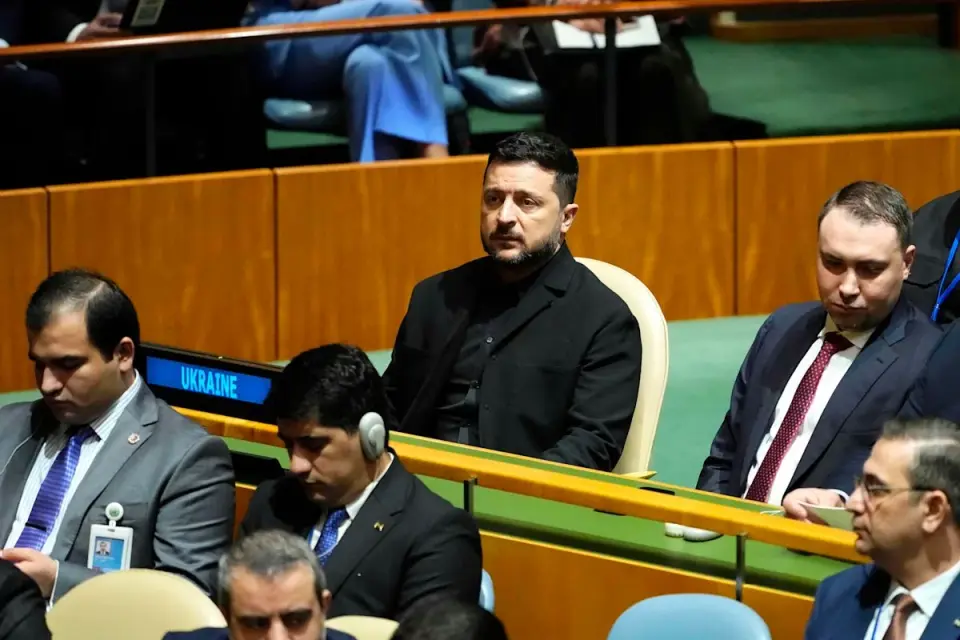
South Korea’s intelligence agency believes President Volodymyr Zelenskyy publicly disclosed the transfer of two North Korean prisoners of war to Seoul to generate domestic support for supplying lethal weapons to Ukraine. The revelation, made at the UN General Assembly, violated a confidentiality agreement, prompting Seoul to summon Ukraine’s envoy and demand an apology. The dispute has damaged bilateral trust and complicated South Korea’s cautious stance on military aid, as it seeks to balance relations with both Kyiv and Pyongyang.
Key points
- South Korea’s National Intelligence Service (NIS) suspects Zelenskyy revealed the transfer to boost public support for arms sales to Ukraine, according to lawmaker Yoo Yeong-ha.
- The two North Korean soldiers, captured in Russia’s Kursk region in January 2025, arrived in South Korea in mid-September and are in good health.
- Seoul summoned Ukraine’s acting ambassador, Andrii Vieshkin, and demanded an apology for breaking a confidentiality agreement, which Kyiv denies existed.
- President Lee Jae-myung called the disclosure 'greatly disappointing,' while his approval rating has fallen to 37.9% amid criticism from his own party.
- South Korea has not provided lethal weapons to Ukraine, citing a domestic ban, but has pledged a $100 million non-lethal aid package.
Background
This dispute follows earlier coverage of Zelenskyy’s UN announcement confirming the transfer of two North Korean POWs to South Korea in late September 2026. Prior reports highlighted Seoul’s demand for an apology after Kyiv breached a confidentiality agreement, which jeopardized the safety of the defectors’ families in North Korea. The incident also complicates South Korea’s diplomatic efforts with Pyongyang, as Lee Jae-myung’s government seeks to reopen peace talks while maintaining cautious support for Ukraine.
How outlets are covering it
Euronews and BBC emphasize the diplomatic fallout, with Seoul accusing Kyiv of breaking a confidentiality agreement to protect the POWs’ families. The Guardian highlights the domestic political crisis in South Korea, noting Lee Jae-myung’s low approval rating and criticism from his own party. All sources agree that the dispute has damaged bilateral trust and complicated South Korea’s stance on military aid to Ukraine. However, Euronews uniquely reports that Seoul’s spy agency believes Zelenskyy’s disclosure was a strategic move to pressure Seoul into providing weapons, a perspective not explicitly mentioned by BBC or The Guardian.
Why it matters
The dispute underscores the complex diplomatic balancing act South Korea faces between supporting Ukraine and maintaining relations with North Korea and Russia. It also highlights the risks of public disclosure in sensitive prisoner exchanges, which could jeopardize future negotiations and the safety of defectors’ families. The incident may influence South Korea’s decision on whether to provide lethal weapons to Ukraine, a move that could have significant geopolitical implications.
What to watch
South Korea is likely to continue demanding an apology from Ukraine and may review its aid package to Kyiv. The dispute could also affect future prisoner exchanges between Ukraine and Russia, as Kyiv had cited concerns about such exchanges as a reason for confidentiality. Additionally, the incident may influence South Korea’s diplomatic efforts with Pyongyang, as Lee Jae-myung’s government seeks to reopen peace talks.
- South Korea says Zelenskyy's revelation of a secret POW transfer was likely a play for more support Yahoo
- Ukrainian minister hopes to heal 'misunderstanding' with South Korea, media reports Reuters
- Seoul suspects Zelenskyy revealed North Korean POW transfer to win arms support euronews.com
- Seoul summons Ukraine envoy over North Korean prisoner-of-war row BBC
- Why is South Korea so angry with Ukraine over two North Korean prisoners of war? theguardian.com
Want the full story? Read the original reporting
Read on Yahoo