
Tanker strikes in Strait of Hormuz escalate as US hawks push to resume Iran campaign
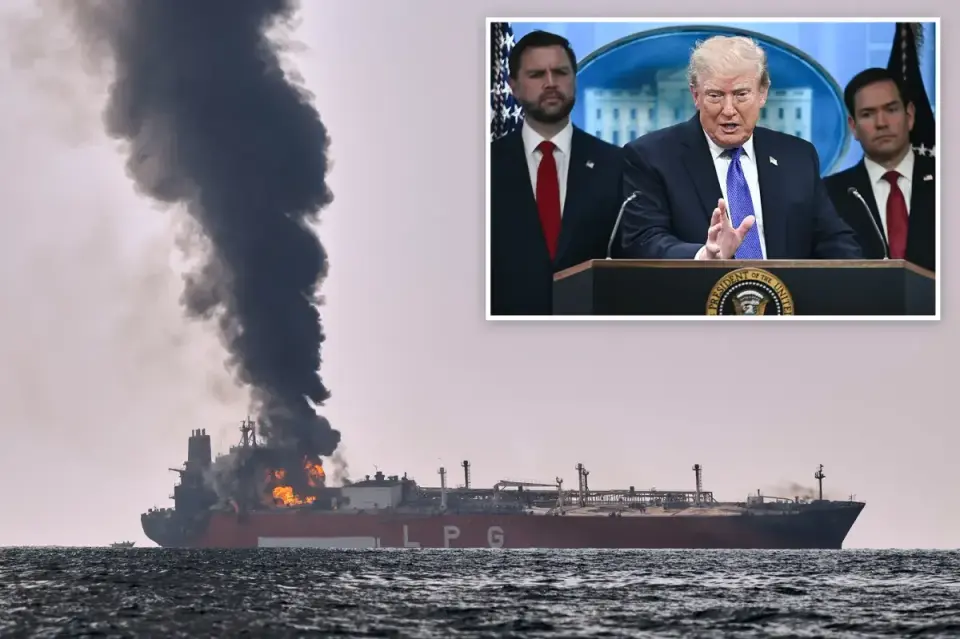
Two tankers were struck by projectiles near the Strait of Hormuz on November 21, 2026, with no casualties reported. The incidents occur as US administration hawks pressure President Trump to resume major strikes on Iran, which have been paused since summer. Israel’s ambassador to the US, Michael Leiter, stated that ousting the Tehran regime is the only long-term solution and that Israel may act alone. Meanwhile, Iran has tightened control over the strait, with its navy claiming a tanker hit a naval mine. The US has blockaded Iranian ports and is deploying naval escorts, while Iran gathers tankers near Kharg Island to bypass the blockade.
Key points
- UK Maritime Trade Operations reported two incidents: one tanker hit in the stern 20km north of Khasab, Oman, and another in the engine room 31km east of Khasab.
- Iran’s navy claimed a tanker caught fire after striking a naval mine in a restricted area, though this could not be independently verified.
- Israel’s ambassador Michael Leiter told the New York Post that Israel believes ousting the Iranian regime is the only answer and may act alone if the US does not.
- US Central Command warned that a prolonged military buildup is straining readiness, while congressional Democrats prepare to challenge funding for the campaign.
- More than a dozen Iranian oil tankers have gathered near Kharg Island, with Tehran considering a convoy through the Gulf of Oman to bypass the US naval blockade.
- Iranian Foreign Minister Abbas Araghchi stated that Iran’s nuclear doctrine has not changed, despite international pressure and US accusations of seeking nuclear capability.
Background
The current escalation follows a war that began in late February 2026 with US and Israeli attacks on Iran. Since then, the Strait of Hormuz, which carried nearly a fifth of global crude oil supplies before the conflict, has seen a sharp increase in tanker attacks. In October, attacks reached a wartime peak, with 11 vessels struck in a single week. The US has responded by blockading Iranian ports and deploying naval escorts, while Iran has targeted US allies, including drone and missile strikes on Kuwait. Previous diplomatic efforts to reopen the strait have stalled, with Iran proposing a two-day timeline to reopen the waterway if US sanctions are lifted, but no formal agreement has been reached.
How outlets are covering it
The New York Post emphasizes the political pressure on President Trump from administration hawks and Israel’s ambassador, framing the tanker strikes as a catalyst for renewed US military action. Al Jazeera highlights Iran’s deliberate strategy to tighten control over the strait, noting that Tehran is escalating tensions to pressure Washington and demonstrate its dominance over the waterway. CNBC focuses on the specific incidents reported by UKMTO, noting the uncertainty over whether the two strikes involved the same vessel. NPR provides a broader context of the escalating conflict, detailing the record-high number of ship attacks in October and November, the environmental impact of oil spills, and the US response with airstrikes on Qeshm Island. The outlets differ in their emphasis: the New York Post and Al Jazeera focus on the political and strategic dimensions, while CNBC and NPR provide more detailed operational and environmental context.
Why it matters
The Strait of Hormuz is a critical global energy corridor, and any disruption to shipping can have significant impacts on oil prices and global supply chains. The escalation in tanker attacks and the potential resumption of US strikes on Iran could lead to a broader regional conflict, with implications for US military readiness and congressional funding. The environmental impact of oil spills and the humanitarian toll on seafarers also underscore the human cost of the conflict. The situation highlights the complex interplay between military, political, and economic factors in the Middle East, with potential ramifications for global energy markets and international relations.
What to watch
The US administration is likely to face increased pressure from hawks to resume major strikes on Iran, while congressional Democrats may challenge funding for the campaign. Iran may continue to tighten control over the Strait of Hormuz, potentially leading to more tanker attacks and environmental damage. Diplomatic efforts to reopen the strait may stall, with Iran and the US at odds over sanctions and military presence. The situation could escalate further if the US resumes major strikes or if Iran takes more aggressive action against US allies or shipping.
- Two tankers hit in Strait of Hormuz as hawks press Trump to resume Iran strikes New York Post
- Tankers hit in Strait of Hormuz as Iran tightens grip on shipping Al Jazeera
- UK maritime agency reports two tanker attacks near Oman; Iran says vessel hit mine east of Hormuz CNBC
- UAE's ADNOC L&S says one crew member missing after attack on its vessel in Hormuz Reuters
- Iran's attacks on ships in the Strait of Hormuz escalate NPR
Want the full story? Read the original reporting
Read on New York Post