
Three Tankers Disabled in 24 Hours as Iran Declares Hormuz Closed Amid US Airstrikes
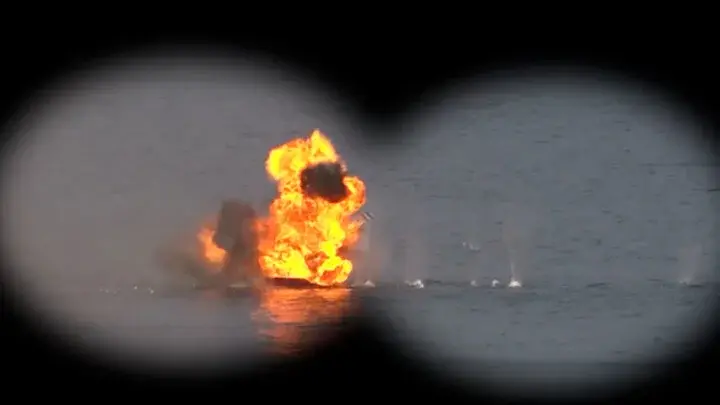
Iran’s Islamic Revolutionary Guard Corps (IRGC) reported that three oil tankers were disabled by naval mines in the Strait of Hormuz within a 24-hour period, marking a sharp escalation in maritime incidents. The IRGC stated that the vessels violated regulations by using unauthorized routes with navigation systems disabled. Simultaneously, the US conducted airstrikes on Qeshm Island in response to Iranian drone attacks on US assets in Bahrain. While Tehran insists the strait remains closed, Washington maintains a naval blockade to protect shipping lanes. These events occur against a backdrop of stalled peace talks and significant environmental damage from ongoing oil spills.
Key points
- The IRGC Navy confirmed that three non-compliant oil tankers struck mines and were disabled in the Strait of Hormuz within 24 hours, including a supertanker carrying over two million barrels of crude.
- The US military conducted airstrikes on Qeshm Island, targeting launchers in response to IRGC drone attacks on US personnel and assets in Bahrain, marking the third Iranian strike on the Gulf kingdom in one week.
- Iranian officials declared the Strait of Hormuz closed, warning shipping companies to use only authorized routes and comply with regulations announced by Iran’s Armed Forces.
- The UK Maritime Trade Operations (UKMTO) confirmed a tanker was struck twice, resulting in an engine room fire, but noted that the crew’s status and damage assessment remain unknown.
- Vice President JD Vance stated that President Trump does not intend for the conflict to become a 'forever war,' despite stalled diplomatic efforts following a June memorandum of understanding.
Background
The current escalation follows a series of incidents in November 2026, including a supertanker sinking claimed by Iran on November 15 and 16. The broader conflict began in February 2026 with joint US-Israeli strikes that killed Supreme Leader Ayatollah Ali Khamenei. Since then, the US has enforced a naval blockade on Iranian ports, while Iran has restricted transit through the Strait of Hormuz. Environmental groups have documented over 500 oil spills since the war began, with cumulative pollution covering approximately 20,000 square kilometers, threatening marine ecosystems in the Persian Gulf.
How outlets are covering it
The IRGC frames the tanker incidents as consequences of vessels violating Iranian regulations by using unauthorized routes with navigation systems off, asserting that the Strait of Hormuz remains closed at Iran’s discretion. In contrast, the US and UK maritime authorities describe the incidents as attacks on shipping, with UKMTO reporting that a tanker was struck by an unknown projectile and later hit a second time. The Telegraph notes that while the IRGC claims a supertanker sank, independent confirmation is lacking, and the US military has claimed to have cleared mines from main routes. Environmental experts, such as those from Greenpeace, emphasize that the repeated attacks have caused massive, long-term pollution, with oil spills covering an area nearly the size of Wales, posing a 'generational threat' to wildlife in the region.
Why it matters
The closure of the Strait of Hormuz, which carries about one-fifth of global oil in peacetime, threatens global energy supplies and exacerbates environmental damage in the Persian Gulf. The ongoing military exchanges between the US and Iran, including airstrikes and drone attacks, risk further escalation in the region, while stalled diplomatic efforts leave the conflict unresolved. The environmental impact, with oil pollution affecting coastlines and marine ecosystems, poses long-term risks to biodiversity and coastal communities dependent on fishing.
What to watch
The situation may escalate further if diplomatic talks between the US and Iran remain stalled, with the US potentially increasing military pressure or Iran continuing to restrict shipping. Environmental assessments of the oil spills will likely continue, though ground investigations remain difficult due to the naval blockade. The US and Iran may engage in further military exchanges, with the US defending its assets in the region and Iran targeting US and Gulf state infrastructure. The outcome of these interactions will depend on whether President Trump pursues a resolution or allows the conflict to continue, as indicated by Vice President Vance's comments on the president's options.
- 3rd non-compliant oil tanker explodes in Hormuz in 24 hours Mehr News Agency
- Iran live updates: CENTCOM says drone attack on Bahrain defeated 'without any damage' Yahoo
- Oil supertanker ‘sinks after hitting mine’ in Strait of Hormuz The Telegraph
- Trump’s War Poses a “Generational Threat” to Wildlife in the Persian Gulf Mother Jones
- Two Tankers Hit Near Strait of Hormuz, One Disabled The Maritime Executive
Want the full story? Read the original reporting
Read on Mehr News Agency