
Trump Rules Out Sunday Iran Strike Amid Conflicting Intelligence and Hormuz Claims
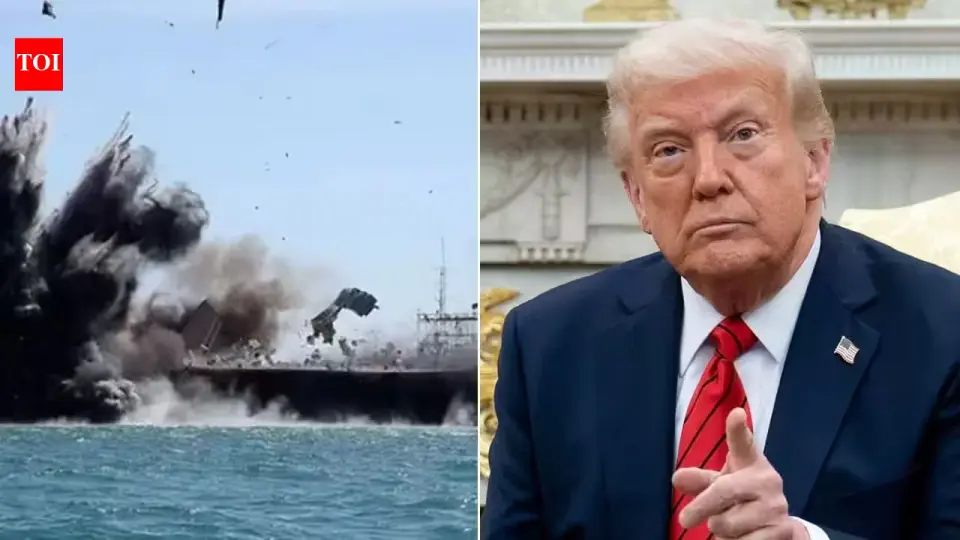
President Donald Trump ruled out immediate military strikes against Iran on Sunday, citing conflicting intelligence reports. He asserted US control over the Strait of Hormuz and framed the conflict as a choice between a diplomatic deal or further escalation. Trump also signaled upcoming peace talks for Russia and Ukraine while criticizing European immigration policies and Taiwan’s chip industry.
Key points
- Trump stated there would be no strike on Iran on Sunday, noting that Washington has 'two very different sets of intelligence reports.'
- The president claimed US forces now control the Strait of Hormuz, enforcing a blockade on Iranian shipping and asserting commercial activity exceeds pre-war levels.
- Trump framed the next phase of the conflict as a binary choice: reach a diplomatic agreement with Tehran or face further military action.
- He indicated that high-level diplomatic engagements involving the US, Russia, and Ukraine could occur soon, expressing optimism that both Moscow and Kyiv want a deal.
- Trump criticized European nations for inadequate border enforcement, linking unrest in France, Italy, Belgium, and Spain to immigration policies, while claiming zero illegal entries into the US over the past 18 months.
Background
This development follows a conflict that erupted in late February after joint US-Israeli strikes. Previous coverage in October noted that Trump ruled out nuclear strikes but confirmed plans for conventional weapons like the MOAB, potentially after the November 3 midterm elections. Earlier in September, tensions rose over allegations that Chinese satellite data aided Iranian strikes on US bases, leading to diplomatic friction between Washington and Beijing.
Why it matters
The uncertainty surrounding intelligence assessments and the potential for rapid escalation in the Middle East affects global energy markets and security. Trump’s claims of controlling the Strait of Hormuz, a critical global shipping route, have significant implications for international trade and oil prices. Additionally, the shift toward diplomatic talks with Russia and Ukraine could reshape the geopolitical landscape in Europe.
What to watch
Watch for any announcements regarding the timing of US-Russia-Ukraine peace talks. Monitor developments in US-Iran negotiations to see if a diplomatic agreement is reached or if military strikes resume. Observe the impact of Trump’s immigration rhetoric on US-Europe relations and the ongoing debate over semiconductor manufacturing and trade with Taiwan and China.
- US has ‘two very different sets of intelligence reports’: Trump rules out Sunday strikes on Iran The Times of India
- Iran in ‘Advanced Stages’ of Planning Attacks Against Americans, Officials Say The New York Times
- U.S. Evacuates Mideast Outposts After Suspected Iranian Plot to Target Americans WSJ
- Iran has ramped up efforts to target US personnel, intelligence memo warns Reuters
- US is reducing staffing at 4 Middle East embassies over increased threats from Iran AP News
Want the full story? Read the original reporting
Read on The Times of India