
Trump’s abrupt cut to Ulchi Freedom Shield strains US-South Korea alliance amid Iran war
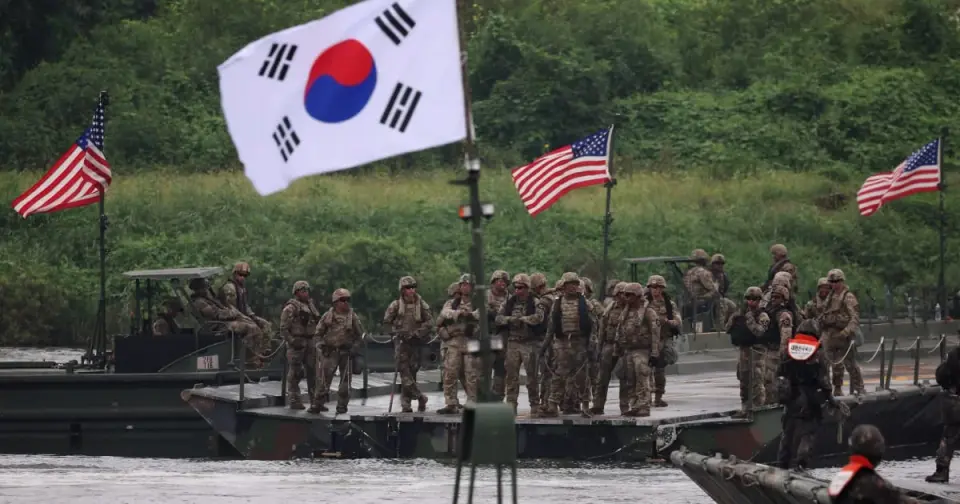
President Trump ordered a significant reduction in joint US-South Korea military drills, citing a 'good relationship' with North Korea and Seoul's refusal to support the US in the Iran conflict. The move ended the Ulchi Freedom Shield exercise six days early, halving planned field training. While the US claims this eases tensions, South Korea and experts warn it undermines deterrence, readiness, and regional stability, especially as North Korea fires missiles and deepens ties with Russia.
Key points
- Trump ordered the Pentagon to 'substantially reduce' the Ulchi Freedom Shield exercise, ending it six days early and halving joint field training.
- The US cited cost savings, a 'good relationship' with North Korea, and frustration with South Korea's stance on the Iran war as motivations.
- South Korea and Japan have increased defense spending to $47.8 billion and $62.2 billion respectively, reflecting growing concerns over North Korean nuclear ambitions and Chinese military buildup.
- North Korea dismissed the drill reduction as insufficient, firing short-range ballistic missiles and maintaining that the exercises remain 'provocative.'
- The US moved six THAAD launchers from South Korea to the Middle East in March, raising concerns about US ability to defend allies while fighting in Iran.
Background
The Ulchi Freedom Shield exercise is an annual joint US-South Korea military drill designed to prepare for potential North Korean aggression. Previous coverage noted that the 2025 edition was planned for 11 days, involving approximately 18,000 South Korean troops. North Korea had previously warned of 'stern steps' and a 'stronger deterrent' against the US and South Korea ahead of the drills, calling them a 'war rehearsal.' The US-South Korea alliance has been under strain due to the Iran conflict, with South Korea and Japan facing economic pressures and domestic opposition to supporting the US war effort.
How outlets are covering it
The Council on Foreign Relations (CFR) argues that Trump's move risks undermining US security interests in Northeast Asia, warning that weakening the alliance could push South Korea toward nuclear weapons and encourage China and Russia. The New York Times emphasizes that the drill cut undermines US military readiness and signals a lack of commitment to allies, a concern shared by current and former military officials. The Atlantic frames the decision as an irrational punishment of South Korea for Trump's perceived humiliation in the Iran war, noting the US is overextended and munition stores are depleted. ClickOnDetroit reports that North Korea dismissed the gesture as insufficient, firing missiles and maintaining that the exercises remain 'provocative,' while also noting that Kim Yo Jong used measured language, suggesting Pyongyang may seek larger concessions from Washington.
Why it matters
The decision to scale back joint military exercises with South Korea raises serious questions about the US commitment to its allies in Asia, particularly as North Korea and China continue to expand their military capabilities. The move could weaken deterrence, undermine regional stability, and push South Korea and Japan to reconsider their defense strategies, potentially including nuclear weapons. It also highlights the strain on US resources due to the Iran conflict, which has depleted munition stocks and diverted military assets away from Asia.
What to watch
The US and South Korea will likely continue to coordinate on defense, but the reduced drills may lead to a reassessment of alliance readiness. North Korea may continue to test its missiles and deepen ties with Russia, while South Korea and Japan may increase their own defense spending and seek closer strategic coordination. The US may also face pressure to replenish its munition stocks and restore its military presence in Asia, particularly as the Iran conflict continues to drain resources.
- Trump’s South Korea Social Post Poses Risks for the United States Council on Foreign Relations
- Trump’s Order to Cut Military Exercises With South Korea Carries Risks, Experts Say The New York Times
- US, South Korean militaries wrapping up drills early, a day after North Korea's missile barrage ClickOnDetroit | WDIV Local 4
- Trump Will Make South Korea Pay for His Iran Humiliation The Atlantic
- US-South Korea military drills to end early after Trump order, Seoul says ABC News - Breaking News, Latest News and Videos
Want the full story? Read the original reporting
Read on Council on Foreign Relations