
Turkey weighs defensive aid for Saudi Arabia as Houthi strikes escalate
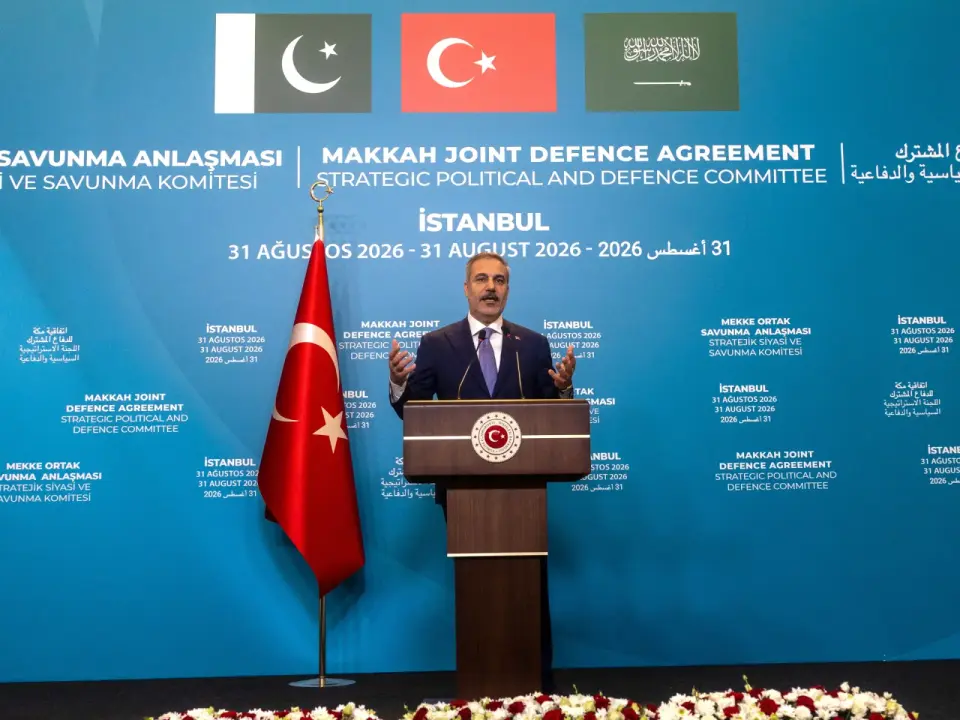
Turkish Foreign Minister Hakan Fidan stated that Ankara is prepared to provide defensive military support to Saudi Arabia under the new Mecca Defence Alliance, following escalating Houthi attacks in Yemen. While Riyadh has not formally requested intervention, Turkey is considering the deployment of air-defense systems and personnel. The alliance, which includes Pakistan, remains in a preparatory phase, with Turkey expected to ratify the pact in October. Analysts warn that direct military involvement could disrupt Turkish supply lines to the Horn of Africa, prompting Ankara to pursue a diplomatic balancing act between Riyadh, Tehran, and the Houthis.
Key points
- Hakan Fidan indicated Turkey may supply air-defense systems and technical personnel to Saudi Arabia to counter Houthi drone and missile attacks, though no formal request has been made yet.
- The Mecca Defence Alliance, signed in August by Turkey, Saudi Arabia, and Pakistan, is moving toward institutionalization, with a secretariat to be established in Riyadh and potential expansion to other regional states.
- Houthi forces have seized the strategic Red Sea city of Mocha and control the Bab al-Mandeb Strait, prompting Saudi Arabia to intercept a drone attack near Mecca.
- Turkey is expected to ratify the pact in October, after which it may begin deploying defensive assets, while avoiding direct ground intervention in Yemen.
- Pakistan has reaffirmed its commitment to defend Saudi Arabia but stated that no immediate military response is currently under discussion under the pact.
Background
The Mecca Defence Alliance was signed on August 7, 2026, by Saudi Crown Prince Mohammed bin Salman, Turkish President Recep Tayyip Erdogan, and Pakistani Prime Minister Shehbaz Sharif. It was formally named the Mecca Defence Alliance on August 31, with a secretariat to be headed by a Pakistani official. The pact was established amid growing Gulf concerns over being drawn into the broader US-Iran conflict, which has persisted for over six months. Previous tensions included the shutdown of Saudi Arabia's East-West oil pipeline in September 2026 following attacks, and Pakistan's earlier clarification that the pact is defensive and does not automatically trigger military action.
How outlets are covering it
Al Jazeera emphasizes Turkey's willingness to address Saudi Arabia's unmet military needs and its diplomatic efforts to end the fighting, while noting the alliance's lack of integrated command structures. Middle East Eye highlights the risks to Turkey's supply lines to the Horn of Africa and argues that Ankara prefers a diplomatic role to avoid a direct clash with the Houthis, who have warned against intervention. Business Insider Africa focuses on the immediate security threat, detailing a recent Houthi drone attack near Mecca and the Houthis' expanding ties with al-Shabaab in Somalia. UA.NEWS reports on the administrative progress of the alliance, noting Fidan's comments on its institutionalization and openness to new members. The outlets differ on the likelihood of direct military action, with Al Jazeera and UA.NEWS focusing on defensive support and institutionalization, while Middle East Eye stresses the diplomatic and economic risks of escalation.
Why it matters
The potential deployment of Turkish military assets to Saudi Arabia marks a significant shift in regional security dynamics, testing the operational viability of the Mecca Defence Alliance. It could alter the balance of power in the Red Sea and Yemen, potentially drawing Turkey into a broader conflict with Iran-aligned forces. The outcome will influence the stability of the US-Iran war and the security of critical shipping routes, including the Bab al-Mandeb Strait, which is vital for global energy and trade flows.
What to watch
Turkish parliament is expected to ratify the Mecca Defence Alliance in October, potentially triggering the deployment of defensive systems to Saudi Arabia. The alliance may seek to expand to other regional states after institutionalization. Diplomatic efforts to de-escalate the Houthi-Saudi conflict will continue, with Turkey potentially acting as an intermediary between Riyadh, Tehran, and the Houthis. The Houthis may respond to Turkish involvement with further attacks or restrictions on Red Sea shipping.
- Turkiye backs Saudi Arabia’s security amid escalating Houthi attacks: FM Al Jazeera
- Turkey says it could help meet Saudi military needs under defence pact Reuters
- World’s 9th strongest military backs Saudi Arabia after Houthi drone attack near Mecca as Yemen militants forge deeper ties with an African terror group Business Insider Africa
- Taking on the Houthis? Turkey could pay a steep price Middle East Eye
- Fidan announces creation of Mecca Alliance headquarters — Anadolu Agency UA.NEWS
Want the full story? Read the original reporting
Read on Al Jazeera