
Turkey, Qatar Sign Mutual Defense Pact Amid Regional Tensions
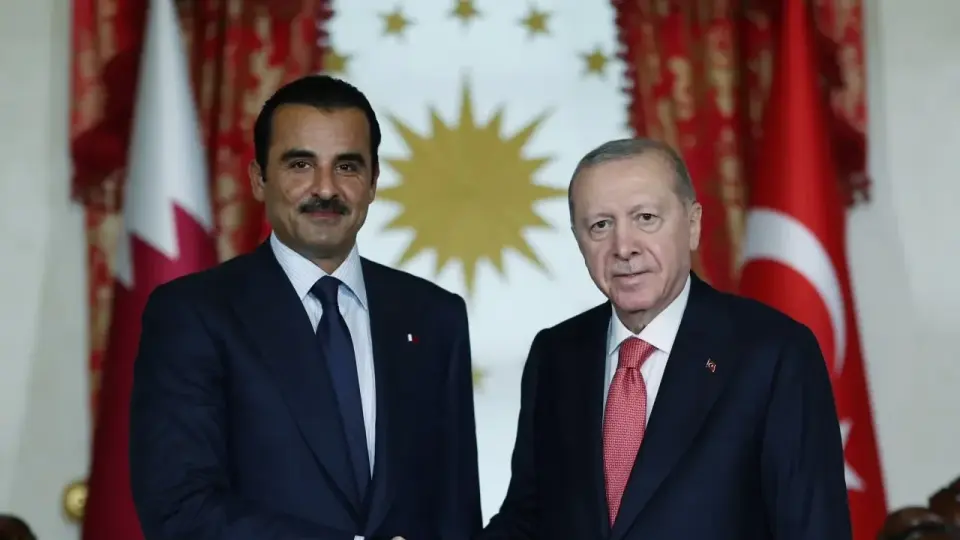
Turkey and Qatar signed a mutual defense agreement on Friday in Istanbul, pledging a unified response to external armed attacks. The deal includes provisions for joint military exercises, defense industry cooperation, and personnel training. While the Turkish presidency offered limited details, Qatar’s foreign ministry emphasized the pact’s role in strengthening collective defense and regional stability. The agreement also addresses humanitarian cooperation in Gaza, with both nations accusing Israel of violating the current peace plan and calling for unhindered aid access.
Key points
- President Recep Tayyip Erdogan and Qatari Emir Sheikh Tamim bin Hamad al-Thani signed the accord in Istanbul on Friday.
- The agreement mandates a 'unified stance' against any external armed attack targeting either country.
- The pact includes clauses for joint military exercises, defense industry collaboration, and personnel training exchanges.
- Both nations condemned Israeli actions in Gaza, citing violations of UN Security Council Resolution 2803 and the comprehensive peace plan.
- The deal also covers cultural, economic, and educational cooperation beyond military matters.
- This follows Turkey’s ratification of the Mecca Joint Defence Agreement with Saudi Arabia and Pakistan last week.
Background
This agreement follows a series of regional defense alignments, including the August Mecca Joint Defence Agreement between Turkey, Saudi Arabia, and Pakistan, which Turkey’s parliament ratified last week. The Mecca pact allows for military support to Saudi Arabia against Houthi attacks. Additionally, recent diplomatic tensions, such as the October CICA summit walkouts involving Iran and Turkey, and Israel’s ongoing blockade of the Board of Peace’s Gaza reconstruction base, highlight the complex security landscape in the region.
How outlets are covering it
The Jerusalem Post and Dawn reported the signing with minimal detail on the agreement’s specific operational mechanics, focusing on Erdogan’s statement that the pact adds a 'new dimension' to bilateral ties. Al Jazeera and Gulf News emphasized the deterrence aspect, noting the pact’s timing amidst fighting in Yemen and the broader US-Iran conflict. Qatar’s foreign ministry, as cited by all sources, framed the agreement as a response to external threats and a commitment to regional stability. While the Turkish presidency highlighted energy and defense industry cooperation, Qatar’s statement focused heavily on the humanitarian crisis in Gaza and accusations against Israel, indicating a divergence in the primary emphasis of the two signatories' public messaging.
Why it matters
The pact signals a deepening of military and strategic ties between two key US allies in the Middle East, potentially reshaping regional security dynamics. It provides a formal framework for joint defense against external threats, which could influence responses to ongoing conflicts in Yemen and the broader Gulf. The agreement also underscores a shared diplomatic stance on Gaza, challenging Israel’s actions and potentially affecting international support for the current peace plan.
What to watch
Observers will watch for the implementation of joint military exercises and defense industry projects outlined in the pact. The diplomatic fallout from the joint condemnation of Israel’s actions in Gaza may influence future negotiations regarding the comprehensive peace plan. Additionally, the agreement’s impact on regional security, particularly in relation to Houthi attacks and the US-Iran conflict, will be monitored in the coming weeks.
- Turkey, Qatar sign defense agreement, accuse Israel of violating Gaza peace plan The Jerusalem Post
- Iran war live: Fighting grips Yemen as Qatar, Turkiye sign defence deal Al Jazeera
- Turkey, Qatar sign mutual defence agreement, pledge unified stance against attack Reuters
- Turkiye, Qatar sign defence agreement: Turkish presidency Dawn
- US-Israel-Iran war: Turkey, Qatar sign defence pact as Trump warns Tehran, Hormuz risks persist Gulf News
Want the full story? Read the original reporting
Read on The Jerusalem Post