
Ukraine's Vivaldi Offensive Gains Ground as US Restrictions Hinder Air Defenses
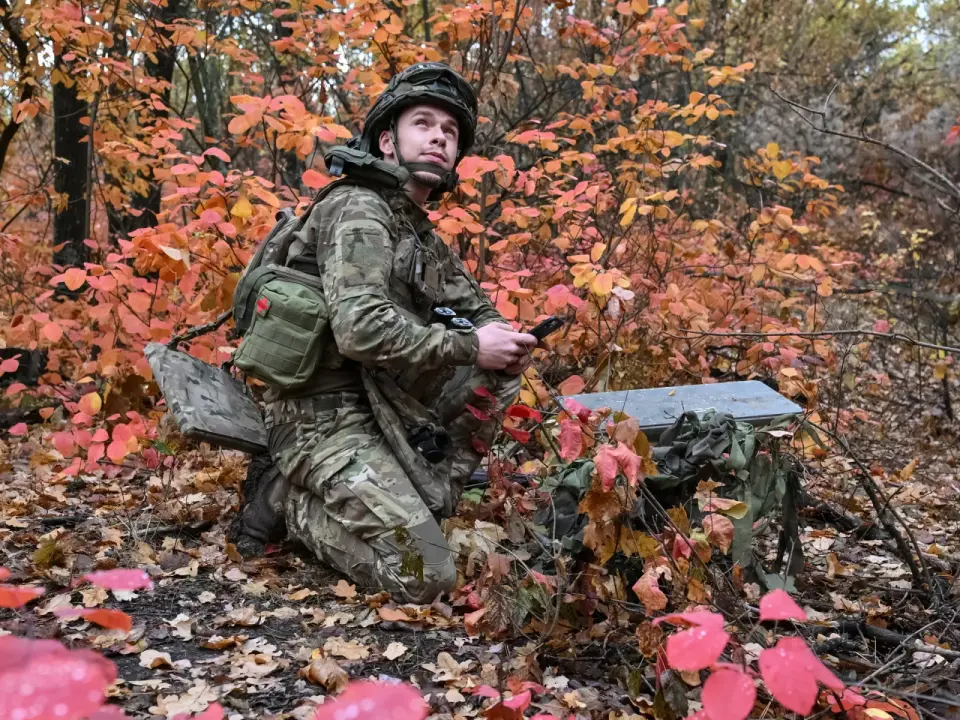
Ukraine’s Third Army Corps has reclaimed 275 square kilometers in Donetsk through Operation Vivaldi, neutralizing Russian gains this year. However, US restrictions on Starlink navigation and intelligence sharing have severely hampered Kyiv’s ability to intercept fast Russian drones, even as Moscow violates the US-brokered energy ceasefire.
Key points
- Operation Vivaldi has liberated 16 settlements and 275 sq km of territory in Donetsk, bringing Russia's net territorial gains in 2026 to near zero.
- US President Trump’s decision to lift oil sanctions and restrict Starlink navigation speeds to 160 km/h has crippled Ukraine’s ability to intercept high-speed Geran-4 drones.
- Russia launched 850 drones and 39 missiles on October 14, striking 30 energy targets despite Trump’s declared energy ceasefire.
- Ukraine resumed strikes on Russian refineries and data centers on October 15, targeting infrastructure in Nizhny Novgorod, Tver, and Voronezh.
- Artillery and HIMARS systems remain critical for holding ground, working alongside drones to prevent Russian reinforcements from retaking lost positions.
Background
This escalation follows a week of strained US-Ukraine relations, where Trump called for Zelensky's removal and signed the Lindsey Graham Act before reversing it to allow Russian diesel sales. Previous archive coverage noted that Trump’s push for an energy ceasefire was driven by US fuel prices, while analysts argued the US-Iran conflict had a larger impact on global supply. Earlier in 2026, ISW data showed Russian gains were far smaller than Kremlin claims, with Ukrainian counteroffensives already reversing August advances.
How outlets are covering it
Al Jazeera emphasizes the diplomatic rupture, highlighting Zelensky’s accusation that the US chose Russia’s side and the immediate impact of Starlink limits on air defense. BBC focuses on the ground-level success of Operation Vivaldi, noting that despite US restrictions, Ukrainian morale remains high and the offensive has blunted Russian pincer movements. Business Insider and Sandboxx stress the continued relevance of traditional artillery, arguing that while drones dominate, heavy guns and HIMARS are essential for maintaining fire superiority and preventing Russian counterattacks.
Why it matters
The US restrictions on Starlink and intelligence sharing expose the fragility of Ukraine’s air defense against high-speed drones, potentially increasing civilian casualties. Meanwhile, Ukraine’s territorial gains in Donetsk demonstrate that its counteroffensive strategy is effective, complicating Russian war aims and challenging Trump’s narrative that Ukraine is losing ground. The violation of the energy ceasefire by Russia further undermines US diplomatic efforts to stabilize global fuel markets.
What to watch
Ukraine is expected to continue striking Russian energy and data infrastructure, as the energy ceasefire has collapsed. The US may face pressure from European allies and domestic senators to investigate the Starlink restrictions. On the ground, Ukraine will likely attempt to consolidate its gains in Donetsk and push further toward the 'fortress cities' of Sloviansk and Kramatorsk, while Russia may attempt to reinforce its lines to prevent further losses.
- Ukraine advances in occupied Donetsk as Trump hands Putin diesel deal Al Jazeera
- Inside Ukrainian offensive pushing Russia back - with Starlink playing a key role BBC
- Ukraine's Operation Vivaldi shows why artillery still matters in a drone fight Business Insider
- Ukraine says it frees more territory in Donetsk region counteroffensive Reuters
- Ukraine’s eastwards counterattack is proving successful thanks to artillery Sandboxx
Want the full story? Read the original reporting
Read on Al Jazeera