
US envoy accuses Israel of baiting Turkey in Syria strike, sparking diplomatic rift
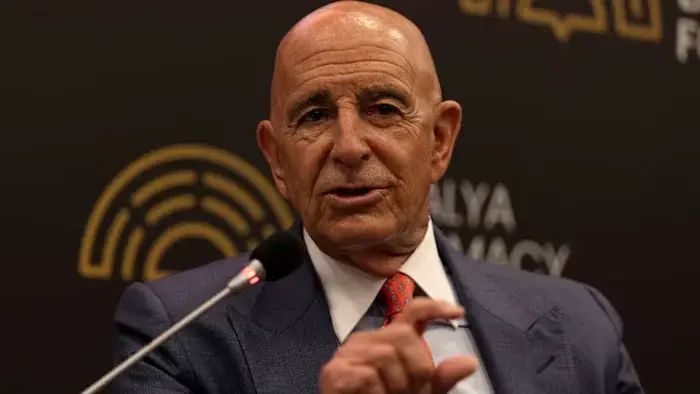
US envoy Tom Barrack accused Israel of intentionally provoking Turkey by striking the Abu al-Duhur airbase in Syria without prior warning, a move he described as a risky pre-election tactic. Israel denied the claim, asserting it shared intelligence with Washington and acted to prevent a Turkish military buildup. The incident has deepened tensions between Israel and Turkey, with Ankara condemning the attack as reckless while Israel maintains its security concerns are valid.
Key points
- Tom Barrack, US ambassador to Turkey and special envoy for Syria, stated that Israel did not warn Washington before striking the Abu al-Duhur airbase in northwestern Syria on Tuesday, breaking from usual coordination protocols.
- Barrack suggested the strike may have been a deliberate attempt to 'bait' Turkey into a conflict ahead of Israel's October general election, calling it an 'aggressive but well received pre-election concept' given Prime Minister Benjamin Netanyahu's polling struggles.
- Israeli Defense Minister Israel Katz rejected Barrack's claims, stating that Israel shared intelligence reports with US authorities and warned the Syrian government, arguing the strike was necessary to prevent Turkey from using the base to harm Israel.
- Barrack noted that the strike could have led to a direct confrontation, as Turkish fighter jets might have been scrambled to intercept Israeli warplanes, potentially risking a wider regional escalation.
- The dispute includes a disagreement over the Golan Heights, with Barrack describing the territory as occupied Syrian land, a stance Katz criticized as contradicting President Donald Trump's 2019 recognition of Israeli sovereignty.
Background
This incident follows a series of Israeli strikes in Syria since the ouster of Bashar al-Assad in December 2024. Israel has occupied parts of southern Syria, designating them as a 'security zone,' while Turkey has increased its military support for the new Syrian government led by Ahmed al-Sharaa. Previous tensions escalated in 2024 over Israel's war in Gaza, leading Turkey to suspend bilateral trade with Israel. The current dispute adds to existing strains between the US, Israel, and Turkey, with Washington attempting to mediate de-escalation talks.
How outlets are covering it
The Financial Times and Los Angeles Times highlight Barrack's view that the strike was a political maneuver to provoke Turkey, emphasizing the lack of prior warning to the US. Al Jazeera focuses on the diplomatic fallout, noting Israel's denial of the 'baiting' claim and Katz's assertion that intelligence was shared. All sources agree that the strike caused damage but no casualties, and that Turkey has condemned the action as reckless. The outlets differ in emphasis: the FT and LA Times stress the pre-election motive and risk of escalation, while Al Jazeera underscores the contradiction between Barrack's stance and Trump's previous policy on the Golan Heights.
Why it matters
The incident risks a direct military confrontation between Israel and Turkey, a NATO ally with the second-largest army in the alliance. It also tests the limits of US influence over Israel's military actions and could destabilize the fragile post-Assad order in Syria. The dispute over the Golan Heights and the lack of coordination between Washington and Tel Aviv may further strain US-Israel-Turkey relations, with potential implications for broader regional security and US foreign policy in the Middle East.
What to watch
Watch for any official response from Turkey to the Israeli strike and Barrack's comments. Monitor developments in US-Israel-Turkey diplomatic channels, as Washington seeks to prevent further escalation. Follow the October Israeli general election, where Netanyahu's polling position may be influenced by the outcome of this incident. Additionally, observe any changes in Turkish military activity in northern Syria or further Israeli strikes in the region.
- Israel’s Syria strike may have been bid to provoke Turkey conflict, US envoy says Financial Times
- U.S. ambassador responds to rising tensions between Israel, Turkey and Syria PBS
- Israel did not warn U.S. ahead of Syrian airstrike, American envoy says Los Angeles Times
- Envoy says Israel did not give the US notice before strikes on Syrian base Al Jazeera
- US Envoy Warns Israel on Syria Base Attack Near Turkish Border Bloomberg.com
Want the full story? Read the original reporting
Read on Financial Times