
Nigeria Ebola Case Sparks Cross-Border Investigation into Airport Exposure
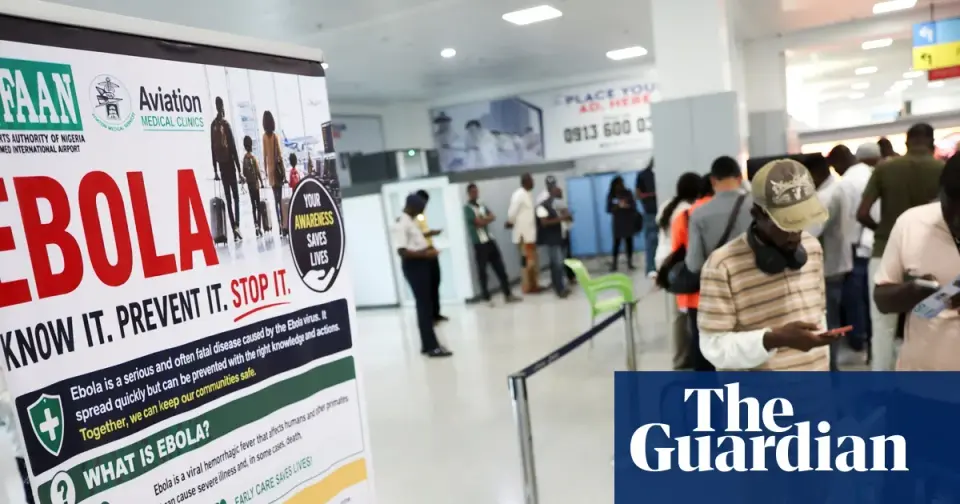
Nigeria has confirmed its first Ebola case in over a decade, involving the Ugandan-born wife of a Swiss diplomat in Abuja. The patient, who tested positive on October 20, is the fourth country affected by the current outbreak originating in the Democratic Republic of Congo (DRC). While the Swiss foreign ministry states she contracted the virus while traveling in Uganda, Ugandan officials previously claimed she visited the DRC. Health authorities are now investigating whether she crossed paths with a deceased Kenyan patient at Uganda’s Entebbe airport on October 3. The outbreak, caused by the rare Bundibugyo strain, has infected over 9,500 people and killed nearly half of them in the DRC alone, with no approved vaccine or treatment available.
Key points
- The patient is a 42-year-old Ugandan national and wife of a Swiss diplomat based in Abuja; she is currently in isolation and showing signs of improvement.
- Swiss officials confirmed she did not travel to the DRC, contradicting earlier claims by Ugandan authorities that she visited eastern DRC for business.
- Africa CDC is investigating a potential link between the Nigerian patient and a Kenyan patient who died after traveling through Uganda’s Entebbe airport on the same day (October 3).
- Nigeria has identified 44 close contacts for quarantine and is conducting genomic sequencing to determine if the infection is linked to other regional cases.
- The current outbreak is the most geographically widespread in history, spreading from the DRC to Uganda, Kenya, and now Nigeria, with no approved vaccine for the Bundibugyo strain.
- Kenya has confirmed nine cases linked to a single index patient, with no evidence of wider community transmission, though officials warn the situation remains critical.
Background
This development follows the confirmation of Kenya’s first Ebola death in early October, marking the third country affected by the DRC outbreak that began in May. Previous coverage noted that the Bundibugyo strain lacks an approved vaccine, complicating containment efforts. The DRC outbreak has become the deadliest in its history, with over 8,400 cases and 4,000 deaths as of early October. Uganda was declared Ebola-free in August after recording approximately 20 cases, but the current spread raises concerns about porous borders and cross-border transmission.
How outlets are covering it
The Guardian and BBC highlight a contradiction in travel histories: the Swiss foreign ministry states the patient did not visit the DRC, while Ugandan officials previously claimed she did. The Guardian and NPR emphasize the investigation into a potential link between the Nigerian patient and a deceased Kenyan patient at Entebbe airport, though WHO expert Marion Koopmans called this theory 'very speculative' without evidence of shared space. BBC and AP focus on the patient’s improvement and the Swiss embassy’s decision not to isolate staff, while The Guardian notes concerns about the ability to contain the outbreak given the conflicting accounts. All sources agree on the lack of an approved vaccine for the Bundibugyo strain and the need for regional coordination.
Why it matters
The confirmation of Ebola in Nigeria, Africa’s most populous country, marks the first West African case linked to the current East African outbreak, raising fears of further spread. The lack of an approved vaccine or treatment for the Bundibugyo strain complicates containment efforts. The conflicting accounts of the patient’s travel history highlight challenges in cross-border surveillance and the importance of rapid information sharing between countries to prevent transmission. The outbreak’s geographic spread underscores the need for strengthened regional surveillance and frontline health worker protection.
What to watch
Nigeria is conducting genomic sequencing to determine if the infection is linked to other cases and is tracing additional contacts beyond the initial 44. Health authorities are investigating whether the Nigerian patient and the deceased Kenyan patient crossed paths at Entebbe airport. The WHO is calling for regional vigilance and urging countries to strengthen surveillance and protect frontline health workers. Kenya is monitoring its nine confirmed cases, with no evidence of wider community transmission, but officials warn the situation remains critical.
- Ebola patient in Nigeria did not visit DR Congo, escalating concern over spread of virus The Guardian
- Health officials race to trace source of Nigeria's Ebola infection Reuters
- Authorities investigating whether first Kenya and Nigeria Ebola cases crossed paths NPR
- Nigeria confirms Ebola case in Abuja as woman who arrived from Uganda tests positive AP News
- Woman with Ebola in Nigeria confirmed as wife of Swiss diplomat BBC
Want the full story? Read the original reporting
Read on The Guardian