
BRICS Summit in New Delhi Tests Unity Amid Iran War Divisions
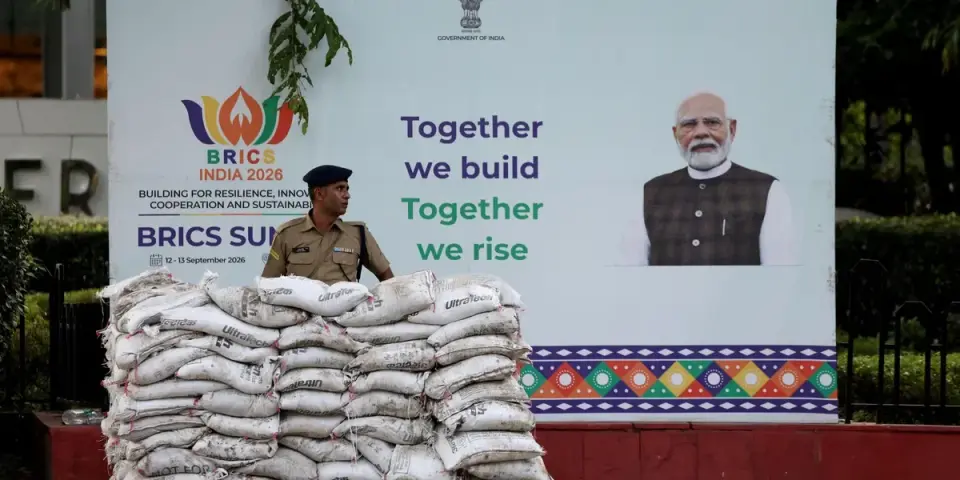
The 18th BRICS Summit in New Delhi faces severe internal fractures as the ongoing U.S.-Israeli war against Iran divides member states. India, the current chair, seeks to pivot the agenda toward economic cooperation and institutional reform to avoid a diplomatic collapse. While Russia and China push for stronger support of Iran, Gulf members like the UAE and Saudi Arabia are estranged due to Iranian attacks on their infrastructure. Key economic initiatives, including the BRICS Pay platform and potential central bank digital currency integration, remain central to the agenda despite geopolitical tensions.
Key points
- The summit is being held in New Delhi from September 11-13, 2026, with India assuming the BRICS chairmanship in January 2026.
- The U.S.-Israeli military campaign against Iran, which began in February 2026, has created a rift between BRICS members, particularly between Iran and Gulf states like the UAE and Saudi Arabia.
- India’s Prime Minister Narendra Modi recently visited Israeli Prime Minister Benjamin Netanyahu, a move that has caused discomfort among other BRICS members who view India’s stance as inconsistent with the bloc’s traditional solidarity with the Global South.
- The BRICS Strategy for Economic Partnership 2030 was finalized by trade ministers in August 2026 and is expected to be endorsed at the summit, focusing on trade, investment, and digital economy.
- BRICS Pay, a cross-border settlement platform launched earlier in 2026, is a major focus, aiming to reduce dependency on the U.S. dollar and SWIFT by integrating systems like China’s CIPS and India’s UPI.
- Iran’s President Masoud Pezeshkian is attending the summit and is expected to seek membership for Iran in the BRICS Bank, a move supported by Russia and China but likely opposed by Gulf members.
Background
The BRICS bloc, originally formed in 2009, has expanded to include 11 members, adding Iran, Saudi Arabia, and the UAE in recent years. This expansion has complicated internal consensus, especially as the bloc now includes countries on opposing sides of the Iran conflict. Previous summits, such as the 2025 meeting in Brazil, saw stronger unified condemnation of Israeli actions, but the 2026 summit is expected to produce a weaker outcome due to these deepening divisions. The U.S. has also increased pressure on BRICS through tariffs and sanctions, complicating the bloc’s efforts to de-dollarize the global economy.
How outlets are covering it
Responsible Statecraft emphasizes the diplomatic challenge for India as chair, noting that the bloc’s divisions are more severe than in previous years due to the active conflict. It highlights India’s attempt to reframe BRICS as a forum for 'Building Resilience and Innovation for Cooperation and Sustainability' to sidestep geopolitical rivalries. NDTV focuses on the logistical and diplomatic aspects of the summit, including the high-level security measures in Delhi and the bilateral meetings between Modi, Putin, and Pezeshkian. It notes the warming of India-China ties, which is crucial for the economic agenda, but does not delve as deeply into the internal bloc fractures as Responsible Statecraft. The two sources agree on the economic focus but differ in their emphasis on the political divisions caused by the Iran war.
Why it matters
The BRICS Summit is a critical test for the bloc’s ability to maintain unity and advance its economic agenda in the face of major geopolitical conflicts. The outcome will signal whether BRICS can function as a cohesive alternative to Western-led institutions or if it will remain fragmented. The success of initiatives like BRICS Pay and the BRICS Bank could have significant implications for the global financial system and the U.S. dollar’s dominance. Additionally, the summit’s handling of the Iran war will reflect the bloc’s capacity to manage internal disagreements and project a unified stance on global issues.
What to watch
The summit is expected to conclude with a final declaration that may avoid explicit mention of the Iran war to maintain consensus. The endorsement of the BRICS Strategy for Economic Partnership 2030 and progress on BRICS Pay and central bank digital currency integration will be key indicators of the bloc’s economic progress. Future summits will likely continue to grapple with the geopolitical divisions caused by the Iran war and U.S. pressure, testing the bloc’s long-term viability and cohesion.
- The Iran war looms large as BRICS leaders gather in New Delhi Responsible Statecraft
- India hosts BRICS summit as Iran war tests bloc unity Reuters
- New Delhi residents face traffic chaos as India prepares to host BRICS summit The Hill
- BRICS Summit marks dual milestones and tests limits of cohesion Nikkei Asia
- India Hosts World Leaders At BRICS Amid 2 Wars. What To Expect NDTV
Want the full story? Read the original reporting
Read on Responsible Statecraft