
Nepal-Tibet Flood Toll Tops 1,000 as UN Warns of Escalating Glacial Risks
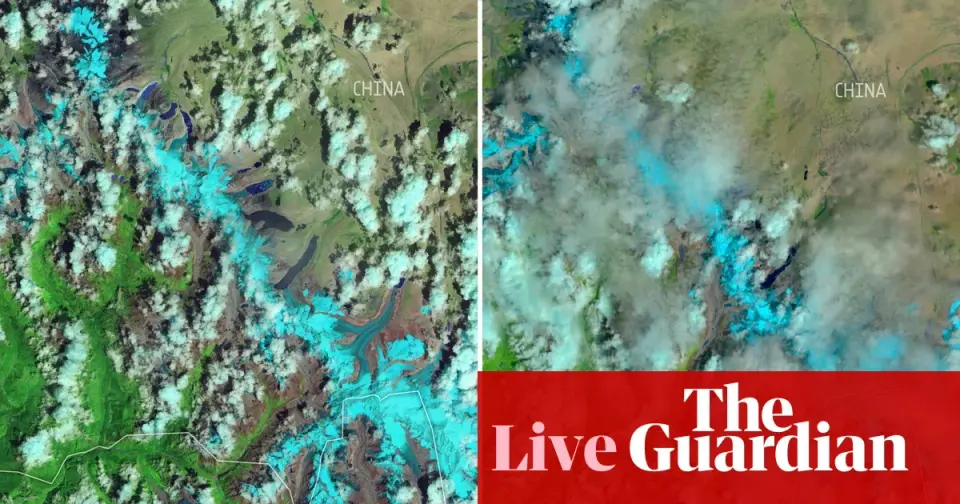
A glacial collapse near Langtang Lirung on August 27, 2026, triggered catastrophic floods along the Nepal-Tibet border, killing at least 1,066 people and leaving nearly 4,000 missing. The disaster has destroyed 10% of Nepal's power capacity and left 2.2 million tonnes of debris. UN officials warn that millions remain at risk from future glacial floods as climate change accelerates glacier melt, with the number of dangerous glacial lakes now significantly higher than the 47 identified in 2020.
Key points
- The death toll stands at 1,066, with 1,050 in Nepal and 16 in Tibet, while nearly 4,000 people remain missing, including 592 foreign nationals.
- The flood surge, triggered by a glacier collapse, rose nine meters in 30 minutes in Rasuwa district, overwhelming communities with little warning.
- UN assistant secretary-general Kanni Wignaraja warned that technology cannot prevent future losses along massive river systems, citing updated data showing millions at risk.
- Nepal's finance minister estimates rebuilding costs at $4-5 billion, nearly 10% of the national economy, while 43,000 women and girls require urgent humanitarian assistance.
- China and Nepal previously met in May 2026 to discuss border disaster risks, but Nepali officials reported insufficient information sharing on glacier hazards.
Background
The August 2026 disaster follows a pattern of increasing Himalayan instability. In 2024, a glacial lake outburst near Mount Everest destroyed Thame village, and in July 2025, floods washed away the Friendship Bridge on the Nepal-China border. ICIMOD reports that glaciers in the Hindu Kush Himalaya are melting at double the rate of pre-2000 levels, with up to 27 meters of ice lost since 1975. These events highlight the region's vulnerability as a 'Third Pole' holding the largest ice volume outside the poles, feeding ten major river systems that sustain nearly two billion people downstream.
How outlets are covering it
The Guardian emphasizes the immediate humanitarian crisis and infrastructure damage, noting that 10% of Nepal's power capacity was lost and that riverbanks may become uninhabitable. Time Magazine, through Nepali MP Sumnima Udas, frames the disaster as a 'climate injustice,' arguing that Nepal, which produces only 0.1% of global emissions, bears the brunt of industrialized nations' fossil fuel use. The Anchorage Daily News draws parallels to Alaskan geologic hazards, noting that the Nepal landslide generated seismic waves detectable 5,000 miles away, and highlights the 'cascading hazard' nature of such events. News Decoder provides broader context on Himalayan warming, noting temperatures have risen 1.5°C, and warns that while short-term risks are flooding, long-term threats include water scarcity for two billion people. Outlets disagree on the primary trigger: early reports suggested an earthquake, but seismologists and the USGS confirmed it was a glacial collapse, though the event registered as a magnitude 5.2 seismic shock.
Why it matters
The disaster underscores the accelerating pace of climate change in the Himalayas, where glaciers are melting faster than monitoring systems can track. With 47 dangerous glacial lakes identified in 2020 and the real number now significantly higher, the risk of future outbursts is escalating. The economic impact, estimated at $4-5 billion, threatens to set Nepal back by a decade, diverting resources from development. The event also highlights the inadequacy of current early warning systems, with communities receiving only six to seven minutes of notice, and the need for international cooperation and climate finance to address the root causes of glacial instability.
What to watch
Nepal is working with international experts for rescue operations, including DNA testing and life-detecting machines, while China has pledged continued support with relief supplies. The UN is compiling updated data on glacial lake risks, and Nepal is calling for immediate climate finance and investment in early warning systems. Rebuilding efforts will face significant challenges due to 2.2 million tonnes of debris and isolated communities, with 1.6 million people affected across five districts. The disaster may accelerate regional cooperation between Nepal, China, and India on hazard monitoring and risk reduction, though previous efforts have been hampered by insufficient information sharing.
- Nepal-Tibet floods: millions at risk from glacial floods in Himalayas in years to come, UN warns, as death toll passes 1,000 – as it happened theguardian.com
- Opinion: Shock waves from Nepal’s geological catastrophe reached Alaska, and so should the lessons Anchorage Daily News
- Disaster in Nepal Shows Mountains Are Becoming Less Stable Bloomberg.com
- The Danger of Ignoring Nepal Time Magazine
- Decoder Replay: When glaciers melt off the mountains News Decoder
Want the full story? Read the original reporting
Read on theguardian.com