
Study: Older Adults Face Deadly Heat Risks at Much Lower Temperatures Than Younger People
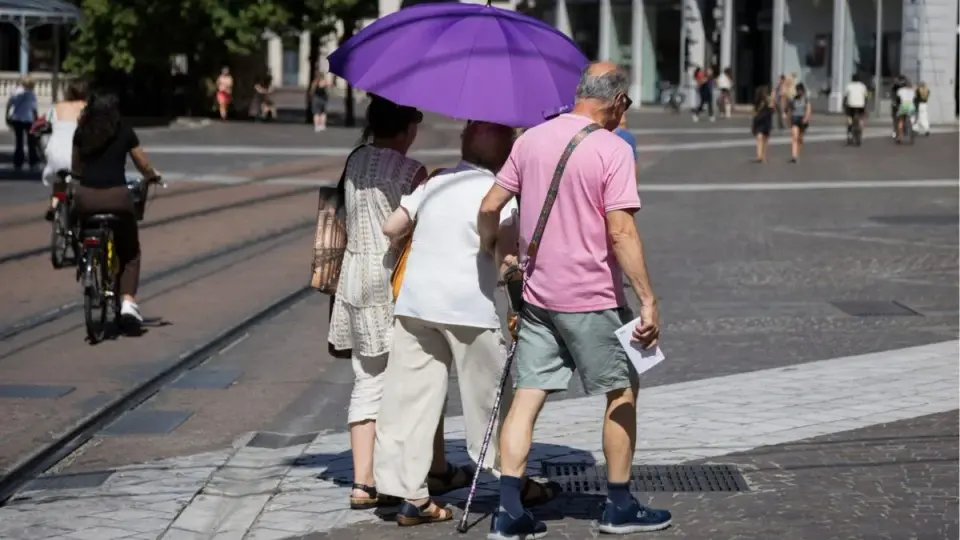
A new study in The Lancet Planetary Health reveals that people aged 60 and over face dangerous heat exposure at significantly lower temperatures than younger adults. At just 1.5 degrees Celsius of global warming, 290 million older adults could experience over 180 hours of dangerous heat annually, a risk level that young adults only face at 4 degrees Celsius of warming. This finding suggests previous climate models underestimated risks for the aging population, which is projected to double by 2050.
Key points
- Research led by Stanford University’s Qinqin Kong shows that age-specific heat tolerance dramatically changes projections of future heat exposure.
- At 1.5 degrees Celsius of warming, 22% of the global population aged 60 and over (approx. 290 million people) would face at least 180 hours of dangerous heat per year.
- Young adults would not reach this same level of heat exposure until global warming reaches 4 degrees Celsius.
- The global population aged 60 and over is expected to double from 1.1 billion in 2021 to 2.1 billion by 2050, with most residing in low- and middle-income countries.
- Older adults are more vulnerable due to reduced sweat production, poorer circulation, and higher rates of underlying health conditions like heart and kidney disease.
- The study warns that parts of the tropics and subtropics, including the Indo-Gangetic Plain and the Persian Gulf coast, could become uninhabitable for older adults at higher warming levels.
Background
This study builds on earlier concerns about heatwaves affecting vulnerable populations, such as the 2026 heat dome in the central U.S. that put 70 million people under advisories. It also follows a July 2026 Lancet Public Health report that first highlighted the heightened risks for older adults at lower temperatures. The findings underscore the urgency of addressing climate change, as the world is currently on track for 2.8 degrees Celsius of warming by the end of the century.
How outlets are covering it
Gizmodo and The Guardian both emphasize the alarming gap between previous climate models and the reality of age-specific vulnerability, noting that older adults face risks at 1.5 degrees Celsius that young adults only face at 4 degrees Celsius. The ABC News highlights the practical implications for Australia, where climate scientist Sarah Perkins-Kirkpatrick warns that the country is 'not quite prepared' for extreme heat events in major cities like Sydney and Melbourne. The Guardian also cites UK Health Security Agency data, noting that 2026’s heatwaves in Britain are likely to cause the highest number of heat-related deaths in a year, with 2,877 excess deaths already recorded in May and June. All sources agree that the findings call for targeted heat action plans and better healthcare preparedness for older adults.
Why it matters
As the global population ages and temperatures rise, the failure to account for age-specific heat tolerance in climate models could lead to severe underestimation of future health risks. This study provides a clear call to action for policymakers to develop age- and region-specific heat adaptation plans, improve healthcare resources, and prioritize greenhouse gas emissions reductions to protect vulnerable populations.
What to watch
Researchers and public health officials are urging the development of targeted heat action plans that account for age and regional differences. There is also a push for better training and resourcing of healthcare staff to handle heat-related emergencies, particularly in low- and middle-income countries where the majority of the aging population resides. The study’s authors hope their findings will lead to more effective adaptation strategies and a greater emphasis on reducing carbon emissions to limit future warming.
- Extreme Heat May Be Even More Dangerous to Older Adults Than We Thought Gizmodo
- Extreme heat more dangerous for people 60 and over than previously thought The Guardian
- 'Wake-up call': Danger from heatwaves 'underestimated' for people over 60 ABC News & Headlines – Australian Broadcasting Corporation
- Each degree of warming could add a month of intolerable heat for 1 billion people Phys.org
- Older adults face significantly higher health risks from rising temperatures, with extreme heat placing greater strain on the body and increasing the likelihood of serious illness and death among the elderly, according to a US modelling study. I via ANC 24/7 Link facebook.com
Want the full story? Read the original reporting
Read on Gizmodo