
Jo Malone donates £100k to accelerate Medical Detection Dogs' electronic cancer-sniffing tech
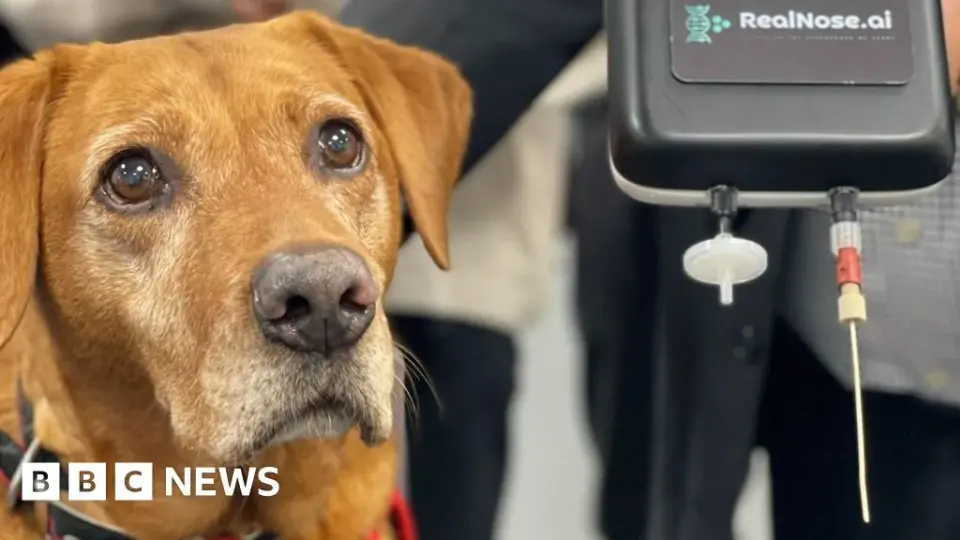
Perfume entrepreneur Jo Malone has donated £100,000 to Medical Detection Dogs (MDD) to accelerate the development of an electronic nose capable of detecting prostate cancer. The funding will support the installation of a 'SniffSpace' facility in Buckinghamshire, allowing MDD's trained dogs to process more urine samples and generate robust data for training artificial intelligence. This technology, developed in partnership with quantum physicist Dr Andreas Mershin, aims to replicate the superior scent-detection abilities of dogs, which possess 300 million sensory receptors compared to humans' five million. The initiative seeks to create scalable diagnostic tools for the NHS, potentially revolutionizing early cancer diagnosis.
Key points
- Jo Malone donated £100,000 to Medical Detection Dogs (MDD) to fund the development of an electronic cancer-detecting nose.
- The donation will finance a 'SniffSpace' facility that allows dogs to sniff more samples in a secure, automated environment, generating data for AI training.
- The technology is a collaboration between MDD and quantum physicist Dr Andreas Mershin, using protein odorant receptors and AI to analyze scent signatures in urine.
- Dogs have 300 million sensory receptors versus humans' five million, enabling them to detect biochemical changes associated with disease far more effectively than current technology.
- The prototype electronic nose is currently analyzing 500 urine samples from Milton Keynes Hospital, with results to be compared against the dogs' accurate detections.
- MDD chief executive Dr Claire Guest described the donation as 'game-changing' for decoding scent signatures and developing reliable diagnostic tools.
Background
Medical Detection Dogs has been collaborating with Dr Andreas Mershin for over a decade to develop an electronic nose modeled on canine scent-detection abilities. The charity's dogs have successfully identified prostate cancer in urine samples, demonstrating the potential of olfactory diagnostics. This latest development follows a demonstration for Queen Camilla, where a prototype successfully detected prostate cancer, highlighting the technology's promise for future medical applications.
Why it matters
This donation represents a significant step toward translating biological scent-detection capabilities into scalable, electronic medical devices. By leveraging the superior olfactory sensitivity of dogs and advanced quantum physics, the project aims to provide the NHS with a reliable, non-invasive tool for early cancer diagnosis, potentially improving patient outcomes and reducing the burden on traditional screening methods.
What to watch
MDD will prepare a team of dogs for training on the new SniffSpace equipment to generate the necessary dataset. Researchers will then compare the electronic nose's results with the dogs' detections to refine the AI algorithms. The partnership between MDD and RealNose.ai aims to establish formal collaborations for creating diagnostic devices for the NHS, initially focusing on prostate cancer before exploring other diseases.
Want the full story? Read the original reporting
Read on BBC