
1975 BBC Report Exposes Global Trade in Stolen Antiquities
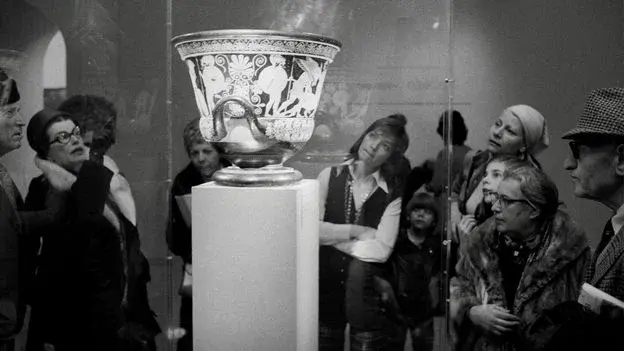
A 1975 BBC investigation revealed how professional grave robbers in Italy and South America looted ancient sites to supply a lucrative global market. The report highlighted the Metropolitan Museum of Art's purchase of a stolen Greek vase and the lack of due diligence by buyers, a practice that persisted until the artifact was returned to Italy in 2008.
Key points
- In 1972, the Metropolitan Museum of Art purchased an ancient Greek vase for $1.2 million, a sum equivalent to $9.6 million today, but the item was later identified as illegally excavated and smuggled from Italy.
- BBC reporter John Percival investigated the necropolis near Cerveteri, Italy, where professional grave robbers known as tombaroli dug for high-value artifacts, leading to a surge in illegal excavations.
- The 1975 report described a 'Wild West' environment in South America, particularly Ecuador, where unexplored burial mounds allowed looters to operate without detection and smuggle gold artifacts out of the country.
- Buyers, including museums and auction houses, often purchased artifacts without verifying their provenance, focusing only on authenticity, which fueled the demand for stolen goods.
- The Metropolitan Museum of Art returned the controversial vase to Italy in 2008 after it was linked to convicted antiquities smuggler Giacomo Medici, though the broader trade in stolen antiquities continues.
Background
This story revisits a 1975 BBC investigation into the illicit antiquities trade, a topic that remains relevant today as looting continues to damage historical knowledge. The archive contains no related background on this specific historical event, but the current news cycle includes unrelated coverage of 1970s luxury cars and video game adaptations of tomb-raiding themes, which do not provide direct context for the 1975 report.
Why it matters
The 1975 report highlights the enduring impact of the antiquities trade on historical preservation and the ethical responsibilities of museums. It underscores how the demand for stolen artifacts continues to drive the destruction of archaeological sites, erasing knowledge about the past and complicating the recovery of cultural heritage.
What to watch
While the 1975 report is a historical account, the ongoing trade in stolen antiquities remains a global issue. Modern efforts to combat looting include stricter laws, satellite imagery monitoring, and the return of stolen artifacts to their countries of origin, but the market for antiquities persists.
Want the full story? Read the original reporting
Read on BBC