
Iran’s Dawn Executions Spark Anti-Religious Backlash and UN Condemnation
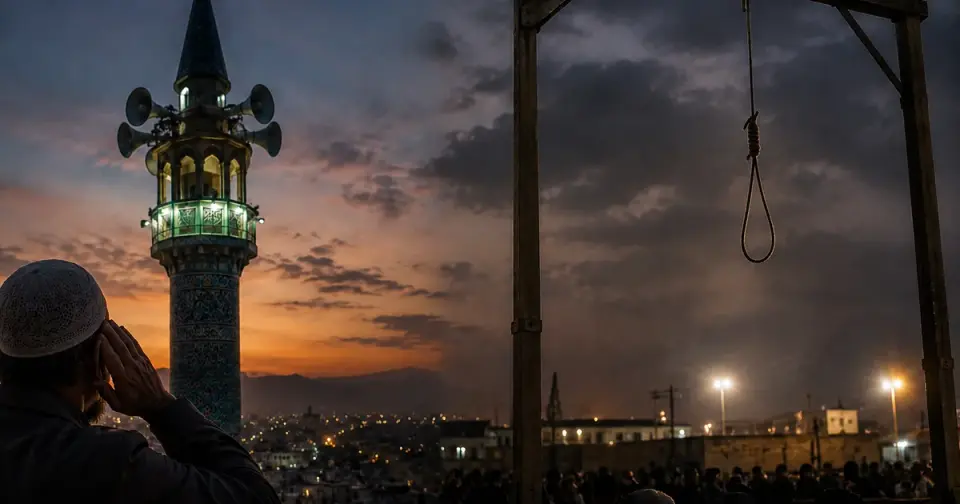
Iran has executed at least 56 people on national security charges since March 2026, with 27 linked to January protests. The surge in pre-dawn hangings has triggered a social media backlash against Islamic symbols, prompting an IRGC-linked campaign to prosecute critics. UN officials condemned the executions as tools of fear, citing due process violations and torture-tainted confessions.
Key points
- UN High Commissioner Volker Türk condemned the rise in executions, noting 56 deaths since March and over 100 others at risk.
- Iranian social media users have linked the dawn adhan (call to prayer) to executions, leading to anti-Islam posts.
- The IRGC-affiliated Fars News Agency launched a campaign demanding prosecution of those insulting Islamic sanctities online.
- Critics highlight that 12 defendants were sentenced to death in a single three-hour closed-door hearing.
- Iran remains the world’s second-most prolific executioner, with 2,159 deaths recorded in 2025.
Background
This escalation follows the 40-day war with the US and Israel and widespread January protests, which resulted in thousands of deaths and detentions. Earlier coverage noted that authorities have used public executions in Isfahan to deter unrest, while a UN fact-finding mission condemned the lack of fair trials. The current crackdown is part of a broader strategy to suppress dissent amid economic crisis and geopolitical tensions.
How outlets are covering it
Iran International and the UN News emphasize the human rights violations, specifically the use of torture to extract confessions and the lack of due process in expedited trials. The BBC and New York Post highlight the scale of the executions, noting that Iran is the second-most prolific executioner globally. While Western outlets focus on the political and security implications, Iran International details the domestic cultural backlash, where citizens are rejecting religious symbols associated with state violence. The IRGC’s response, reported by Iran International, contrasts sharply with the UN’s call for abolition, as hardliners demand harsher penalties for online dissent.
Why it matters
The executions signal a shift toward using capital punishment as a tool of state terror to suppress dissent during a period of economic and political instability. The backlash against religious symbols indicates a deepening crisis of legitimacy for the Islamic Republic, while the IRGC’s push for prosecution of critics suggests a tightening of control over public discourse.
What to watch
Authorities may increase prosecutions of online critics under Article 513 of the Islamic Penal Code. The UN is expected to continue urging Iran to halt executions, while the IRGC may intensify its campaign against perceived 'insults' to Islamic sanctities. Further executions of the 100+ individuals currently at risk are likely as the regime seeks to deter renewed unrest.
- Anti-Islam posts follow Iran's dawn executions, sparking hardline backlash Iran International
- UN rights chief alarmed by rise in Iran executions since March bbc.com
- UN rights chief says Iran executed at least 56 people since March Reuters
- Sharp spike in executions, death sentences in Iran UN News
- UN rips ‘deeply troubling’ Iran for executing at least 56 people since start of war: ‘Has no place in our world’ New York Post
Want the full story? Read the original reporting
Read on Iran International