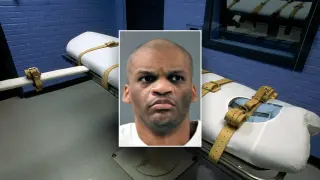
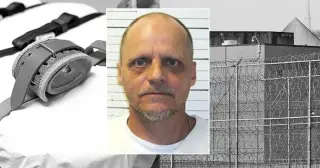
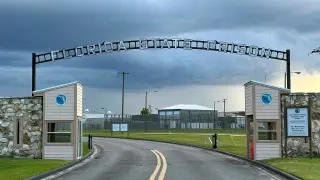
Texas executed LeJames Norman, 40, by lethal injection for the 2005 killings of three people during a botched Edna burglary; after pleading guilty to capital murder, he declined to give final words as the warden asked, and died about 6:44 p.m. at Huntsville Unit. His co-defendant Ker’Sean Ramey faces execution next week, and Norman was the fifth inmate Texas has executed this year.
LeJames Norman, 40, was executed by lethal injection in Huntsville, Texas, for the 2005 triple murder during an attempted robbery inside a neighbor’s Edna home that killed Samuel Roberts (24), Tiffani Peacock (18) and Celso Lopez (38). Norman had pleaded guilty to capital murder; Ker’Sean Ramey was also convicted and faces a separate death sentence. The U.S. Supreme Court denied a stay for Norman’s execution. The coverage also notes a Georgia death-row case that was halted and provides context on the broader ongoing use of the death penalty in 2026.
Texas executed LeJames Norman, the state’s fifth death-penalty execution this year, for the 2005 killings of three people; Georgia’s scheduled execution of Stacey Humphreys was halted by a judge tied to a new abuse-resentencing law, while Florida remains the nation’s busiest death chamber with more than half of this year’s 25 executions.
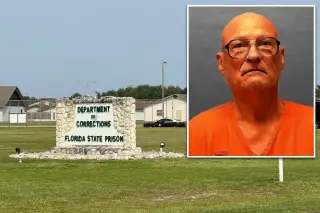
Florida executed Harold Gene Lucas, 74, by lethal injection for the 1976 murder of Jill Piper, a 16-year-old, marking the state’s 14th death-penalty execution this year. Lucas had five death sentences, did not pursue last-minute appeals, and told the warden, “No” as he faced death; Gov. DeSantis touted the ruling as delivering justice and highlighted Florida’s leading role in US executions.
Sunao Takami, 58, who killed five people by setting fire to an Osaka pachinko parlor in 2009, was hanged in Japan—marking the first execution under Prime Minister Sanae Takaichi’s government after a 2011 murder/arson conviction and a 2016 Supreme Court upholding of the death sentence. The case highlights Japan’s continued use of capital punishment amid global criticism and calls for greater transparency, as executions are carried out in secrecy. Japan remains one of the few G7 nations with the death penalty, alongside the United States, a point noted in the coverage.
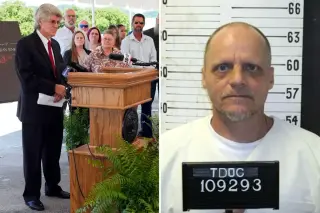
Anthony Hines, a 66-year-old Tennessee death-row inmate, was executed by lethal injection for murdering Catherine Jenkins in 1985. His last words were directed to his son, Dennis Jenkins, who witnessed the execution at Riverbend Maximum Security Institution in Nashville. Dennis said he hopes Hines felt severe pain. Hines had unsuccessfully appealed, and the day also marked the first triple execution in the U.S. in 16 years, with inmates in Oklahoma and Alabama also executed. The case underscores ongoing debates over the death penalty.
Oklahoma executed Carlos Cuesta-Rodriguez, 70, for murdering his common-law wife, and Tennessee followed an hour later with Darrell Hines, 66, for a 1985 murder. A third Alabama execution, Jeremy Williams, 42, who raped and killed a five-year-old, was scheduled but not carried out. If all three proceed, it would be the first three-execution day in the US in more than 15 years, signaling renewed appetite for capital punishment; all three were to be by lethal injection, though Alabama’s nitrogen-gas method was halted by a federal judge, and last year’s total was driven in large part by Florida’s activity.
Three inmates—Anthony Darrell Hines (Tennessee), Jeremy Williams (Alabama) and Carlos Cuesta-Rodriguez (Oklahoma)—are slated for execution on Thursday, signaling a rise in U.S. capital punishment as Florida drives much of the surge under Gov. Ron DeSantis; the trend comes amid waning public support for the death penalty and a drop in the number of death sentences nationwide.
Anthony “Darrell” Hines, on death row for four decades, is set for a Thursday lethal-injection execution in Tennessee, the first since a May botch that left a backup IV unresolved and witnesses describing the prisoner’s suffering. In the wake of that failed attempt, state officials have not disclosed whether Dr. Mark Walton Fowler will participate in the next execution, prompting questions about his qualifications and the doctor’s role in upcoming deaths.
Public executions resurfaced in Iran as authorities widen a crackdown after months of war and mass protests; at least 56 people have been executed on national-security charges since March, including 27 linked to January protests, with three young men hanged in Isfahan amid a crane-equipped public square and heavy security, while families allege torture and forced confessions and rights groups warn more are at risk.
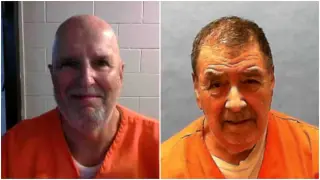
Florida carried out its 11th execution of the year and set to execute a second inmate on the same day—the first time two inmates were put to death in one day—amid Gov. DeSantis’s aggressive push on capital punishment. The day featured James Duckett, who helped kill 11-year-old Teresa McAbee in 1987, and Dominick Occhicone, scheduled to die for a 1986 Pasco County family massacre; DNA testing was inconclusive and protests formed outside the prison as the state advances its record pace.
Former Lake County police officer James Aren Duckett was put to death by lethal injection in Florida, the first of two planned executions on the same day, with 80-year-old Dominick Occhicone slated for the second. Duckett, who raped and drowned 11-year-old Teresa McAbee in 1987, saw DNA testing on old evidence yield inconclusive results. The move comes amid Gov. DeSantis’s accelerated death-penalty pace, marking Florida’s first back-to-back executions since 2017.
Two men were publicly executed in Isfahan’s Alikhani Square as part of a case linked to January protests, with four total executions in the group so far and eight others still under death sentences; UN human rights experts criticized the trials for lacking fair-trial standards and called for halting the executions, underscoring ongoing international concern about Iran’s crackdown.
Florida is poised to carry out its first double execution in the modern era, with James Duckett and Dominick Occhicone scheduled within six hours; if completed, it would mark the first time since 2017 that a death-penalty state has two executions in a single day, amid criticism of secrecy and the rapid pacing of death-penalty decisions under Gov. Ron DeSantis. Advocates warn haste raises the risk of botched deaths and protocol violations even as Florida has led the nation with executions in recent years, and the cases raise ongoing questions about innocence, age, and due process.
Florida is set to carry out two lethal injections on Tuesday, six hours apart—the first time since 2017 a U.S. state schedules two executions in one day. Ex-police officer James Aren Duckett, 68, and 80-year-old Dominick Anthony Occhicone would be executed at noon and later that day, respectively, bringing Florida’s total executions this year to 11 and 12. The Florida Supreme Court denied appeals for both; Duckett’s DNA evidence yielded inconclusive results, and Occhicone faces health issues. The governor, Ron DeSantis, has overseen a record pace of executions, with 19 in 2025 and 31 in two years. Floridians for Alternatives to the Death Penalty opposes the moves. If carried out, Occhicone would become the oldest inmate executed in Florida’s modern history, and the second-oldest in U.S. history, following an 83-year-old executed in Alabama in 2018. Florida’s executions are carried out by a three-drug lethal-injection protocol.”,