
EU-Canada 'associate membership' proposal sparks debate over new transatlantic alliance
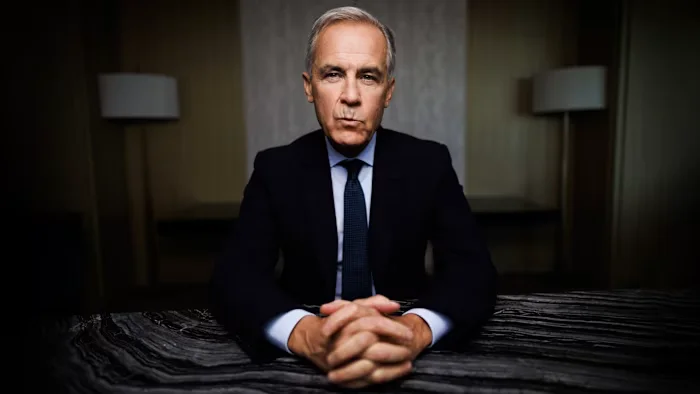
European Commission President Ursula von der Leyen proposed that Canada become the 'first associate member' of the EU, a status not currently defined in EU treaties. Canadian Prime Minister Mark Carney welcomed the idea as an 'alliance for the future' to counter US pressure, while Finance Minister François-Philippe Champagne suggested the UK should join. The proposal lacks a legal blueprint, with experts noting it resembles existing 'second circle' concepts or tailored frameworks like the EU-Swiss model, rather than full membership.
Key points
- Von der Leyen proposed Canada as the first 'associate member' of the EU, citing shared values on AI, climate, and Ukraine.
- Mark Carney embraced the idea, framing it as a path to 'collective resilience' against US unpredictability.
- François-Philippe Champagne urged the UK to 'team up' with Canada in this new alliance, citing shared values.
- The term 'associate member' is not in EU treaties, requiring potential treaty reform or a new legal framework.
- Trump called the idea 'laughable' and threatened further tariffs if the alliance proved 'hostile' to the US.
Background
This development follows escalating trade tensions between the US and Canada, including collapsed trade talks and tit-for-tat tariffs. It also comes after Iceland rejected further EU accession negotiations, prompting the EU to seek new partnerships. The concept of a 'second circle' of countries, discussed since the Jacques Delors era, and Macron's European Political Community, provide historical precedents for such arrangements.
How outlets are covering it
The Financial Times article was behind a paywall, so its specific analysis is unavailable. The Guardian emphasized the lack of a legal blueprint for 'associate membership,' noting it is a 'political hypothesis' and comparing it to the EU-Swiss model or 'integrated partnership' concepts. It highlighted that Canada's focus on 'deep cooperation' without single-market access differs from the UK's post-Brexit challenges. The BBC focused on the practical implications, quoting Champagne's call for UK involvement and Carney's vision for an alliance of 'middle powers.' It noted the potential for other nations like Australia to join such a framework. All sources agree the proposal is a response to US pressure, but differ on its feasibility and scope.
Why it matters
The proposal signals a potential shift in transatlantic alliances, with the EU and Canada seeking to diversify away from US dependence. It could set a precedent for new types of international partnerships, affecting trade, security, and regulatory cooperation. For the UK, it raises questions about its post-Brexit positioning and potential for closer ties with Europe and Canada.
What to watch
Negotiations on the specifics of 'associate membership' are expected to begin, though no formal process has been defined. The UK may explore joining the alliance, as suggested by Champagne. The US may respond with further tariffs or diplomatic pressure if it views the alliance as hostile. The outcome will depend on whether the EU can create a viable legal framework for such a status.
- Mark Carney and the limits of defying Donald Trump Financial Times
- The EU’s Canada offer is more mood than reality but it could hint at a future geometry for the bloc The Guardian
- Café Europa newsletter: Canada’s love-in with the EU The Economist
- UK should 'team up' with Canada in new Europe alliance, Canadian minister says BBC
- This Week in Canada: Mark Carney’s EU Fever Dream The Free Press
Want the full story? Read the original reporting
Read on Financial Times