
EU Proposes Unprecedented 'Associate Member' Status for Canada to Counter US Tariffs
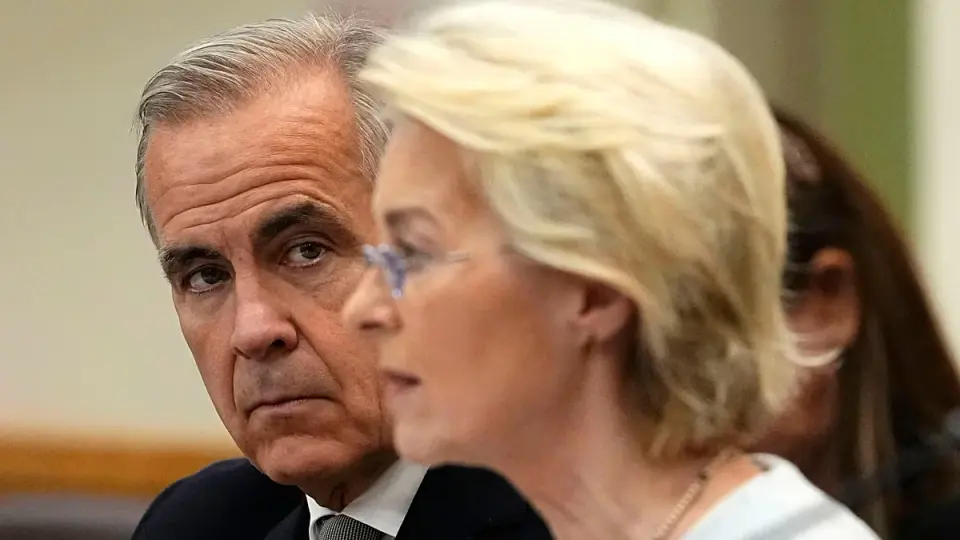
The European Commission has formally invited Canada to become the EU's first 'associate member,' a new status designed to deepen strategic and economic ties without granting full membership. This move follows the collapse of US-Canada trade talks and aggressive tariffs from Washington. The proposed partnership would integrate Canada into EU defense, energy, and technology sectors, though its legal framework remains undefined and requires approval from all 27 member states.
Key points
- Ursula von der Leyen formally invited Canada to become the EU's first associate member, a status not currently defined in EU treaties.
- The initiative follows the collapse of US-Canada trade negotiations in August 2026 and the imposition of 25-50% tariffs by the US administration.
- Associate membership would allow Canada to participate in EU defense procurement, Arctic projects, and AI cooperation, but it would not grant voting rights in the European Parliament.
- The partnership aims to secure critical minerals and energy for the EU while providing Canada with an alternative to its heavy reliance on US exports.
- A summit in Montreal is scheduled for late October to define the legal framework and concrete terms of the new alliance.
Background
In mid-September 2026, the EU Commission announced its intent to open the door for Canada to become an associate member, signaling a shift toward deeper cooperation in security and technology. This followed earlier discussions where Canadian Prime Minister Mark Carney welcomed the move as a way to boost strategic autonomy. The proposal emerged as Canada sought to diversify its economic relationships away from the United States, which accounted for over 70% of its merchandise exports in 2025.
How outlets are covering it
Euronews highlights the legal ambiguity of the 'associate member' status, noting that it does not exist in current EU treaties and will require a new legal framework. The outlet emphasizes the strategic necessity of the move for both sides, with Canada seeking protection from US sovereignty threats and the EU seeking stable sources of critical minerals. The Globe and Mail focuses on the rhetorical dimension, praising Mark Carney's speech in Strasbourg as a pivotal moment that redefines Canada's geopolitical stance through eloquent diplomacy. In contrast, the Toronto Star raises concerns about whether Canada is sacrificing its unique national identity by aligning too closely with European structures, suggesting that the move might overshadow Canada's distinct role in global affairs.
Why it matters
This development marks a significant shift in transatlantic relations, creating a new model for non-EU partnerships that could influence future alliances with countries like the UK, Australia, and Japan. For the EU, it reduces dependency on Russian energy and Chinese supply chains. For Canada, it offers a buffer against US trade aggression and sovereignty threats, potentially reshaping the global economic order by forming a bloc of like-minded democracies.
What to watch
The primary focus will be the EU-Canada summit in Montreal on October 29-30, 2026, where leaders aim to clarify the definition of 'associate membership' and present a concrete proposal. Negotiations will need to address regulatory alignment and secure unanimous approval from all 27 EU member states, a process that could take years. Success in this partnership may lead to a broader alliance of non-EU democracies, while failure could leave Canada vulnerable to continued US pressure.
- What is an EU 'associate member'? Why is Canada the first? Euronews.com
- As Carney Seeks New Partners for Canada, He Knows the Limits nytimes.com
- Trump administration muses about hitting Canada with EU-style tariffs over Carney’s EU pivot Yahoo News Canada
- Opinion: Mark Carney marks the return of the consequential political speech The Globe and Mail
- Haroon Siddiqui: No, Mark Carney, Canada is not the most European non-European country Toronto Star
Want the full story? Read the original reporting
Read on Euronews.com