
SCO Summit in Bishkek: Leaders pose for unity photo while institutional reforms stall
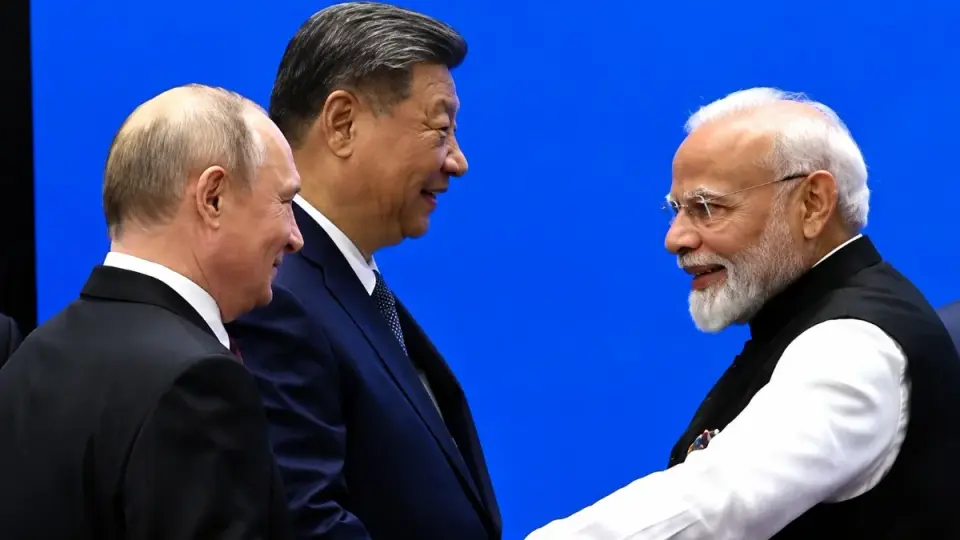
The 26th Shanghai Cooperation Organisation (SCO) summit in Bishkek, Kyrgyzstan, concluded with a symbolic display of unity among India, Russia, and China, but yielded mixed results on institutional reforms. While leaders posed for a joint photograph, the bloc failed to launch a proposed Development Bank and omitted Ukraine from its final declaration, despite bilateral discussions on the conflict.
Key points
- PM Modi, President Putin, and President Xi Jinping shared a handshake moment during the official family photo op, which the Kremlin framed as 'strategic alignment.'
- The summit adopted 28 documents, including amendments to the SCO Charter and regulations for new security centers, but did not finalize the SCO Development Bank.
- Kazakhstan and Kyrgyzstan competed to host the proposed Development Bank, leaving its governance and capital commitments unresolved.
- The final Bishkek Declaration condemned strikes on Iran but did not mention the war in Ukraine, despite Modi’s bilateral appeal to Putin for peace.
- Pakistan has assumed the SCO chairmanship for 2026-2027 and will host the next summit in Islamabad.
Background
The SCO marks its 25th anniversary this year, expanding to 10 members and 15 dialogue partners. Previous coverage noted the bloc’s push for a multipolar world order and economic integration, though analysts warned of internal disagreements and limited substantive breakthroughs. India has maintained strategic autonomy, balancing ties with Russia and the West, while the summit took place amid ongoing conflicts in Ukraine and the Middle East.
How outlets are covering it
India Today emphasized the symbolic 'bonhomie' between Modi, Putin, and Xi, highlighting the visual diplomacy as a counter to Western influence. Al Jazeera focused on the reaffirmation of Russia-China ties amid 'unpredictable' global conditions, noting that while Xi and Putin discussed economic cooperation, they only touched on the Ukraine war 'in passing.' The Times of Central Asia provided a critical institutional analysis, pointing out that while the summit produced 28 documents, the failure to launch the Development Bank and the omission of Ukraine from the declaration revealed the bloc’s internal divisions and lack of consensus on major geopolitical issues.
Why it matters
The summit underscores the SCO’s role as a platform for non-Western powers to coordinate on security and economic issues, but also highlights its limitations. The inability to agree on the Development Bank and the exclusion of Ukraine from the final declaration suggest that the bloc remains fragmented by national interests, particularly regarding the Russia-Ukraine war and the Middle East conflict. The symbolic unity displayed by Modi, Putin, and Xi may signal a desire for a multipolar order, but the lack of concrete institutional progress indicates that the SCO’s influence remains constrained by internal disagreements and external pressures.
What to watch
Pakistan will host the next SCO Council of Heads of State summit in Islamabad, where it may push for clearer outcomes on the Development Bank and security cooperation. The bloc will continue to navigate tensions between its members, particularly regarding the Ukraine war and the Middle East, while seeking to deepen economic integration and transport connectivity. The outcome of the Development Bank negotiations will be a key indicator of the SCO’s ability to translate political rhetoric into concrete economic institutions.
- PM Modi, Putin and Xi make a statement with handshake moment at SCO Summit India Today
- Putin Turns Again to China’s Xi as Russia’s Clout Crumbles WSJ
- India's Modi tells Russia's Putin that the war in Ukraine must end for humanity's sake Reuters
- Putin, Xi reaffirm Russia-China ties amid ‘unpredictable’ world Al Jazeera
- SCO Summit Delivers Institutional Reform but Leaves Development Bank Unsettled The Times Of Central Asia
Want the full story? Read the original reporting
Read on India Today