
Modi’s Public Rebuke at SCO Summit Signals Shifting Dynamics in Russia’s Diplomatic Isolation
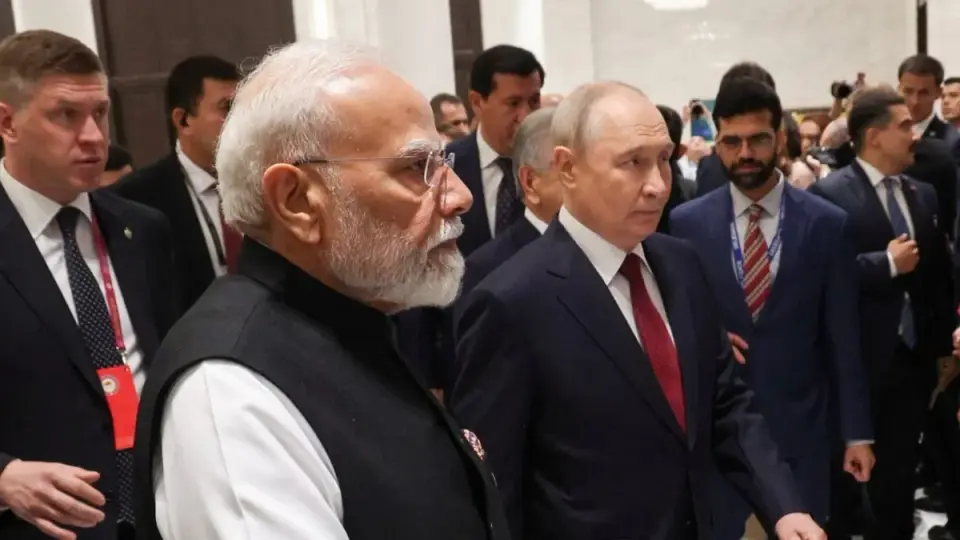
At the 26th Shanghai Cooperation Organisation (SCO) summit in Bishkek, Kyrgyzstan, Indian Prime Minister Narendra Modi delivered a public call for an end to the war in Ukraine, marking a notable departure from the typically coordinated messaging among SCO leaders. This moment highlighted growing diplomatic friction, as Putin, who relies heavily on India for oil purchases, faced criticism from a key ally in a forum traditionally dominated by pro-Russian sentiment. The incident underscores Putin’s increasing isolation, both domestically and internationally, amid ongoing pressure from the US and shifting geopolitical alliances.
Key points
- The 26th SCO Council of Heads of State meeting took place on September 1, 2026, in Bishkek, Kyrgyzstan, chaired by President Sadyr Japarov.
- India’s Prime Minister Narendra Modi publicly called for an end to the war in Ukraine, stating that 'every step towards peace gives all of humanity real hope for peace,' a statement that diverged from Russia’s official messaging.
- Vladimir Putin appeared visibly uncomfortable during the summit, with reports suggesting he was fidgeting and nervous, possibly due to the unexpected criticism from a key ally.
- India remains one of Russia’s largest purchasers of oil, but US tariffs and potential legislative pressure (including a bill to raise tariffs to 100%) may be influencing Modi’s stance.
- The SCO summit approved 28 documents, including the Bishkek Declaration, and passed the chairmanship to Pakistan for 2026–2027, with Lahore designated as the SCO Tourism and Cultural Capital.
- Putin’s domestic isolation is compounded by his advanced age and the aging of his inner circle, with concerns about the reliability of information from his advisors.
Background
The SCO is a 10-member international organization, including China, India, Pakistan, Iran, and Russia, that provides a platform for cooperation outside Western-dominated forums. India has been a crucial lifeline for Russia’s economy, particularly as a major buyer of Russian oil, despite US sanctions. Previous tensions between the US and India over Russian oil purchases led to tariffs, which were reduced but remain in force at 18%. The archive notes earlier geopolitical shifts, such as US tariffs on India and oil price surges, which may have influenced Modi’s current stance.
How outlets are covering it
The i Paper emphasizes the symbolic significance of Modi’s public rebuke, framing it as a sign of Putin’s growing isolation and the erosion of his support among key allies. It highlights the contrast between the SCO’s traditionally pro-Russian stance and Modi’s call for peace, suggesting a shift in India’s diplomatic posture. The secondary source, sectsco.org, provides a factual account of the summit, focusing on the procedural and diplomatic outcomes, such as the approval of 28 documents and the transfer of chairmanship to Pakistan, without commenting on the political tensions between Putin and Modi. The i Paper also notes the impact of US tariffs and potential legislative pressure on India’s decision, while the secondary source does not address these external factors.
Why it matters
Modi’s public call for an end to the war in Ukraine at the SCO summit signals a potential shift in India’s diplomatic stance, which could have significant implications for Russia’s economic and geopolitical position. As India is one of Russia’s largest oil buyers, any change in its policy could affect Russia’s revenue and its ability to sustain the war. Additionally, the incident highlights the growing isolation of Putin, both domestically and internationally, as he faces increasing pressure from allies and adversaries alike. This could influence future diplomatic dynamics within the SCO and broader international relations, particularly as the US continues to exert pressure on countries that support Russia.
What to watch
The SCO chairmanship will pass to Pakistan for 2026–2027, with Lahore designated as the SCO Tourism and Cultural Capital. The organization will continue to focus on multilateral cooperation, including security, trade, and energy, as outlined in the 28 approved documents. The future of Russia-India relations will depend on how Moscow responds to Modi’s call for peace and whether India adjusts its oil purchases in light of US pressure. Additionally, the domestic situation in Russia, including the aging of Putin’s inner circle, may influence his decision-making and diplomatic strategy.
- Putin has just been publicly humiliated. Even his friends are fed up The i Paper
- Summit With Russia, India and Iran Shows Leverage Wars Have Given Xi of China The New York Times
- The 26th Meeting of the Council of Heads of State of the SCO Member States and the "SCO Plus" Meeting Held in Kyrgyzstan sectsco.org
- Putin Turns Again to China’s Xi as Russia’s Clout Crumbles WSJ
- India's Modi tells Russia's Putin that the war in Ukraine must end for humanity's sake Reuters
Want the full story? Read the original reporting
Read on The i Paper