
Rubio Frames Central Asia Push as Long-Term Economic Strategy, Not Just a Summit
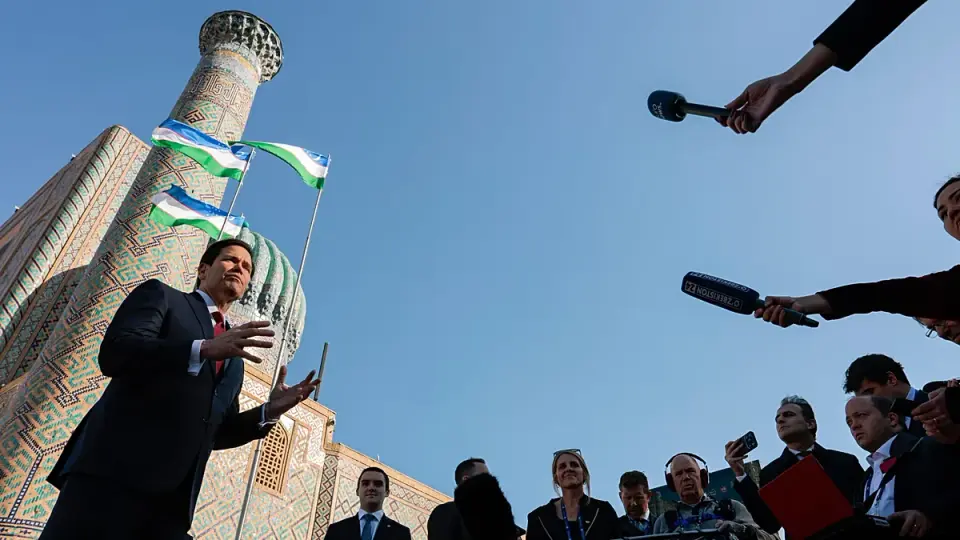
US Secretary of State Marco Rubio is in Samarkand, Uzbekistan, to announce new commercial agreements and expand American economic influence in Central Asia. He framed the visit as the start of a broader US engagement in the region, emphasizing critical mineral supply chain diversification and competition with China, while denying any pause in intelligence sharing with Ukraine.
Key points
- Rubio stated that nearly 300 US businesses are in Samarkand discussing agreements potentially worth billions, calling the visit 'the beginning' of broader US engagement in Central Asia.
- He identified critical minerals as a key area for cooperation, arguing that global supply chains should not depend on a single source for 100% of any resource.
- Rubio described US involvement as economic competition with China, not an attempt to force regional governments to choose sides, praising Uzbekistan's openness to multiple partners.
- He denied Ukrainian President Volodymyr Zelenskyy's claim that the US briefly paused sharing intelligence on Russian missile attacks, stating 'There has been no pause.'
- The visit follows a November 2025 C5+1 summit in Washington where over $25 billion in commercial commitments were announced across Central Asian countries.
Background
Rubio's trip follows a November 2025 White House C5+1 summit where over $25 billion in commercial agreements were announced. Recent US policy toward Central Asia has shifted toward transactional diplomacy, prioritizing trade and rare earth minerals over human rights concerns. In October 2026, Russia concluded the Center-2026 military exercises involving 47,000 troops, simulating an offensive into a Central Asian state, highlighting regional security tensions.
How outlets are covering it
Euronews and AP News both report on Rubio's visit to Samarkand and the C5+1 summit, but Euronews provides more detail on Rubio's specific quotes regarding critical minerals and his denial of an intelligence pause with Ukraine. AP News focuses more on the commercial ties and the broader diplomatic context. Both outlets agree on the scale of the business delegation (over 200 leaders) and the focus on economic deals, but Euronews highlights Rubio's framing of the visit as a long-term strategy rather than a one-off event.
Why it matters
The US is actively diversifying its critical mineral supply chains away from concentrated sources, with Central Asia emerging as a key partner. This move could reshape global supply chains and reduce dependence on single-source suppliers, while also intensifying economic competition with China in the region. The visit signals a sustained US commitment to Central Asia, moving beyond one-off summits to ongoing commercial engagement.
What to watch
Rubio is scheduled to meet President Shavkat Mirziyoyev and attend events with the Uzbekistan-US Business and Investment Council. He will also meet Kazakhstan's Foreign Minister and participate in the C5+1 ministerial meeting. The US State Department has not yet released a final list of agreements or their values, but announcements are expected to follow the forum's meetings.
- US is coming to Central Asia with deals to stay, Rubio tells Euronews Euronews.com
- Rubio heads to Central Asia as some wonder if he's keeping the most pressing matters at a distance PBS
- Rubio seeks to expand Central Asia ties with pomp-filled Uzbekistan visit Reuters
- Rubio Visits Uzbekistan Seeking Strong Central Asia Partnership Bloomberg
- Rubio is in Uzbekistan to promote US ties and trade with Central Asia AP News
Want the full story? Read the original reporting
Read on Euronews.com