
Europe’s Autumn of Unrest: How 26 Years of Price Hikes Outpaced Wages
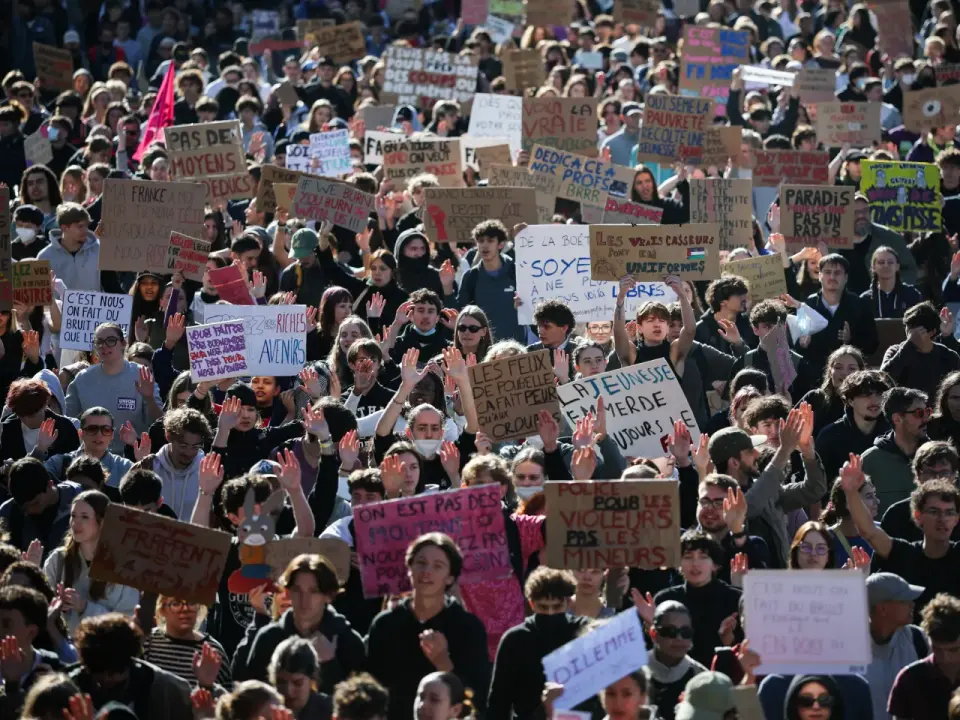
Protests across France, Italy, Spain, and Portugal have escalated into a broader European crisis over the cost of living. While student demonstrations in France began in September over school conditions, anger has spread to other nations, driven by decades of rising prices that have outpaced wage growth. Data shows consumer prices have increased by 59% to 78% since 2000, with housing affordability deteriorating significantly in Spain and Portugal. Although real wages have risen in some countries, they have failed to keep pace with inflation, leaving many households feeling squeezed. Leaders across the political spectrum face mounting unrest as young people report no longer expecting to be better off than their parents.
Key points
- Consumer prices in France, Italy, Spain, and Portugal have risen by 59% to 78% since 2000, with Spain recording the steepest increase at 78%.
- Real wages in Italy fell by nearly 5% between 2000 and 2025, while Spain, France, and Portugal saw increases of 7%, 11%, and 20% respectively, but these gains did not offset price hikes.
- Housing affordability has worsened in all four countries, with Spain’s price-to-income ratio rising by 56% and Portugal’s by 67% since 2015, despite earlier affordability gains.
- Protests in France began in September over school overcrowding and teacher shortages but expanded to include broader cost-of-living grievances, leading to violent clashes and curfews.
- In Spain, the eviction of an 87-year-old woman after a 230% rent hike triggered housing protests, leading Prime Minister Pedro Sanchez to call a snap election after failing to pass emergency housing legislation.
- Italy saw violent clashes in Milan, Turin, and Bologna, with over 200 arrests, as Prime Minister Giorgia Meloni condemned the violence while acknowledging underlying economic grievances.
Background
This unrest follows a period of heightened geopolitical tensions, including a CIA warning in September 2026 about potential Russian drone strikes on southern Europe. The current protests are part of a broader 'autumn of discontent' that has seen violent clashes in multiple European cities, mirroring similar unrest in the United States and Australia. The economic strain is compounded by global factors, including the Russia-Ukraine war and the US-Iran conflict, which have driven energy prices higher and exacerbated inflation across the developed world.
How outlets are covering it
Al Jazeera emphasizes the long-term trend of rising prices and stagnant wages, highlighting the disconnect between the experiences of young protesters and their leaders. The Guardian focuses on the immediate triggers of the protests, such as the eviction of an 87-year-old woman in Spain and the violent clashes in Italy, while also noting the political responses, including snap elections and curfews. ABC News frames the issue as a transnational phenomenon, linking the European unrest to broader global economic trends, including rising interest rates and wealth inequality. The outlets differ in their emphasis: Al Jazeera and ABC News focus on structural economic issues, while The Guardian highlights specific events and political responses. All agree that the cost of living crisis is a major driver of unrest, but they differ in their analysis of the underlying causes and the potential for resolution.
Why it matters
The cost of living crisis in Europe is not just a local issue but a transnational phenomenon that is reshaping political landscapes and social contracts. The failure of wages to keep pace with inflation, combined with rising housing costs and stagnant public spending on education, is leading to a loss of faith in democratic institutions and a shift toward populist movements. This unrest has the potential to destabilize governments, as seen in Spain’s snap election and France’s curfews, and could have long-term implications for the political and economic stability of the region. The crisis also highlights the need for structural reforms to address inequality and ensure that the benefits of economic growth are shared more equitably.
What to watch
The protests are expected to continue, with plans for a general strike in Spain on November 11. In France, the government has announced measures to address teacher shortages and university fees, but the underlying economic grievances remain unresolved. In Italy, Prime Minister Meloni is likely to face continued pressure to address the cost of living crisis while managing the fallout from violent protests. The political landscape in Europe is likely to shift further toward the fringes, as populist leaders gain momentum by exploiting public anger over economic hardship. The outcome of these protests will depend on the ability of governments to implement meaningful reforms that address the root causes of the crisis, including rising prices, stagnant wages, and unaffordable housing.
- How has the cost of living changed in France, Italy, Spain and Portugal? Al Jazeera
- From France to Albania, social unrest is setting Europe’s streets ablaze AP News
- Why are people protesting across Europe? The Guardian
- The dark forces driving discontent across the developed world ABC News & Headlines – Australian Broadcasting Corporation
- Violent protests multiply across Europe Financial Times
Want the full story? Read the original reporting
Read on Al Jazeera