
Russian Missile Warning Forces U.S. Antarctic Resupply Flight to Turn Back
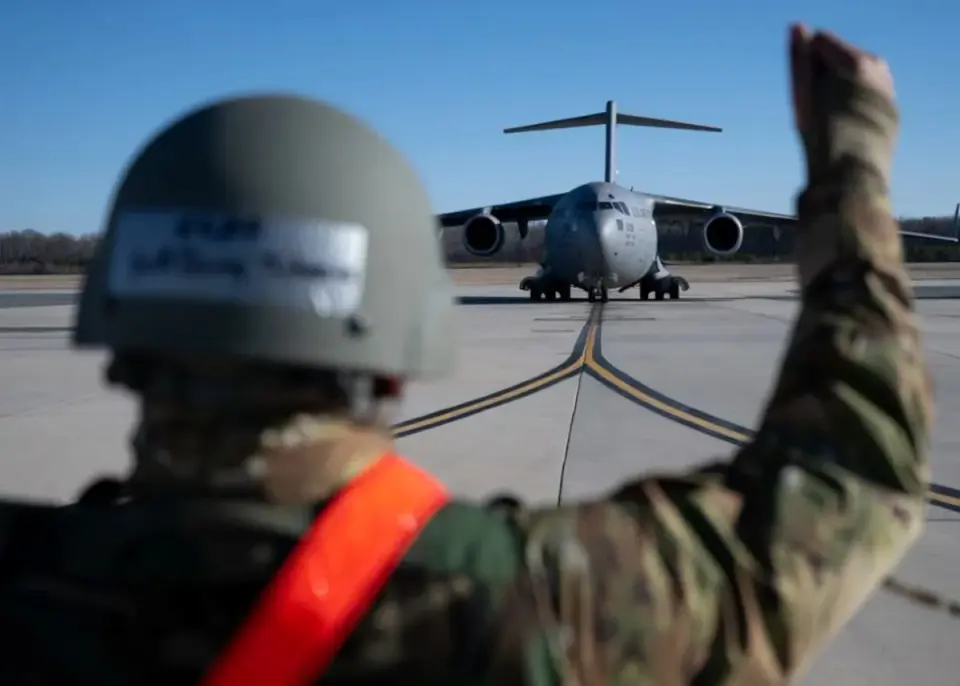
A U.S. Air Force C-17 Globemaster III diverted from its route to Antarctica and returned to Christchurch, New Zealand, after a Russian warning of a planned missile launch triggered a safety notice in international airspace. The incident occurred during the annual Winter Fly-In, a critical logistical period for resupplying research stations. While New Zealand authorities treated the warning as a standard hazard notification, analysts suggest the event may be an information operation or show of force, given the lack of physical evidence for the launch and the strategic importance of the region.
Key points
- A U.S. Air Force C-17 Globemaster III, call sign ICE28, departed Christchurch, New Zealand, on August 18, 2026, at 9:00 a.m. local time for a routine resupply mission to Antarctica.
- The aircraft turned back and landed at Christchurch approximately 150 minutes later after receiving a Notice to Airmen (NOTAM) regarding 'potentially hazardous' space activity.
- New Zealand’s Civil Aviation Authority (CAA) issued the NOTAM after receiving a warning from the Russian Air Traffic Management Corporation about a planned missile launch in the Oceanic Flight Information Region (FIR).
- The CAA stated that the NOTAM alerts operators to hazards but does not legally restrict flight paths, noting that much of the FIR covers international waters where New Zealand has limited control.
- The flight was part of the annual Winter Fly-In (WinFly), which delivers personnel and cargo to McMurdo Station and Scott Base ahead of the summer research season.
- The Diplomat argues the warning may be a 'dummy' missile launch or information operation, as no Russian vessels were detected in the area and the warning aligns with recent Russian naval exercises and tensions over sanctions.
Background
This incident occurs during the annual Winter Fly-In, a logistical operation that has historically delivered over 300 passengers and 230,000 pounds of cargo to Antarctica. The region is strategically significant, hosting ground stations for global navigation satellite systems used in missile timing. Recent tensions include Russian naval exercises in the Kuril Islands and disputes over the seizure of Russian 'shadow fleet' vessels, which Moscow has labeled as piracy. New Zealand has previously experienced the landing of Russian space debris but not a missile launch warning.
How outlets are covering it
Military Times and CNN report the event as a standard safety protocol, emphasizing that the CAA issued a NOTAM to alert operators but did not restrict flight. They note that the U.S. Pacific Air Forces described the mission as routine. In contrast, The Diplomat frames the event as a potential hybrid warfare tactic or information operation, suggesting the warning was a 'dummy' missile launch intended to intimidate or test the region's defenses. The Diplomat highlights that no Russian vessels were present and that the warning coincides with broader geopolitical tensions, including Russian naval exercises and disputes over sanctions enforcement. The CAA’s stance is neutral, stating that operators make their own decisions based on available information, while The Diplomat questions the legitimacy of the warning and its implications for regional security.
Why it matters
The incident highlights the vulnerability of international airspace to geopolitical maneuvers and the potential for information operations to disrupt critical logistical operations. It underscores the strategic importance of Antarctica, where ground stations for navigation satellites support military and civilian functions. The event may signal a shift in how great powers use airspace and maritime domains for deterrence or intimidation, particularly in regions with limited oversight. It also raises questions about the reliability of NOTAMs and the need for robust verification mechanisms in international aviation safety.
What to watch
New Zealand’s government has requested more information from Russia regarding the alleged missile launch. The U.S. Air Force and the U.S. Antarctic Program have not yet confirmed whether the diverted flight will be rescheduled. Analysts will monitor for further Russian activity in the Southern Ocean and any changes in the Winter Fly-In schedule. The incident may prompt a review of NOTAM protocols and the coordination between air traffic authorities and military operations in international waters.
- US Air Force flight to Antarctica turns back after Russian hazardous space activity warning Military Times
- US Air Force flight to Antarctica turns back after space activity warning CNN
- US Air Force plane turns back from Antarctica after Russian missile threat The Hill
- US Antarctic Flight Turns Back Over Missile Warning MiGFlug
- Russia’s Fake Missile Test Warning to New Zealand The Diplomat – Asia
Want the full story? Read the original reporting
Read on Military Times