
Russia and North Korea Open First Road Bridge, Deepening Strategic Ties
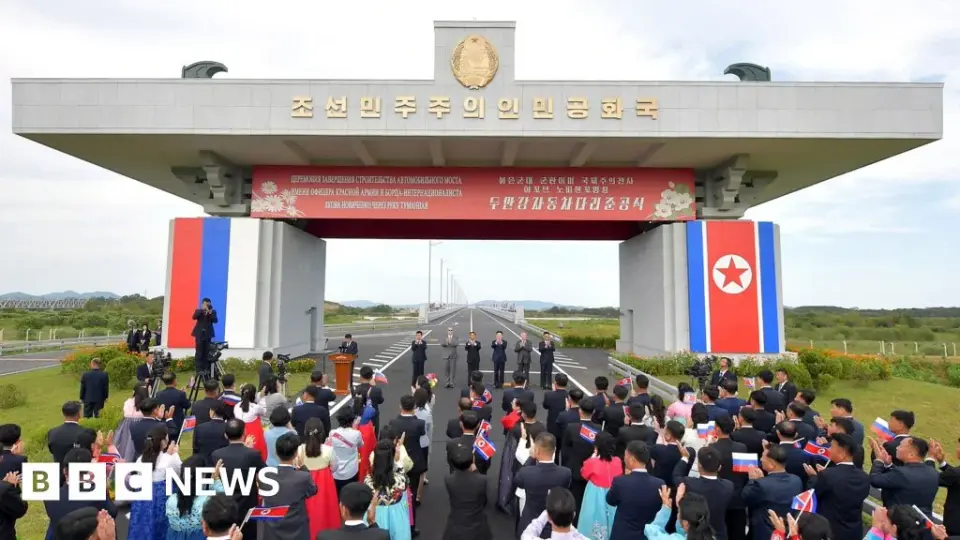
Russia and North Korea have officially opened the first road bridge connecting their borders, spanning the Tumen River between Khasan and Tumangang. While officials frame the crossing as a boost for trade and tourism, analysts suggest it may serve as a covert military logistics corridor. The bridge replaces a makeshift wooden plank arrangement on an existing rail link and is expected to facilitate the movement of troops, weapons, and laborers, further solidifying the strategic partnership formed during the Ukraine war.
Key points
- The one-kilometer bridge connects Khasan in Russia’s far east with Tumangang in North Korea, replacing a temporary wooden plank setup on a rail bridge.
- Russian Prime Minister Mikhail Mishustin described the bridge as a symbol of friendship that will boost trade, tourism, and scientific cooperation.
- Ukrainian OSINT group Truth Hounds argues the bridge is primarily intended to create a covert military logistics corridor for moving troops and resources.
- The bridge allows up to 300 vehicles and 2,323 people to cross daily, initially for cargo before opening to passenger traffic later this year.
- Construction took 495 days, beginning in 2025 after an agreement reached during Putin’s 2024 visit to North Korea.
Background
This development follows a significant deepening of ties between Moscow and Pyongyang since the start of the Ukraine war in 2022. Previous reports indicated North Korea had deployed thousands of troops to Russia’s Kursk region and supplied various weapons, including ballistic missiles and artillery shells. In return, Russia has reportedly provided North Korea with air-defense systems and satellite technology. The new bridge adds to existing rail and air links, potentially easing the flow of military and economic resources between the two nations.
How outlets are covering it
Russian and North Korean officials emphasize the bridge’s role in enhancing trade, tourism, and cultural cooperation, with Mishustin calling it a 'new symbol of friendship.' Conversely, Ukrainian groups like Truth Hounds view the bridge as a strategic military asset, suggesting it will facilitate the movement of North Korean troops and Russian technology with less risk of detection. South Korean intelligence estimates that North Korea has already transferred billions of dollars worth of weapons to Russia, and the bridge may further accelerate this exchange. Some Russian partners, such as Kazakhstan, have expressed frustration with Moscow’s continued war in Ukraine, highlighting the diplomatic isolation Russia faces.
Why it matters
The opening of the bridge signals a new level of integration between Russia and North Korea, potentially altering the dynamics of the Ukraine war by facilitating the transfer of military resources and personnel. It also raises concerns about the long-term implications for regional security and the global balance of power, as the two countries continue to support each other in the face of international pressure.
What to watch
The bridge is expected to open to passenger traffic later this year, potentially increasing tourism and further integrating the two economies. Analysts will monitor whether the bridge is used to move additional troops or weapons, and how it impacts the broader military cooperation between Russia and North Korea. International observers will also watch for any diplomatic responses from other nations, particularly those concerned about the escalation of the Ukraine conflict.
- North Korea and Russia open first road bridge linking the two countries BBC
- North Korea and Russia open their first road bridge, a symbol of expanding ties Reuters
- Russia and North Korea open the first road link across shared border ABC News - Breaking News, Latest News and Videos
- Russia, North Korea Finish First Road Bridge Link As Ties Deepen Bloomberg.com
- Russia and North Korea open first road bridge across their shared border The Guardian
Want the full story? Read the original reporting
Read on BBC