
Israel clears itself in 2024 Gaza aid worker killings, drawing sharp rebukes from Canada, Australia, and World Central Kitchen
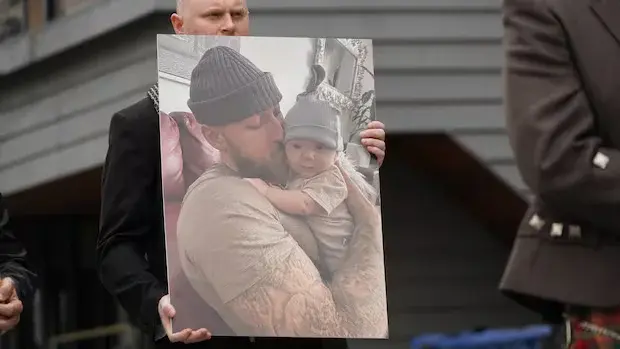
Israel’s military prosecutor has concluded that no criminal investigation is warranted for the April 2024 airstrikes that killed seven aid workers, including Canadian Jacob Flickinger and Australian Zomi Frankcom. While the Israeli military cited 'serious failures' and mistaken identification, it found no reasonable suspicion of criminal misconduct. This decision has triggered strong diplomatic backlash from Canada and Australia, with officials calling the outcome 'unacceptable' and 'insulting.' World Central Kitchen rejected the findings as a cover-up, demanding an independent inquiry, while the Israeli government simultaneously announced it would proceed with investigations into other civilian deaths, highlighting a controversial disparity in its legal approach.
Key points
- Israel’s military prosecutor decided against a criminal investigation into the April 2024 airstrikes that killed seven World Central Kitchen (WCK) aid workers, including Canadian Jacob Flickinger and Australian Zomi Frankcom.
- The Israeli military acknowledged 'serious failures' and mistaken identification but stated that commanders’ decisions did not raise 'reasonable suspicion of criminal misconduct.'
- Canada’s Foreign Affairs Minister Anita Anand called the decision 'unacceptable,' while Australia’s Foreign Minister Penny Wong described it as 'especially insulting' and summoned the Israeli ambassador.
- World Central Kitchen condemned the account as 'inconsistent with the full truth,' arguing the military 'conflates different timelines' and 'shifts the blame' for illegal conduct.
- The IDF simultaneously announced it would pursue criminal investigations into the deaths of four Médecins Sans Frontières staff and the killing of five-year-old Hind Rajab, a move critics argue highlights a double standard.
Background
The April 2024 strikes occurred during the broader Gaza conflict, targeting a convoy that WCK claimed had been coordinated with the Israeli military. At the time, two officers were removed from their positions and three others reprimanded. Former Canadian Prime Minister Justin Trudeau had previously called for an independent investigation, rejecting the notion that collateral deaths among aid workers were a normal part of war. The current ruling comes more than two years after the incident, following a period of internal military reviews.
How outlets are covering it
Outlets and stakeholders disagree on the legitimacy of the Israeli military’s conclusion. CBC and BBC report the official Israeli stance that the deaths resulted from 'mistakes' and 'serious failures' rather than criminal intent. In contrast, World Central Kitchen and Australian officials argue the military’s account is a deliberate cover-up that 'muddies the story.' The Guardian’s Geoffrey Robertson argues that under international law, gross negligence in war zones constitutes a war crime, criticizing the IDF’s refusal to investigate as 'despicable.' While Canada and Australia focus on the lack of accountability for their nationals, WCK emphasizes that the IDF had 'full visual clarity' on the marked vehicles, suggesting the strikes were not accidental.
Why it matters
This decision sets a precedent for how international humanitarian law is applied in conflict zones, potentially shielding military personnel from accountability for civilian and aid worker deaths. It highlights the growing diplomatic friction between Israel and its allies, particularly Canada and Australia, over the conduct of the Gaza war. The disparity in how the IDF treats different civilian deaths—investigating some while clearing others—raises serious questions about the consistency and integrity of its legal processes, potentially undermining trust in international justice mechanisms.
What to watch
Canada and Australia are expected to continue pressing Israel for a 'full accounting' and justice for the victims, with Australia considering further diplomatic steps beyond summoning the ambassador. World Central Kitchen will likely continue to demand an independent commission to investigate the airstrikes. The international community may look to the International Criminal Court (ICC) for potential jurisdiction, although the United States has recently signaled opposition to ICC operations. The families of the victims may seek legal recourse through civil courts, though access to justice against the IDF remains a significant hurdle.
- Israel clears itself in killing of Canadian during airstrikes on World Central Kitchen convoy CBC
- Zomi Frankcom did not deserve to die. Israel’s refusal to investigate her death and its failure to apologise is despicable The Guardian
- Australia 'outraged' after Israel decides not to open criminal investigation into killing of aid worker in Gaza BBC
- World Central Kitchen Condemns Israeli Account of April 1, 2024 World Central Kitchen
- Poland 'very disappointed' after Israel drops probe into killing of Polish citizen Reuters
Want the full story? Read the original reporting
Read on CBC