
Pakistani Pilot Zeeshan Ali Launches on China's Shenzhou 24 to Tiangong Station
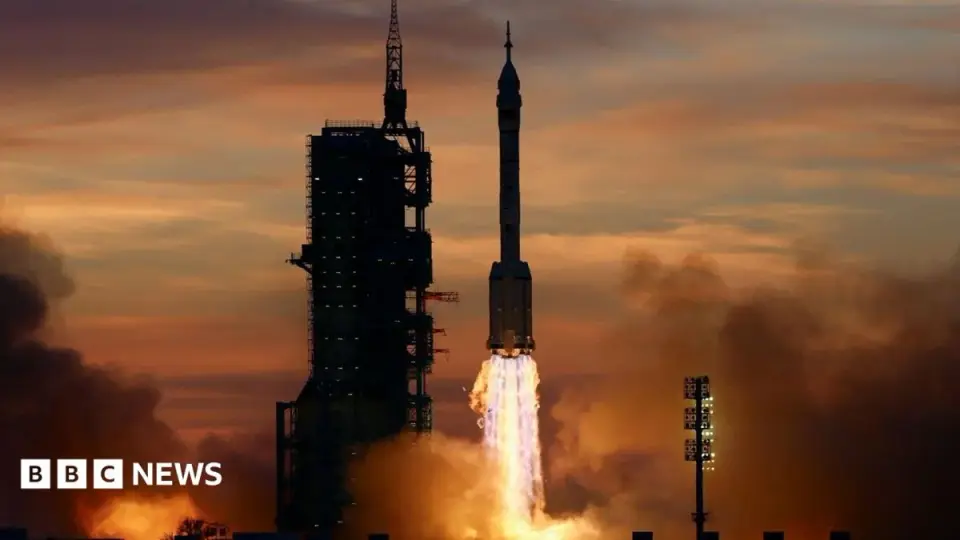
China launched the Shenzhou 24 spacecraft from the Jiuquan Satellite Launch Center on November 24, 2026, carrying Pakistani astronaut Muhammad Zeeshan Ali to the Tiangong space station. Ali, a former Pakistani Air Force pilot, became the first foreign national to visit China's orbital facility. The mission, which includes Chinese commander Tang Hongbo and flight engineer Wu Yi, was declared a complete success shortly after liftoff. Ali will conduct scientific experiments in biotechnology and materials science for approximately one week before returning to Earth on the Shenzhou 23 spacecraft. This historic flight marks a significant diplomatic milestone for Beijing and Islamabad, coinciding with the 75th anniversary of their diplomatic ties.
Key points
- Muhammad Zeeshan Ali, 40, is the first foreigner to board China's Tiangong space station, joining Chinese crew members Tang Hongbo and Wu Yi.
- The Shenzhou 24 mission launched at 00:18 GMT from the Gobi desert and was declared a 'complete success' by Chinese authorities.
- Ali will spend about one week in orbit, conducting four joint experiments in biotechnology, materials science, and fluid physics before returning on the Shenzhou 23.
- Ali underwent seven months of intensive training in Beijing, including mastering Mandarin technical terminology, which he described as his biggest challenge.
- The mission strengthens China-Pakistan ties, with Beijing positioning Tiangong as an international research platform and Islamabad aiming for future lunar cooperation.
Background
This mission follows a February 2025 agreement between China and Pakistan for joint space activities. Pakistan has previously collaborated with China on robotic lunar missions, including the iCube-Qamar satellite that reached lunar orbit in 2024. The current flight is part of a broader strategy for China to expand its space influence beyond the US-led International Space Station, while Pakistan seeks to become a key player in human spaceflight despite lacking its own launch capabilities.
How outlets are covering it
BBC News emphasized the personal challenges faced by Ali, particularly his intensive seven-month Mandarin language training, and highlighted the emotional significance of the launch for Pakistan. Al Jazeera provided detailed technical and diplomatic context, noting that Ali will return on the Shenzhou 23 while his backup, Khurram Daud, remains in reserve. Al Jazeera also highlighted the geopolitical implications, with China Manned Space Agency spokesperson Zhang Jingbo describing Pakistan as an 'all-weather strategic cooperative partner.' Bloomberg focused on the diplomatic symbolism, framing Ali's flight as a deepening of bilateral ties and a statement of China's growing space dominance. All sources agree on the technical success of the launch and the historic nature of the mission, but differ in emphasis: BBC on the human element, Al Jazeera on the scientific and diplomatic details, and Bloomberg on the geopolitical significance.
Why it matters
This mission represents a major shift in global space politics, as China becomes the first nation to host a foreign astronaut on its own space station. It demonstrates Beijing's ability to offer an alternative to the US-led space program and strengthens its diplomatic ties with Pakistan. For Pakistan, it marks a historic achievement in space exploration and opens the door for future international collaborations, including potential lunar missions. The success of this mission could pave the way for more joint space projects between China and other nations, reshaping the landscape of international space cooperation.
What to watch
Muhammad Zeeshan Ali will remain on the Tiangong space station for approximately one week, conducting scientific experiments before returning to Earth on the Shenzhou 23 spacecraft. China and Pakistan are expected to continue their space cooperation, with potential future missions including joint lunar explorations. The success of this mission may encourage other nations to seek similar partnerships with China, further expanding the international presence on the Tiangong station.
- Shenzhou 24: China launches space mission with Pakistani astronaut on historic journey BBC
- China launches Shenzhou 24 spacecraft carrying 2 Chinese and a Pakistani astronaut AP News
- Pakistan’s Zeeshan Ali set for historic flight to China’s space station Al Jazeera
- China Space Program to Fly Pakistan Pilot as its First Foreigner Bloomberg.com
- China's Shenzhou-24 space flight takes off with Pakistani national as first foreign astronaut Reuters
Want the full story? Read the original reporting
Read on BBC