
Zaporizhzhia Nuclear Plant Loses Final Power Link, Relies on Generators Amid Escalating Strikes
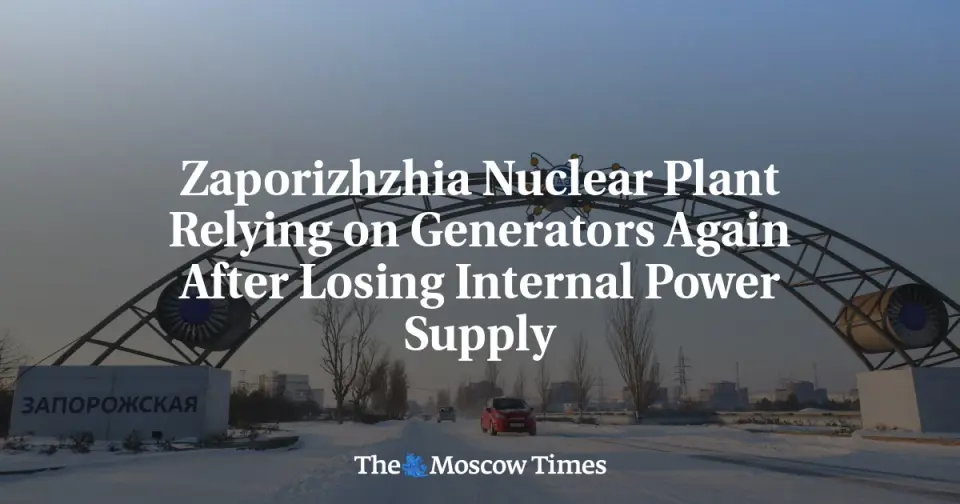
The Zaporizhzhia nuclear power plant in southeastern Ukraine has lost its final external power connection, forcing it to rely on emergency diesel generators for reactor cooling. The International Atomic Energy Agency (IAEA) confirmed the disconnection of the Ferosplavna line on Sunday, marking the 27th such event since the conflict began. While the plant currently has fuel reserves for approximately two weeks, the IAEA has urged an increase in diesel supplies to ensure safety. This incident coincides with intensified Russian strikes on Ukrainian energy infrastructure, leaving over 600,000 people without electricity in the Dnipropetrovsk region. Ukrainian President Volodymyr Zelensky accused Russia of escalating attacks to pressure Kyiv ahead of US-mediated peace talks scheduled for November 10-11 in Abu Dhabi.
Key points
- The Zaporizhzhia plant, Europe’s largest with six reactors, lost its last off-site power link, the Ferosplavna line, on Sunday.
- The IAEA stated the cause and location of the disconnection are unknown but confirmed the plant is now operating on emergency diesel generators.
- IAEA Director General Rafael Mariano Grossi noted this is the 27th such power loss event during the conflict, highlighting a precarious nuclear safety situation.
- The plant’s Russian-installed management claimed the line was shut by 'automatic protection' and that radiation levels remain normal.
- Ukrainian power company DTEK reported that a Russian overnight attack on energy facilities in Dnipropetrovsk left over 600,000 people without electricity.
- Zelensky stated that Russia launched 115 missiles, nearly 1,900 guided aerial bombs, and over 3,000 drones in the past week, aiming to pressure Ukraine before the Abu Dhabi talks.
Background
The Zaporizhzhia plant was seized by Russian forces in the early weeks of the 2022 invasion. It has been without external power since August 20, following a local ceasefire brokered by the IAEA in early September to allow repairs. The plant produces no electricity but requires external power to keep nuclear fuel cool. This latest incident follows a pattern of repeated power losses, with the IAEA reporting the main Dniprovska line remained unavailable as of October 23.
How outlets are covering it
The IAEA and The Moscow Times emphasize the technical failure and the reliance on backup generators, noting the unknown cause of the disconnection. The Hill highlights the broader context of escalating Russian strikes and the upcoming peace talks in Abu Dhabi, involving US envoy Steve Witkoff. The Independent focuses on the immediate safety risks, quoting Energoatom’s warning that 'blackout mode' creates a direct risk of failure in life-support systems and nuclear fuel cooling. While The Moscow Times and The Hill report on the power loss, The Independent also details a separate Russian drone strike on emergency crews in the Zaporizhzhia region, which killed at least 55 people, illustrating the broader military escalation.
Why it matters
The loss of external power to Zaporizhzhia, Europe’s largest nuclear plant, poses a significant risk to nuclear safety and could lead to a radiation accident if generators fail or fuel runs out. The incident underscores the ongoing vulnerability of critical infrastructure in the conflict zone and the potential for escalation ahead of diplomatic efforts to end the war. The simultaneous strikes on energy facilities in Dnipropetrovsk and the Zaporizhzhia region highlight Russia’s strategy of targeting civilian infrastructure to exert pressure on Ukraine and its allies.
What to watch
The IAEA is monitoring the plant’s operational parameters and has called for increased diesel fuel reserves to ensure the generators can operate for the estimated two-week period. The US-mediated peace talks between Ukraine and Russia are scheduled for November 10-11 in Abu Dhabi, with European nations, including France, expected to participate. The outcome of these talks may influence the intensity of military strikes and the future of energy infrastructure in the region.
- Zaporizhzhia Nuclear Plant Relying on Generators Again After Losing Internal Power Supply The Moscow Times
- Zaporizhzhia nuclear plant relying on generators again after losing external power supply Reuters
- Ukrainian nuclear plant switches to generators after losing final power line The Hill
- Ukraine-Russia war live: Kremlin claims attack on three ships in Black Sea The Independent
- Zaporizhzhia Nuclear Plant Loses External Power Supply, Russian-Installed Management Says The Moscow Times
Want the full story? Read the original reporting
Read on The Moscow Times