
Coordinated settler violence disrupts West Bank olive harvest, injuring journalists and farmers
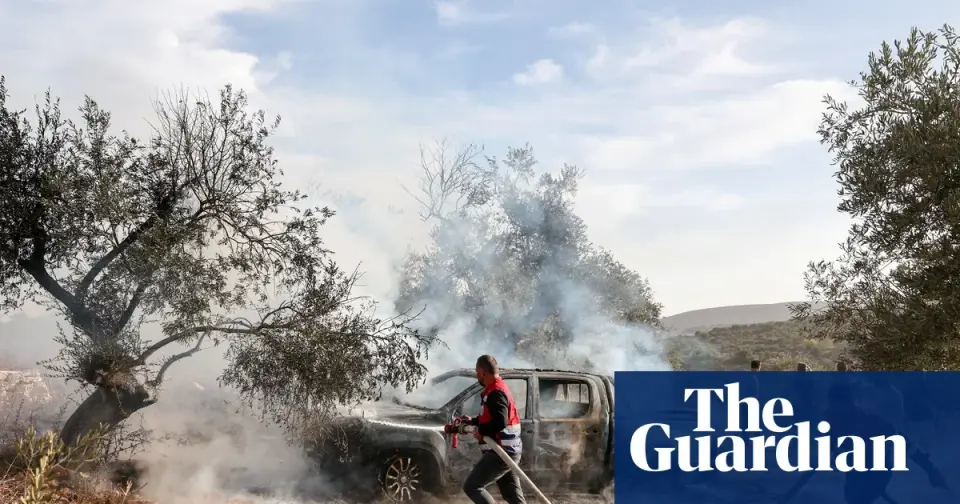
On October 16, 2026, masked Israeli settlers launched a coordinated assault on Palestinian olive farmers in the West Bank, injuring at least 12 people and Washington Post photographer Heidi Levine. The violence, which included arson and rock-throwing, occurred despite the presence of Israeli military forces. This incident marks a significant escalation in settler violence during the annual harvest season, with rights groups reporting over 170 attacks since late September. New military restrictions have also limited Palestinian access to agricultural land, exacerbating tensions ahead of Israeli elections.
Key points
- Settlers attacked farmers in Abu Falah and Turmus Ayya, burning cars and trees, and injuring at least 12 Palestinians, including four dual citizens.
- Washington Post photographer Heidi Levine was beaten for over 10 minutes, stripped of her equipment, and hospitalized; she stated her press gear protected her from fatal injury.
- Israeli military forces were present but did not intervene to stop the settler violence, instead firing tear gas at Palestinians who attempted to defend themselves.
- Yesh Din reports at least 170 settler attacks since September 27, with the UN noting more attacks in the past two weeks than in the entire previous harvest season.
- New Israeli military rules prohibit Palestinians from entering 8,800 hectares of agricultural land in Area C without approval, a 30% increase from the previous year.
Background
The olive harvest is a critical economic lifeline for Palestinians, especially after Israel revoked many work permits following the 2023 Hamas-led attack. Recent archive entries indicate a pattern of escalating violence against journalists, including an AFP photographer hospitalized in early October 2026. The current surge in violence coincides with Israeli elections and new military restrictions that limit Palestinian access to land while expanding settler access.
How outlets are covering it
The Guardian and BBC emphasize the coordinated nature of the settler attacks and the failure of Israeli military to protect journalists or farmers, noting that soldiers fired tear gas at Palestinians. The Washington Post highlights the severity of the assault on Heidi Levine and the lack of accountability for settlers. CNN focuses on the hospitalization of Levine and the broader context of settler violence. Rights groups like Yesh Din and Peace Now criticize the Israeli government for reducing restrictions on settler access to land while increasing restrictions on Palestinians. The US State Department condemned the violence but declined to comment further due to privacy laws, while the Israeli Foreign Press Association called for action against 'lawlessness.'
Why it matters
This incident highlights the growing danger for journalists and civilians in the West Bank and the perceived impunity for settler violence. The escalation in attacks and new military restrictions threaten the economic stability of Palestinian communities and raise concerns about the rule of law and international norms regarding settlements and land access.
What to watch
Israeli police have launched an investigation into the attack on Heidi Levine, but accountability for settler violence remains low. The approaching Israeli elections may influence government policy on settler violence and land access. Continued monitoring of the olive harvest season will be crucial to assess the impact of new military restrictions and the frequency of settler attacks.
- Israeli settlers attack olive farmers and Washington Post journalist in West Bank The Guardian
- Palestinians and US journalist injured by Israeli settlers in West Bank harvest attack BBC
- Israeli settlers attack Palestinians and Washington Post photographer in West Bank The Washington Post
- Washington Post journalist hospitalized after Israeli settler attack on Palestinian olive harvest in West Bank CNN
- Israeli settlers attack Palestinians during olive harvest, and other Middle East developments AP News
Want the full story? Read the original reporting
Read on The Guardian