
Iran's Economic Collapse Risks Regime Hardening Rather Than Collapse
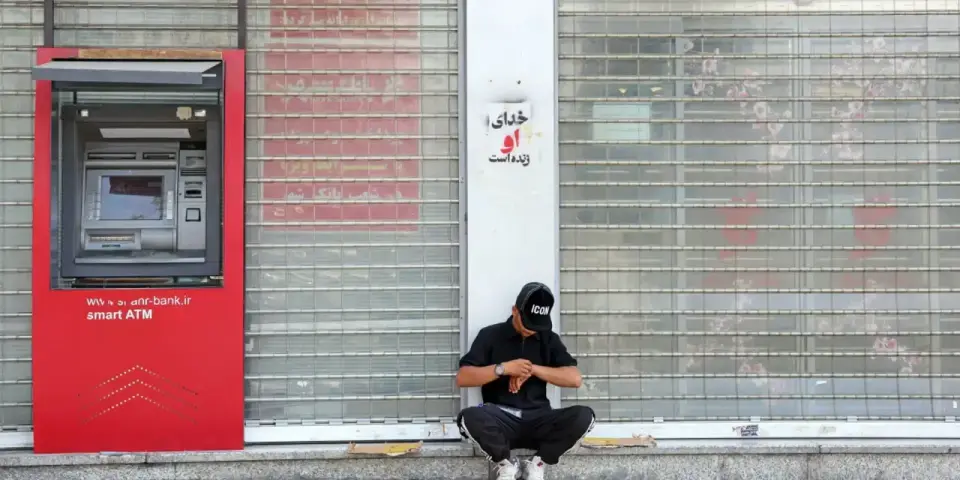
Iran faces a severe economic crisis marked by 84% inflation, empty shelves, and fuel shortages, yet experts warn that intensified US sanctions and internal repression may harden the regime rather than topple it. While the middle class collapses into poverty, the government prioritizes security crackdowns over economic reform, creating a volatile deadlock where economic pain could trigger regional escalation instead of domestic change.
Key points
- Inflation reached 84.4% in August 2026, with meat and dairy prices rising over 100% in the past year, forcing Iranians to cut consumption drastically.
- The US naval blockade and expanded sanctions have reduced oil exports from over 2 million barrels daily to under 100,000, costing Iran $435 million daily in lost revenue.
- The regime is responding to economic distress with increased repression, including arrests linked to January 2026 protests and new laws criminalizing foreign economic activity.
- Internal divisions exist between President Pezeshkian, who seeks negotiations, and hardliners who reject concessions, leading to a strategy of deterrence rather than compromise.
- Experts warn that economic pressure may not cause regime collapse but could push Iran to attack regional oil infrastructure or intensify threats to prevent total isolation.
Background
This crisis follows the US naval blockade declared in April 2026 and the failure of nuclear negotiations. Previous coverage noted that while sanctions aim to force Iran to the negotiating table, Tehran has historically survived economic pressure by redistributing income and leveraging national independence narratives. The current situation is exacerbated by war damages estimated at $270 billion and a drought affecting 30% of reservoir capacity.
How outlets are covering it
Israel Hayom emphasizes the paradox that economic pressure may strengthen the regime by forcing it to rely on deterrence and repression, citing experts who argue that an angry citizenry does not necessarily translate to regime change. Iran Human Rights Monitor focuses on the structural repression, highlighting how the state uses arrests and legal criminalization to prevent protests, framing the crisis as a violation of human rights. The National Council of Resistance of Iran highlights the internal regime split, noting that while some officials acknowledge economic failure, the leadership is divided between those seeking negotiations and those viewing talks as surrender, with the regime treating poverty statistics as security threats.
Why it matters
The situation risks a regional escalation where Iran, feeling cornered, may attack oil infrastructure in Saudi Arabia or close the Strait of Hormuz. The failure of economic pressure to force concessions could prolong the conflict and empower a regime that is increasingly isolated and aggressive, while the internal repression signals a regime focused on survival rather than reform.
What to watch
Watch for potential Iranian attacks on regional oil infrastructure if economic pressure intensifies, further expansion of US sanctions targeting third-party countries, and any signs of internal regime fracture as the middle class collapses. The outcome of negotiations, if any, will depend on whether the hardline leadership can withstand the economic pain without triggering a broader regional war.
- Iran is suffocating from within, but that could backfire on Israel www.israelhayom.com
- Iran Is Facing Its Soviet Moment and Possibly Its End | Opinion Newsweek
- ‘I feel the pain of hopelessness’: Iranians face growing economic struggles Dawn
- Escalation of Social and Legal Repression: A Structural Response to Deepening Livelihood Crises - Iran HRM Iran Human Rights Monitor (Iran HRM)
- Iran’s Fuel-Price Trap Meets 84% Inflation and a Regime Split Over Negotiations National Council of Resistance of Iran - NCRI
Want the full story? Read the original reporting
Read on www.israelhayom.com