
US Third-Country Deportations Surpass 16,000 as Global Criticism Intensifies
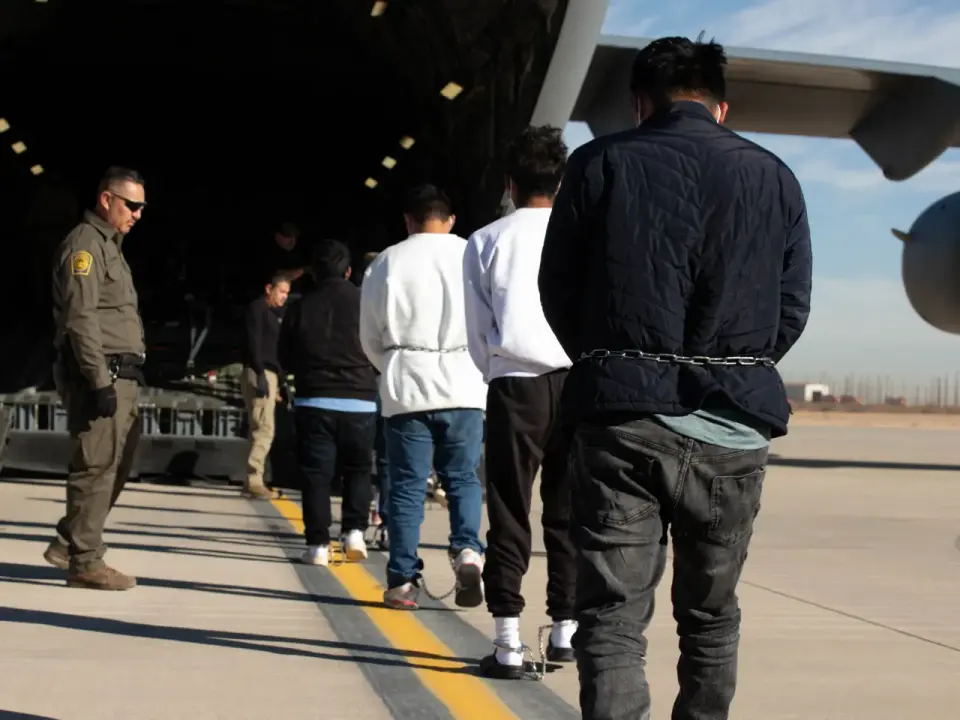
The US government has deported over 16,000 people to third countries since January 2025, a figure rights groups estimate exceeds 25,000. This policy, which sends migrants to nations with no ties to them, has faced severe criticism from the UN and human rights organizations for violating international law and exposing individuals to persecution. Despite legal challenges, the Supreme Court has allowed the practice to continue.
Key points
- DHS data confirms over 16,000 third-country deportations from Jan 2025 to Aug 2026, likely an undercount.
- Rights groups estimate the actual number exceeds 25,000, including asylum seekers and those facing persecution.
- The US has signed agreements with over a dozen African nations, including Cameroon, Eswatini, and South Sudan.
- Financial incentives, such as $124m for Liberia and $400m for Cameroon, are used to secure these agreements.
- The US Supreme Court allowed the practice to continue in September, with a final hearing scheduled for December.
Background
This policy follows a broader shift in US foreign policy, including the shutdown of USAID and reorganization of the State Department. It mirrors similar EU initiatives, such as the 'return hub' framework adopted in October 2026, which aims to pilot deportation hubs by 2027. Previous coverage highlighted specific cases, such as a Nigerian pastor deported to Ghana, illustrating the legal and humanitarian flaws in the system.
How outlets are covering it
Al Jazeera and UA.News emphasize the scale of the deportations and the financial incentives used to secure agreements with third countries. IR Insider highlights the geopolitical implications, noting that the US is leveraging financial aid to pressure African nations, some of which are in conflict or have poor human rights records. The AP focuses on the human cost, detailing the plight of a transgender Cuban woman deported to the Central African Republic, where she faces severe persecution. All sources agree that the practice is controversial and faces legal challenges, but they differ in their emphasis on the geopolitical, humanitarian, and legal dimensions of the issue.
Why it matters
The US third-country deportation policy raises significant concerns about human rights and international law. It exposes migrants to potential persecution and torture in countries with no ties to them, undermining global norms on refugee protection. The financial incentives used to secure these agreements also raise questions about the ethical implications of US foreign policy and its impact on global stability.
What to watch
The US Supreme Court is scheduled to hear oral arguments in December, with a final decision expected by July. The outcome of this case will determine the future of the third-country deportation policy. Additionally, the EU is expected to launch a pilot project for 'return hubs' by the first half of 2027, which could further influence global migration policies.
- Trump ramps up third-country US deportations despite global rights outcry Al Jazeera
- Cross-continental collaboration and sensitive source work expose the human peril of third-country deportations www.ap.org
- The Deportation Project—Inside the Trump Administration’s Secret Deals to Expel People Worldwide AfricaBrief
- US deported more than 16,000 people to third countries — Al Jazeera UA.NEWS
- List of African Nations in Third-Country Deportation Agreements with the US Continues to Grow IR Insider
Want the full story? Read the original reporting
Read on Al Jazeera