
Iran Targets US Carrier Group in Escalation, but Misses Strategic Mark
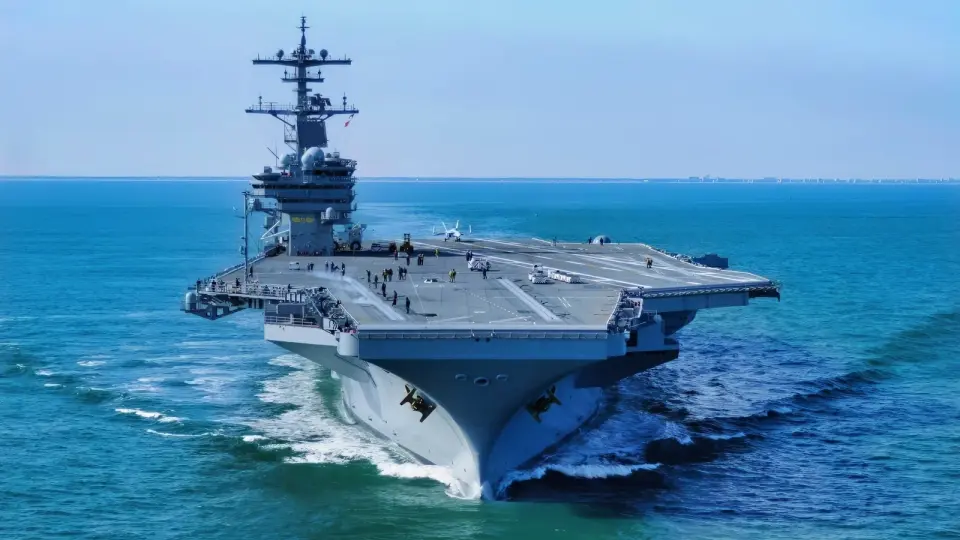
Iran fired ballistic missiles at a US destroyer and aircraft carrier over the weekend, claiming both were damaged and withdrawn. US Central Command denied any hits, stating the ships remained operational, and retaliated by destroying one Iranian Revolutionary Guard tanker and disabling two others. Analysts note that while Iran has identified naval aviation as the US center of gravity in the ongoing conflict, it lacks the reconnaissance infrastructure to reliably strike moving warships. The attack highlights a strategic shift as US land bases in the Middle East become increasingly vulnerable to Iranian missile and drone strikes, forcing greater reliance on mobile naval platforms despite the high cost of defending them.
Key points
- Iran claimed its ballistic missiles damaged a US destroyer and an aircraft carrier, forcing them to withdraw, but US Central Command denied any hits or damage to the vessels.
- In retaliation, the US struck three Iranian Revolutionary Guard tankers, destroying one and disabling two others, characterizing the Iranian attack as an unprovoked escalation.
- The conflict has lasted seven months, with US land bases in the Middle East suffering extensive damage from Iranian missiles and drones, depleting interceptor stocks and making naval aviation critical for continued operations.
- Experts argue that while Iran understands the strategic importance of targeting US naval power, it lacks the expensive reconnaissance-strike complex needed to reliably locate and hit moving warships, which have layered defensive systems.
- Reports suggest China and Russia are providing Iran with intelligence and technology, potentially improving its targeting capabilities in the future, though current attacks demonstrate comprehension rather than full capability.
Background
The US has been deploying multiple aircraft carriers, including the USS Abraham Lincoln, USS George Washington, and USS George H.W. Bush, to the Middle East to support Operation Epic Fury against Iran. Recent rotations have highlighted strain on crews and logistical bottlenecks, with the Lincoln returning to the US after a lengthy deployment. The current conflict has forced the US to rely heavily on naval platforms as land-based assets face increasing vulnerability from Iranian counter-attacks.
Why it matters
The incident marks a potential escalation in the seven-month US-Iran conflict, shifting focus from land-based strikes to direct challenges against US naval power. While the immediate attack failed to damage US ships, it signals Iran's strategic intent to target the US center of gravity in the region. The vulnerability of US land bases and the high cost of defending naval assets could prolong the conflict and strain US military resources, potentially affecting broader geopolitical stability in the Middle East and beyond.
What to watch
The US Navy will likely continue to prioritize the protection of its carrier strike groups, potentially adjusting operational tactics to mitigate Iranian missile threats. Iran may continue to develop its targeting capabilities with foreign assistance, while the US may face increasing pressure to manage interceptor stocks and crew fatigue. The conflict's trajectory will depend on whether Iran can achieve reliable hits on US naval assets or if the US can maintain its blockade and strike operations without significant losses.
Want the full story? Read the original reporting
Read on 19FortyFive