
Russia Upgrades Iskander Missiles with Homing Sensors to Target Ukrainian Bridges
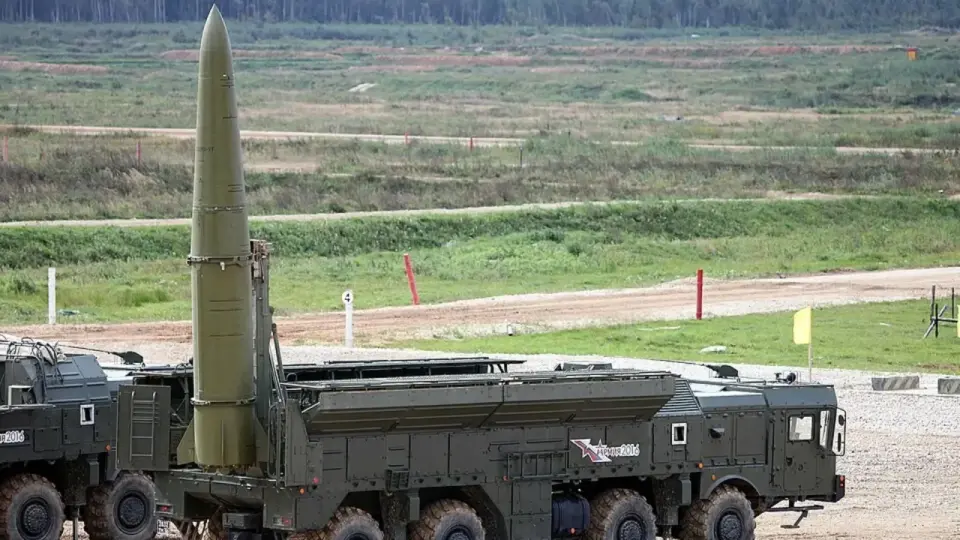
Russia has modified its Iskander short-range ballistic missiles with optical and radar homing seekers to improve accuracy against Ukrainian bridges. These upgrades allow the missiles to adjust trajectories in the final seconds of flight, overcoming previous limitations where gravity-guided paths caused significant error margins. The shift aims to sever logistical links across the Dnipro River and degrade living conditions before winter, following failed attempts using jet-powered drones that were countered by Ukrainian electronic warfare.
Key points
- The modified Iskander missiles feature optical and radar homing seekers, enabling terminal-phase trajectory adjustments for accuracy within a few meters.
- Russia shifted from drone attacks to ballistic missiles in late October after Ukrainian electronic warfare jammed drone electronics, rendering them ineffective against narrow bridge targets.
- The Iskander system has a range of 500 kilometers and can carry high-explosive, fuel-air, or thermonuclear warheads, though current strikes focus on conventional payloads.
- Recent strikes included four missiles hitting Kyiv's North Bridge in a single night, causing traffic disruptions but not total structural collapse due to robust engineering.
- Ukraine plans to construct eight temporary bridges, including two in Kyiv, by February 2027 to handle 30-40% of traffic load and mitigate damage from ongoing attacks.
Background
This development follows a broader pattern of Russian infrastructure targeting in Ukraine, which intensified in October 2026. Previous archive coverage noted Zelensky warning of imminent ballistic missile attacks and Ukraine striking Russian refineries in response. The current missile upgrades represent a tactical adaptation to Ukrainian electronic warfare defenses, which had previously neutralized drone threats. While North Korea and Iran have also tested or adjusted missile capabilities recently, the focus here remains on the Russia-Ukraine conflict and the specific technological modifications to the Iskander system.
How outlets are covering it
Interesting Engineering emphasizes the technical shift from gravity-guided parabolic arcs to active homing, highlighting how this bypasses Ukrainian electronic warfare that previously jammed drones. LIGA.net focuses on the strategic implications, noting that while the new guidance systems improve accuracy, experts doubt Russia can fully destroy Kyiv's sturdy bridges. LIGA also highlights the immediate impact on civilian life, including traffic jams and the Ukrainian government's plan for temporary pontoon bridges. Both sources agree that the upgrades address previous tactical shortcomings but differ in emphasis: Engineering focuses on the missile mechanics, while LIGA focuses on the infrastructure resilience and political response.
Why it matters
The upgrade to the Iskander missile represents a significant escalation in precision and lethality against critical infrastructure. By overcoming electronic warfare countermeasures, Russia aims to isolate Ukrainian cities and degrade winter preparedness. The success of these strikes will determine whether Ukraine can maintain logistical cohesion across the Dnipro River, potentially influencing the broader military and humanitarian situation in the conflict.
What to watch
Ukraine expects intensified attacks on bridges and power grids as winter approaches. The construction of temporary bridges in Kyiv is scheduled for completion by February 2027. Military experts will monitor whether the new guidance systems can overcome the structural integrity of heavily engineered bridges or if further technological adaptations are required from both sides.
- US’ top nuclear rival upgrades Mach-6 speeding ballistic missile that hit targets with accuracy Interesting Engineering
- The redesigned Russian missile splitting Ukraine in two Yahoo
- Russia has upgraded its Iskander missiles to strike bridges across the Dnipro. Mezha.net
- Key bridges in Kyiv struck in massive Russian ballistic missile attack across Ukraine The Kyiv Independent
- The Telegraph has shown how the trajectory of the Iskander missiles Russia uses to attack Kyiv's bridges has changed LIGA.net
Want the full story? Read the original reporting
Read on Interesting Engineering