
Two Men Convicted of Iranian Espionage for Plotting Violence Against Journalists and Lawyer
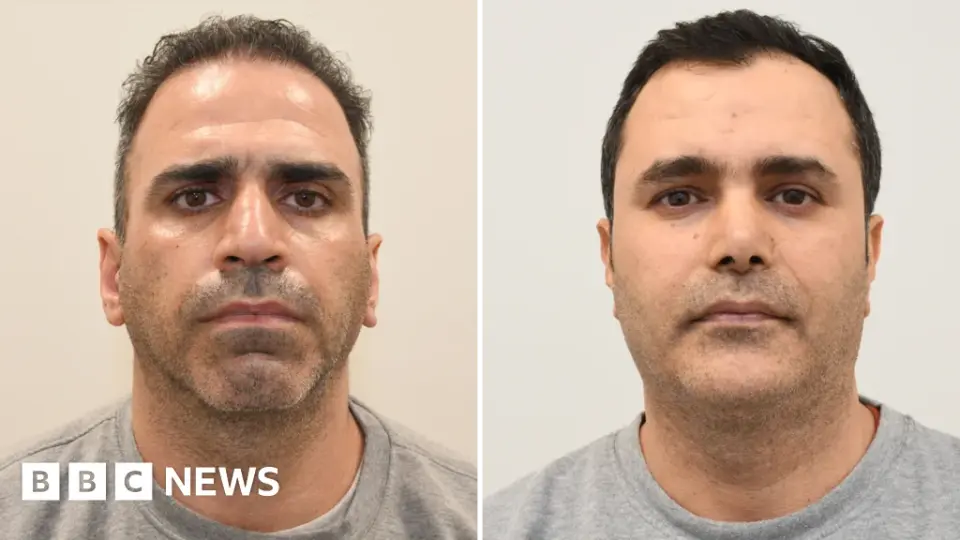
Mostafa Sepahvand and Farhad Manesh were found guilty at Woolwich Crown Court of assisting Iran’s Islamic Revolutionary Guard Corps by surveilling journalists and a lawyer in the UK. Prosecutors allege Sepahvand planned violent attacks against targets, including media figures and a legal activist, using data and AI tools. A third defendant was acquitted. Sentencing is scheduled for December 17.
Key points
- Mostafa Sepahvand, 41, and Farhad Manesh, 46, were convicted of assisting a foreign intelligence service at Woolwich Crown Court on Thursday.
- The pair were tasked by Iran’s Islamic Revolutionary Guard Corps (IRGC) to monitor targets, including journalists Mojtaba Pourmohsen and Kambiz Hosseini, and Jonathan Turner, a founding member of UK Lawyers for Israel.
- Police seized 534GB of data showing the men received details on targets, such as car colors and pet names, and used ChatGPT for further research.
- Sepahvand intended to carry out a violent attack against at least one target, while Manesh assisted in planning; a third man, Shapoor Qalehali Khani Noori, was acquitted.
- Both defendants are asylum seekers who arrived in the UK via lorry and small boat, respectively, and had been granted temporary leave to remain.
- Sentencing for Sepahvand and Manesh is scheduled for December 17 at the Old Bailey.
Background
This case follows a series of recent UK security incidents linked to Iranian intelligence, including charges against two men in October 2026 for a plot targeting RAF Fairford. It also aligns with broader global concerns over espionage using AI tools, as seen in the November 2026 case of a former OpenAI engineer charged with planting surveillance devices. The use of ChatGPT in this trial marks a first in UK state threat cases, highlighting evolving methods in foreign intelligence operations.
Why it matters
The conviction underscores Iranian intelligence’s willingness to use proxies to target regime critics abroad, including journalists and legal activists. The use of AI tools for surveillance planning signals a shift in counter-terrorism policing, as noted by UK authorities. It also highlights the risks faced by asylum seekers recruited by foreign states, often under false promises of financial or legal benefits. The case reinforces the need for vigilance against foreign interference in the UK and the evolving role of technology in espionage.
What to watch
Sentencing for Mostafa Sepahvand and Farhad Manesh will take place on December 17 at the Old Bailey. Authorities will likely continue monitoring for similar plots involving foreign intelligence services and AI-assisted surveillance. The case may influence future legal precedents regarding the use of AI in state threat investigations.
Want the full story? Read the original reporting
Read on BBC