
Himalayan barrier lake drains as China and Nepal resume rescue operations
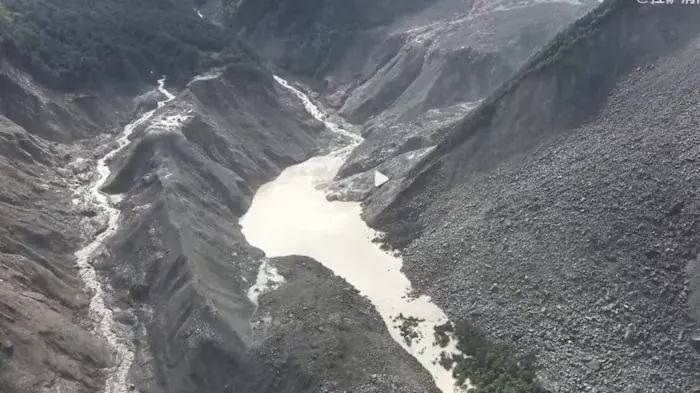
Rescue operations on the Nepal-China border have resumed after a temporary pause caused by a barrier lake overflowing. The lake, formed by a massive glacial landslide, has begun draining, reducing the immediate risk of secondary floods. Authorities in both countries are now focusing on locating survivors in debris-choked areas, including a hydropower tunnel, while death tolls continue to rise.
Key points
- China suspended rescue efforts at the Gyirong border crossing on Friday after a barrier lake formed by the landslide began to overflow, posing a risk of new flash floods.
- Both Chinese and Nepali authorities have since resumed operations as the lake’s water level dropped by approximately 10 meters, reducing the immediate danger.
- The disaster, triggered by a glacial avalanche on Wednesday, has killed at least 489 people in Nepal and five in China, with over 1,500 people still missing.
- Chinese Premier Li Qiang was dispatched to the region to lead relief efforts, while President Xi Jinping held a moment of silence for the victims.
- Nepal’s interior minister described the situation as a 'race to save lives,' with helicopters and drones used to transport survivors and supplies in the difficult terrain.
Background
This disaster follows a glacial collapse near Langtang Lirung, which scientists identified as the cause of the flash flood. The event highlights growing concerns about climate change impacts in the Himalayas, where warming temperatures may be increasing the frequency of such geological hazards. Previous archive coverage noted that the flood surge rose 7-9 meters in about 30 minutes, overwhelming monitoring stations.
How outlets are covering it
The Financial Times emphasized the initial suspension of rescue efforts due to the overflowing barrier lake and the high-level political response from Chinese leadership. CNN provided updates on the resumption of operations and detailed the composition of the flood wave, describing it as 'liquid concrete' that was impossible to outrun. The BBC focused on the broader context of climate change, noting that Nepal’s foreign minister called for a 'global effort' to address the crisis, while also highlighting the international aid pledged by countries like the UK, EU, and Canada. All sources agreed on the severity of the disaster and the challenges faced by rescue teams in the high-altitude, debris-filled environment.
Why it matters
The incident underscores the increasing vulnerability of Himalayan regions to climate-induced disasters. The scale of the destruction, with hundreds of buildings wiped out and thousands missing, highlights the need for improved infrastructure and disaster preparedness in the area. The international response and the involvement of top leaders from both China and Nepal indicate the significant geopolitical and humanitarian implications of the event.
What to watch
Rescue teams will continue to search for survivors in the debris and tunnels, particularly at the Trishuli-3 'A' hydropower site. Authorities will monitor the barrier lake to ensure it continues to drain safely. International aid, including medical teams and supplies, will be deployed to support the ongoing relief efforts. The focus will shift to long-term recovery and reconstruction in the affected areas.
- China suspends Nepal rescue efforts as lake overflows Financial Times
- Nepal-China flooding latest: Lake formed following landslide has broken its banks CNN
- The terrifying mechanics of the Nepali flash flood The Economist
- Nepal-Tibet floods: China suspends rescue efforts at border due to risk of second flood BBC
- Rescuers scour Nepal flood debris as risk of fresh flooding grows Reuters
Want the full story? Read the original reporting
Read on Financial Times