
139 Arrested in London as Protests Defy Palestine Action Ban Ahead of Supreme Court Ruling
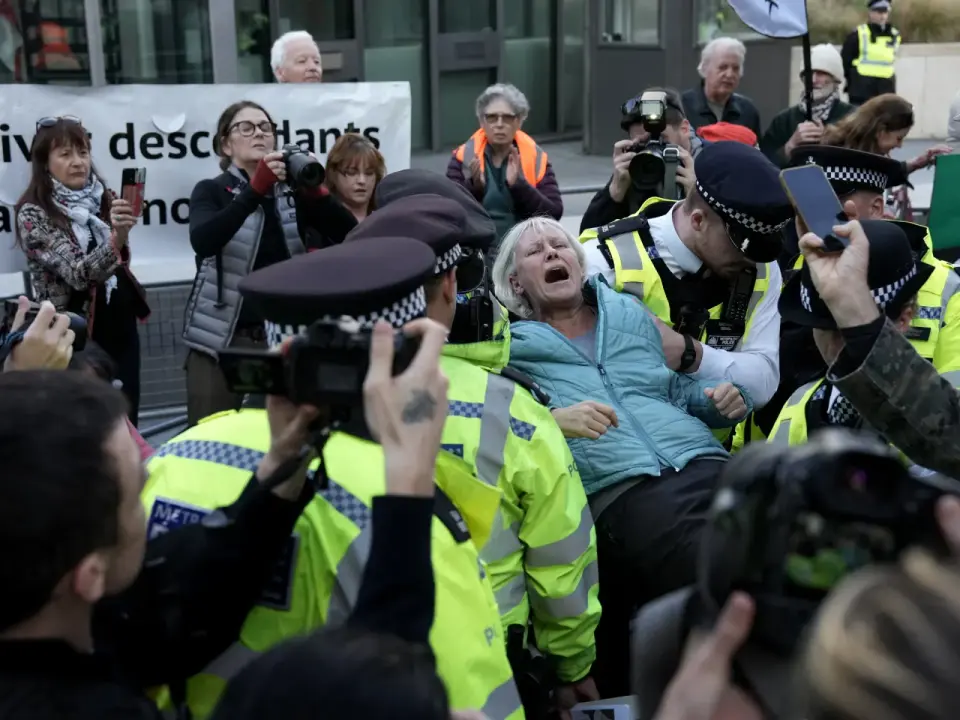
London police arrested 139 people on Saturday after hundreds protested the proscription of Palestine Action outside the US embassy. The demonstrations, which included a vigil in Edinburgh, occurred days before a UK Supreme Court appeal challenging the group’s terrorist designation. Organizers claim over 4,000 arrests have occurred since the ban took effect in July 2025, while police maintain that supporting a proscribed organization is a criminal offense. Critics argue the ban silences pro-Palestine voices and appeases US interests, whereas authorities insist the law is being enforced against unlawful conduct, not peaceful expression.
Key points
- Metropolitan Police arrested 139 individuals in London, up from an initial 48, during a protest outside the US embassy in Battersea.
- Protesters held signs reading 'I oppose genocide. I support Palestine Action,' defying police warnings that attending the rally constituted an offense.
- A simultaneous vigil took place outside the US consulate in Edinburgh, with no reported arrests in that location.
- The protests precede a UK Supreme Court appeal scheduled for November 4, which challenges the legality of the group’s proscription.
- Defend Our Juries, the protest organizer, stated that over 4,000 people have been arrested for defying the ban since July 2025.
- Police Commander Adam Slonecki warned that those providing logistical support or organizing the event could also face arrest under the Terrorism Act.
Background
The proscription of Palestine Action, a direct action group founded in 2020, took effect in July 2025 under the previous government of Prime Minister Keir Starmer. The group had previously targeted defense companies with ties to Israel, including Elbit Systems. The ban followed an appellate court ruling in June 2026 that upheld the designation. Recent protests have intensified under Prime Minister Andy Burnham’s leadership, with previous demonstrations in Liverpool and at Labour Party conferences resulting in significant arrests. The current protests occur amid broader international tensions, including a UN report declaring Israel’s actions in Gaza as genocide, which has fueled global anti-Israel activism.
How outlets are covering it
The Metropolitan Police and Commander Adam Slonecki framed the arrests as necessary enforcement of the law, stating that participants were 'purposefully committing a crime' by supporting a proscribed organization. They emphasized that logistical support and organization also constituted offenses. In contrast, Defend Our Juries and Amnesty International UK condemned the arrests as a 'dystopian' attack on freedom of speech, arguing that the ban was motivated by appeasing US President Donald Trump and Israeli weapons companies rather than genuine security concerns. Labour MP John McDonnell and other critics argued that opposing a government decision cannot be automatically interpreted as supporting a banned group. The Jerusalem Post and other outlets highlighted the police warning that even those not holding signs could be arrested, while The Guardian noted the involvement of elderly and disabled protesters, such as 79-year-old Sue Morhall, who expressed frustration with the criminalization of peaceful dissent. Some protesters, like Rev Bill White, resigned from the Labour Party in protest of the ban, highlighting deep divisions within the political establishment.
Why it matters
The mass arrests and upcoming Supreme Court appeal highlight a significant legal and political crisis in the UK regarding the boundaries of free speech and counter-protest. The proscription of Palestine Action has polarized British society, with critics viewing it as a tool to silence dissent against the Israel-Palestine conflict, while supporters see it as a necessary measure against terrorism. The outcome of the November 4 Supreme Court hearing could set a precedent for how the UK government handles proscription of political groups and the limits of protest. Additionally, the protests underscore the growing influence of US foreign policy on domestic UK law, with organizers arguing that the ban was driven by pressure from Washington following incidents involving Trump’s golf course. The situation also reflects broader global tensions, as pro-Palestine activism continues to face legal challenges in multiple countries, raising questions about the balance between national security and civil liberties.
What to watch
The UK Supreme Court is scheduled to hear the appeal against the proscription of Palestine Action on November 4 and 5. The ruling will determine whether the group’s designation as a terrorist organization is lawful. In the interim, the government faces continued pressure from opposition parties and civil rights groups to rescind the ban. Prime Minister Andy Burnham and Home Secretary Shabana Mahmood have maintained their support for the proscription, but public opinion and legal outcomes may force a reconsideration. Further protests are likely to occur as the legal challenge progresses, with organizers planning to highlight the impact of the ban on freedom of expression. The outcome of the Supreme Court case could also influence how other countries approach similar proscription cases, particularly in the context of the Israel-Palestine conflict.
- London police arrest 139 as hundreds protest Palestine Action ban Al Jazeera
- Almost 140 arrested at protest against Palestine Action ban outside US embassy in London The Guardian
- Dozens arrested for expressing support for Palestine Action at protest Sky News
- Police Threaten to Arrest Anyone Helping Protesters at Palestine Action Demo Novara Media
- UK police warn of arrests ahead of Palestine Action protest at US Embassy The Jerusalem Post
Want the full story? Read the original reporting
Read on Al Jazeera