
Burnham’s maiden address: Blaming Brexit and Thatcher for a decade of stagnation
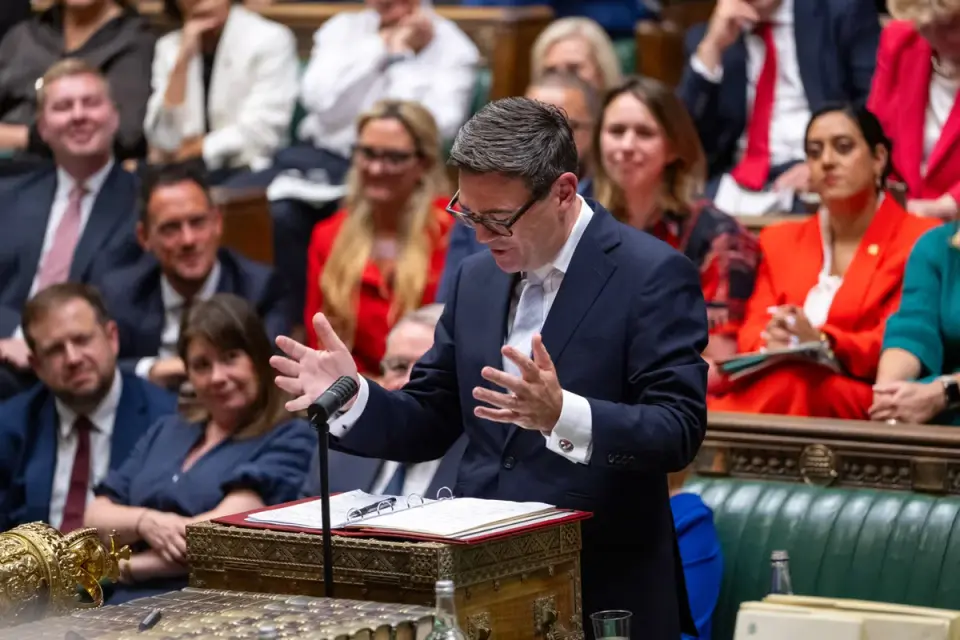
UK Prime Minister Andy Burnham has blamed Brexit and 1980s policies for a decade of low growth, promising a 10-year plan to increase public control over essential services. He faces immediate scrutiny over fiscal discipline and a global bond sell-off.
Key points
- Burnham stated that the UK economy suffered a 6% hit from Brexit, describing it as a 'wrong turn' that compounded 1980s neoliberal policies.
- The Prime Minister pledged to release a 10-year plan before year-end, focusing on public control of energy, water, and housing to lower costs.
- He confirmed the government will fully fund the Defence Investment Plan and meet NATO commitments by 2035, potentially spending 3% of GDP.
- Keir Starmer announced he will stand down as an MP to focus on international affairs, triggering a byelection in his Holborn and St Pancras seat.
- Burnham’s first PMQs session saw him defend his fiscal record against Conservative leader Kemi Badenoch, who criticized his borrowing and spending.
Background
Burnham replaced Keir Starmer in July 2026 following a series of local election defeats. His appointment marked a shift in Labour leadership, with Burnham previously serving as Mayor of Greater Manchester. The transition occurred amid a decade of political churn and stagnant wages, with Burnham’s historic Catholic faith marking a first for the office.
How outlets are covering it
The Independent and The Guardian emphasized Burnham’s historical critique, linking Brexit to a broader 40-year decline in public power and economic growth. The BBC focused on the practical challenges of his new political style, noting that despite promises of less adversarial politics, he faced sharp ideological clashes with Badenoch over tax and borrowing. Al Jazeera highlighted his commitment to NATO and his efforts to 'bring back hope' through public control of utilities. Badenoch countered Burnham’s narrative, accusing him of 'living in the past' and blaming high taxes for economic constraints rather than privatisation.
Why it matters
Burnham’s diagnosis of the UK’s economic stagnation sets the stage for a significant shift in policy, potentially including renationalisation of utilities and electoral reform. His ability to balance fiscal discipline with cost-of-living relief will determine the success of his government, especially as global bond sell-offs limit budgetary headroom. The upcoming 10-year plan and the Holborn byelection will test his progressive credentials and political stability.
What to watch
The government will release a 10-year plan before the end of 2026. A budget is expected in late October, where the Chancellor’s headroom may be halved due to global bond sell-offs. Labour will select a candidate for the Holborn and St Pancras byelection next Wednesday. Burnham is also expected to attend the Cop31 climate summit in Turkey and may approve the Jackdaw gasfield.
- Burnham blames Brexit for ‘decade of low growth’ in UK The Independent
- UK’s Burnham faces first parliament grilling, vows to ‘bring back hope’ Al Jazeera
- Burnham blames Brexit and Thatcher for ‘wrong turns’ in first Commons speech as PM The Guardian
- Andy Burnham’s ambitions are already proving too expensive for our economy The Times
- Burnham's PMQs debut shows the challenge of delivering new style of politics BBC
Want the full story? Read the original reporting
Read on The Independent