
Burnham’s Liverpool Address Pivots to Public Ownership and Pension Cuts
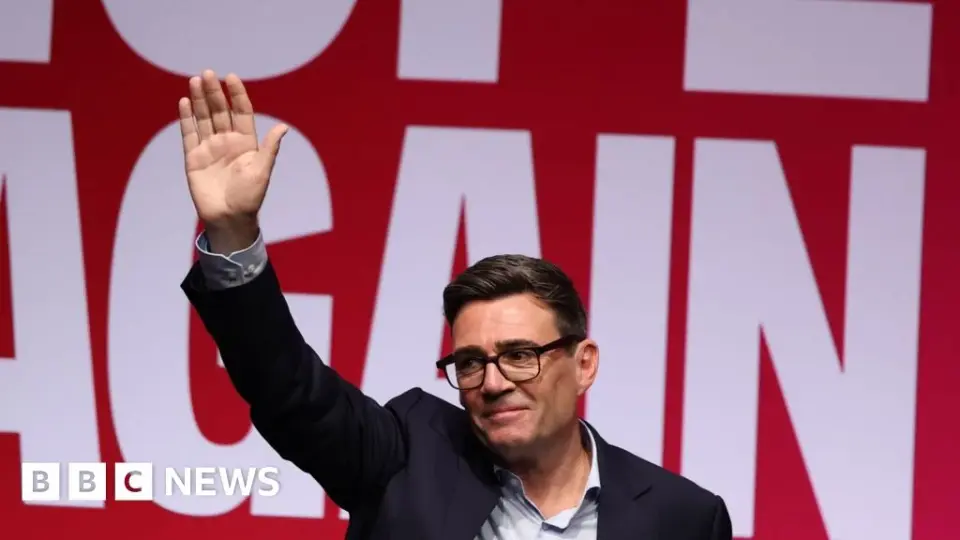
Prime Minister Andy Burnham delivered his first Labour conference speech in Liverpool, outlining a shift toward public ownership and fiscal restructuring. Key announcements include a plan to end the state pension triple lock by 2030 to fund a National Care Service, legislation to repeal bans on public water ownership, and a national commission on electoral reform. The speech emphasized breaking with 40 years of neoliberal policy, receiving 11 standing ovations, while avoiding direct confrontation with opposition leaders.
Key points
- Burnham announced the state pension triple lock will end in April 2030, with increases tied to inflation or 2.5% to generate savings for a National Care Service.
- The government plans to legislate later this year to repeal the ban on public ownership of water companies, aiming for a 10-year transition to a new water system.
- A national commission on electoral reform was established, with a manifesto commitment to change the first-past-the-post voting system in the next general election.
- Burnham pledged to create a publicly owned 'Great British Grid' and increase public control over housing, energy, and water.
- The speech avoided mentions of Nigel Farage and Kemi Badenoch, contrasting with previous leaders, and included an emotional tribute to his late father, Roy Burnham.
Background
This speech follows Burnham’s recent announcement that rejoining the EU is a viable option, a shift from previous Labour commitments. Earlier coverage noted his pledge to overhaul public services and the political pressure surrounding the funding of these reforms. The move to end the triple lock has drawn criticism from Scottish First Minister John Swinney, who called it a bad idea.
How outlets are covering it
The BBC reported the speech as serious and policy-heavy, noting the absence of jokes and opposition mentions. The Financial Times framed Burnham’s agenda as an existential threat to the right, arguing his strategy aims to entrench multi-party politics and diminish the Conservatives. The Guardian’s Owen Jones argued the left has won the rhetorical battle, noting Burnham’s embrace of anti-neoliberal rhetoric, though he questioned the substance of fiscal commitments. The Telegraph source was inaccessible due to a security block.
Why it matters
The pension triple lock change and public ownership plans represent a significant departure from recent UK economic policy, potentially reshaping the political landscape ahead of the next general election. The electoral reform commission could alter the voting system, impacting party dynamics and coalition possibilities.
What to watch
Legislation on water ownership is expected later this year. The pension triple lock change takes effect in April 2030. The national commission on electoral reform will propose changes for the next general election manifesto. Burnham plans to detail EU rejoining options at a UK-EU summit later this year.
- Five takeaways from Andy Burnham's Labour conference speech BBC
- Andy Burnham, faux heretic The Economist
- Burnham’s wake-up call to the right Financial Times
- I heard one thing loud and clear in Andy Burnham’s landmark speech: the left has won the arguments | Owen Jones The Guardian
- Labour has fallen down the mother of all rabbit holes The Telegraph
Want the full story? Read the original reporting
Read on BBC