
Burnham’s First PMQs: Optimism Meets Economic Reality
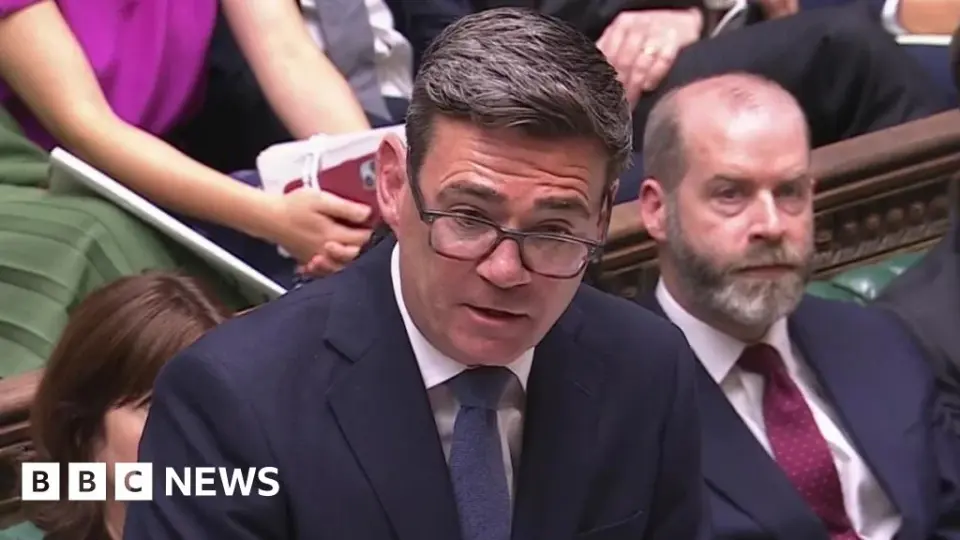
Andy Burnham’s debut at Prime Minister’s Questions highlighted the tension between his new, optimistic communication style and the harsh economic realities facing the UK. While he promised a return to hope and highlighted early tax cuts, Conservative leader Kemi Badenoch pressed him on soaring borrowing costs and fiscal discipline. Burnham blamed previous Conservative policies for economic instability, but faced scrutiny over how he will fund his commitments, including defence and social care, amidst a global rise in interest rates.
Key points
- Burnham faced his first PMQs with a confident, optimistic tone, contrasting with his predecessor Keir Starmer’s more pessimistic approach.
- Conservative leader Kemi Badenoch challenged Burnham on the UK’s rising borrowing costs and the funding of his government’s commitments.
- Burnham blamed the previous Conservative government for the current economic instability, citing the budget of former PM Liz Truss.
- Burnham highlighted early actions, such as cutting VAT on electricity bills and business rates for pubs, as evidence of his fiscal priorities.
- Burnham promised a 10-year plan for the UK, including stronger public control over essential services like energy and water, to be released before the end of the year.
Background
Burnham became Prime Minister in July 2026 after Keir Starmer was pushed out of leadership following a series of local election defeats. Starmer’s tenure was marked by a significant drop in popularity, with his favourability rating reaching -36. Burnham, known for his 'King of the North' persona as Mayor of Greater Manchester, has attempted to cultivate a new style of politics focused on optimism and direct public engagement, including a heavy social media presence and a summer tour of the country. His first Commons address in early September focused on devolution, blaming Brexit for a decade of low UK growth, and signalling a push for public ownership and electoral reform.
How outlets are covering it
The BBC and Al Jazeera focused on the adversarial nature of Burnham’s first PMQs, highlighting the clash between his optimistic tone and the economic challenges posed by rising borrowing costs. The BBC noted that Burnham, despite his promises to end 'point scoring', quickly resorted to blaming the Tories for the economic record. Al Jazeera emphasized Burnham’s commitment to defence spending and his call for solidarity with Germany and Ukraine. The Guardian, through columnist Polly Toynbee, praised Burnham’s 'warmth and empathy' and his ability to connect with the public, contrasting him favourably with Starmer. Toynbee noted Burnham’s +13 favourability rating, the only party leader to score above zero, and highlighted his early tax cuts as a response to Badenoch’s challenges. The Independent’s coverage was largely obscured by technical errors, but its title suggested a focus on Burnham’s stance on Brexit, aligning with his earlier Commons address where he blamed Brexit for UK growth stagnation.
Why it matters
Burnham’s first PMQs set the tone for his premiership, revealing the difficulty of balancing a new, optimistic political style with the harsh economic realities of the UK. The debate over borrowing costs and fiscal discipline will likely dominate the political landscape, especially with the October Budget approaching. Burnham’s ability to navigate these challenges while maintaining public support will be crucial for his government’s success. The clash between his optimistic messaging and the economic constraints also highlights the ongoing ideological differences across the Commons, with Burnham blaming privatisation and Brexit, while Badenoch points to high taxes and spending as the main constraints on economic growth.
What to watch
The next major event will be the October Budget, where Burnham’s government will need to outline its funding plans for its commitments. Burnham has promised a 10-year plan for the UK, including stronger public control over essential services, to be released before the end of the year. The political debate over borrowing costs and fiscal discipline is expected to continue, with Badenoch likely to press Burnham on the funding of his government’s commitments. Burnham’s ability to maintain his optimistic tone while navigating the economic challenges will be a key factor in his premiership.
- Burnham's PMQs debut shows the challenge of delivering new style of politics BBC
- Unlike Keir Starmer, Andy Burnham promises us that things will get better. And we must believe they can The Guardian
- UK PM Burnham faces first parliament grilling, vows to ‘bring back hope’ Al Jazeera
- Andy Burnham tries to calm bond markets as public spending fears mount Financial Times
- Majority of Britons agree with Burnham that Brexit was ‘wrong turn’ for UK The Independent
Want the full story? Read the original reporting
Read on BBC