
China Elevates Sole Remaining General to Politburo Amid Record Purges
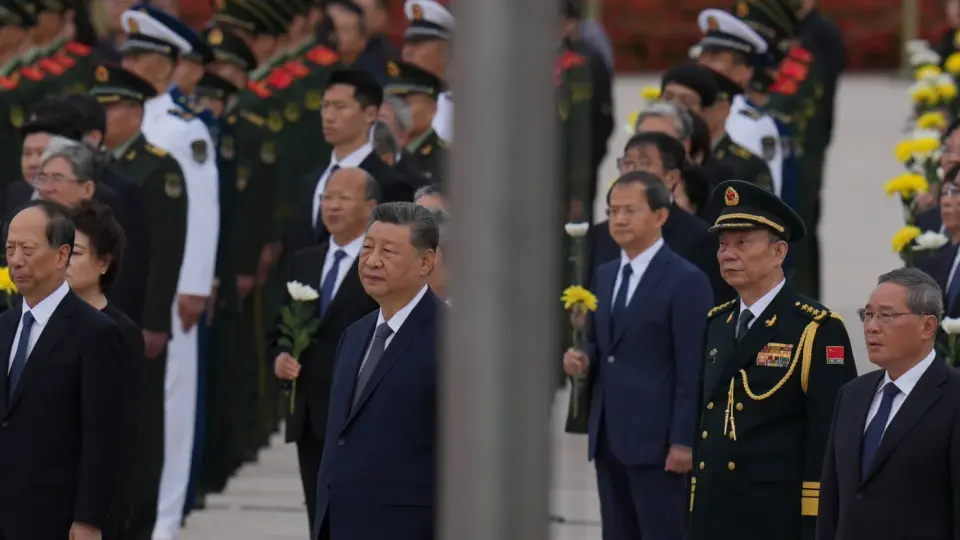
Chinese President Xi Jinping’s leadership has elevated General Zhang Shengmin to the Politburo, the party’s top governing body, following the purge of other senior military figures. This move restores a military representative to the highest decision-making circle after the Central Military Commission was reduced to just two members. The decision coincides with a resolution on strict party discipline and anti-corruption measures, adopted during a four-day closed-door plenum. The session, which saw historically low attendance due to ongoing investigations, aims to consolidate loyalty ahead of Xi’s expected fourth term in 2027.
Key points
- General Zhang Shengmin, vice chairman of the Central Military Commission, was elected to the Politburo, the only military member remaining after previous purges.
- The Central Military Commission now consists of only two members: Xi Jinping and Zhang Shengmin, down from seven in 2023.
- The plenum adopted a resolution emphasizing 'self-governance' and anti-corruption, describing tasks as 'increasingly arduous' and requiring ideological purity.
- Attendance at the plenum was approximately 74%, the lowest since the Mao Zedong era, according to analyst Neil Thomas.
- The meeting occurs one year before the 21st Party Congress, where Xi is expected to secure a fourth five-year term.
Background
This development follows a series of high-profile purges in 2026, including the expulsion of generals Zhang Youxia and Liu Zhenli in September. Earlier plenum sessions in October focused on enforcing discipline ahead of the 2027 Party Congress, amid economic challenges and a property sector crisis. The anti-corruption campaign has expanded to include civilian officials, such as Beijing deputy mayor Xia Linmao, and former defense ministers Wei Fenghe and Li Shangfu, who received suspended death sentences.
How outlets are covering it
NPR highlights the structural changes within the party, noting that Zhang’s elevation fills a void in the Politburo and that the resolution focuses on long-term governance capacity. CNN emphasizes the personal consolidation of power by Xi, describing the purges as a tool to eliminate potential rivals and ensure loyalty. CNN notes that the anti-corruption drive has reached 'untouchable' areas, including the military and anti-corruption agencies themselves, while NPR focuses on the formal institutional adjustments and the low attendance rate as a sign of the purge's scale. Both outlets agree that the measures are designed to secure Xi’s fourth term, but CNN frames it as a strategy to create a loyalist base, whereas NPR presents it as a broad disciplinary and ideological campaign.
Why it matters
The elevation of Zhang Shengmin and the adoption of strict discipline resolutions signal a shift from temporary anti-corruption measures to a permanent governance tool. The hollowing out of the military command structure and the low plenum attendance indicate a regime prioritizing loyalty over institutional stability. This consolidation of power ahead of the 2027 Party Congress suggests Xi will face minimal internal opposition, potentially altering China’s domestic and foreign policy trajectories.
What to watch
The next major event is the 21st Party Congress in 2027, where Xi is expected to secure a fourth term. The party will likely continue daily anti-corruption probes and expulsions to maintain control. The reinstatement of a military voice in the Politburo may influence future defense policies, though the reduced command structure could limit operational flexibility. Analysts expect the focus on 'ideological purity' to intensify, targeting underperforming officials and potential rivals.
- China elevates a military general to the Politburo and seeks to strengthen party discipline NPR
- China’s Xi Demands More Loyalty as Purges Trim Party Elite WSJ
- China Confirms Expulsion of 33 Officials, as Xi’s Purge Deepens The New York Times
- China's Communist Party conclave on toughening discipline sees record expulsions, absences Reuters
- It can be lonely at the top. And that’s just how China’s leader likes it CNN
Want the full story? Read the original reporting
Read on NPR