Harry Kane scored twice and assisted once as England defeated Czech Republic 3-0 at Wembley, equaling Peter Shilton's record of 125 caps. The victory secures England's place in the Nations League quarter-finals.
Spain defeated Czech Republic 3-1 in the UEFA Nations League, with Lamine Yamal scoring his third consecutive early goal. Rodri and Mikel Merino added late strikes, securing a perfect start for the World Cup champions.
Czech Prime Minister Andrej Babiš’s coalition government survived a second no-confidence motion in parliament, with only 83 votes cast in favor, falling 18 votes short of the 101 required to remove the cabinet. The vote occurred less than two weeks before local and senate elections, following a three-day debate over the government’s proposed 2027 budget, which includes a deficit of 386 billion koruna (approximately €15.8 billion), the second-largest in the country’s history. Critics also raised concerns about Babiš’s alleged unresolved conflict of interest. The opposition’s failure to topple the government leaves Babiš’s coalition in power ahead of the upcoming elections.
The Czech Republic won its 12th Billie Jean King Cup title by defeating Ukraine 2-0 in the final in Shenzhen, China. Wimbledon finalists Linda Noskova and Karolina Muchova secured the victory with straight-sets wins, marking the team's first title since 2018. This success makes the Czechs the second-most successful nation in the competition's history, behind the United States. The tournament also saw Great Britain eliminated in the quarter-finals by the Czechs, ending their campaign early.
Archaeologists in the Czech Republic have uncovered a massive Ice Age site containing the remains of at least 20 woolly mammoths, suggesting repeated human hunting activities approximately 27,000 years ago. The discovery, found beneath a construction site for a Justice Palace in Bukov, includes thousands of animal bones, stone tools, and evidence of butchery, offering rare insights into Late Gravettian human behavior in Bohemia.
Britain were knocked out of the Billie Jean King Cup in the quarter-finals by the Czech Republic after Sonay Kartal, returning from a six-month injury, pushed world number 26 Marie Bouzkova to a deciding set in a 7-6(7-2) 4-6 6-4 marathon, and Katie Boulter lost 6-2 7-6(7-3) to Wimbledon finalist Linda Noskova. With Noskova and Muchova in the Czech team, Britain’s bid for a maiden title ends as the Czechs advance to face Kazakhstan or Spain in the semi‑finals; it’s Britain’s first non-semi-final finish since 2023.
Linda Noskova defeated Katie Boulter 6-2 7-6(7-2) to send the Czech Republic into the Billie Jean King Cup semi-finals, ending Britain's campaign in the quarter-finals; the Czechs now await Spain or Kazakhstan in the semis.
Linda Nosková defeated Karolína Muchová in three sets (6-2, 5-7, 6-3) to win Wimbledon and claim her first Grand Slam title, becoming the youngest Wimbledon women's champion since Petra Kvitová in 2011 at 21 years old. The all-Czech final marked the Open Era's first major between two Czech players, with Muchová saving five championship points before Nosková closed out the decider.
Linda Nosková beat Marta Kostyuk 6-4, 6-4 to reach Wimbledon’s women’s final against fellow Czech Karolína Muchová, setting up an all-Czech title showdown on grass and continuing a long Czech Grand Slam legacy. It would be the first all-Czech Grand Slam final since the 2017 US Open.
Europe endures a record-breaking early heatwave, with Germany reaching 41.5C (a second consecutive national record), Denmark hitting 37C, and the Czech Republic at 40.8C, affecting about 150 million people with temperatures above 35C; the World Meteorological Organization warns of major health and ecological impacts as authorities deploy cooling measures and heat-related deaths rise, with scientists attributing the unusual intensity to a persistent heat dome and climate change, and some relief expected later in the week.
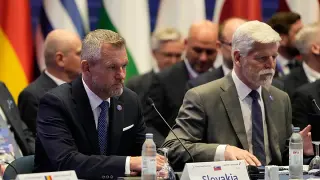
Leaders from Hungary, Poland, the Czech Republic and Slovakia gathered in Budapest to reboot the Visegrad Group (V4), signaling renewed regional cooperation as Hungary prepares to hand the presidency to Slovakia and push a more coordinated stance within Europe.
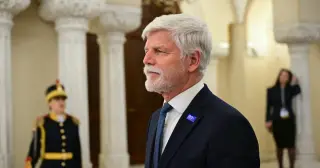
President Petr Pavel has filed a competency lawsuit with the Czech Constitutional Court to determine who decides on the president’s participation in international duties, after Prime Minister Andrej Babiš announced Pavel would not join a July delegation to Ankara for the NATO summit. Pavel argues that representing the country abroad is a presidential prerogative, while the government cites practicality and defence-spending concerns. The Beştepe summit is scheduled for July 7–8, with NATO members under pressure to meet defence commitments set at last year’s Hague summit.
PM Andrej Babiš blocked President Petr Pavel from attending the NATO summit in Ankara, triggering a constitutional dispute over who represents the Czech Republic abroad and highlighting a power struggle between the president and his government.
President Petr Pavel filed a constitutional suit against Prime Minister Andrej Babiš to challenge his decision not to include the president in the government delegation to the NATO summit in Ankara, arguing it violates the president’s constitutional powers. The Constitutional Court will hear the case, framed as a dispute over separation of powers. Pavel notes he has attended all NATO summits since taking office, while Babiš cites differences for this year and points to defense spending debates (about 1.8% of GDP, below the 2% target).
Thousands of protesters gathered in Prague to denounce Prime Minister Andrej Babiš’s government plan to overhaul funding for public broadcasters, a move critics say would threaten their independence and raise concerns over media freedom and democracy in the Czech Republic.