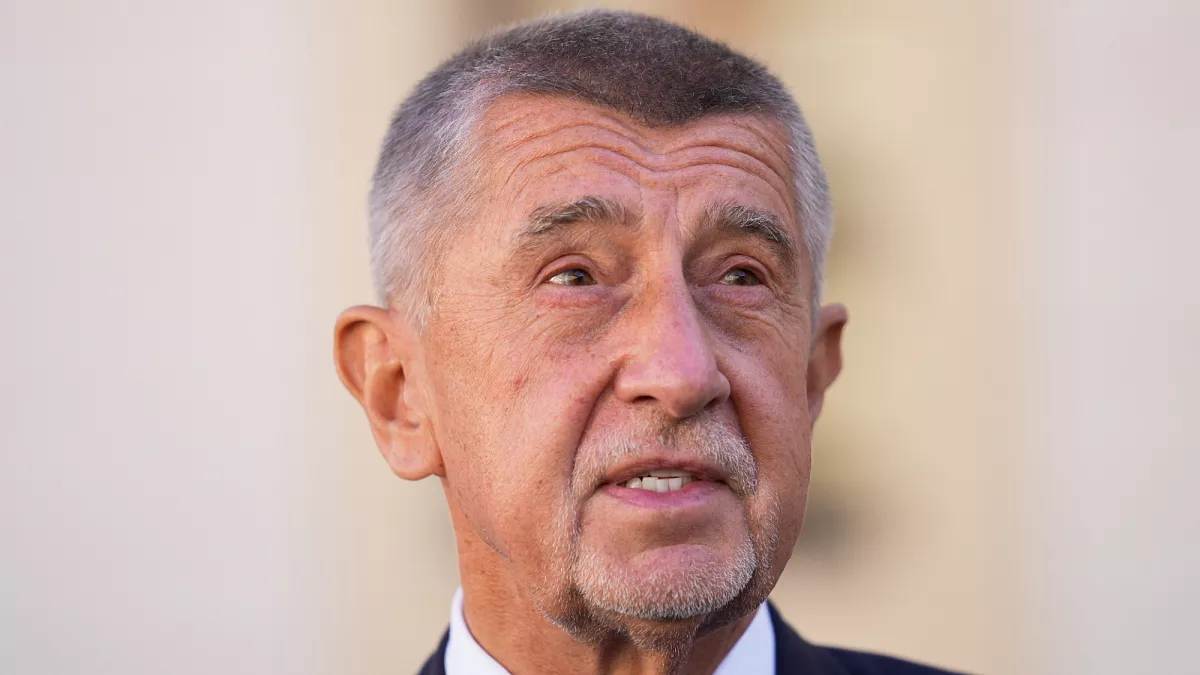
Czech Prime Minister Andrej Babiš led a high-level delegation to Israel Aerospace Industries (IAI) on Tuesday to evaluate the Arrow 3 missile defense system. The visit signals Prague's interest in acquiring the system, which is designed to intercept ballistic missiles outside Earth's atmosphere. This move aligns with a broader European trend of adopting Israeli defense technologies amid rising security concerns. While no formal purchase has been announced, the Czech government is actively exploring options to accelerate its air defense procurement, potentially bypassing a 2030 timeline. The discussions occur against a backdrop of existing Czech-Israeli defense cooperation, including the recent delivery of SPYDER systems, and broader diplomatic engagements involving President Isaac Herzog and Israeli opposition leader Gadi Eisenkot.
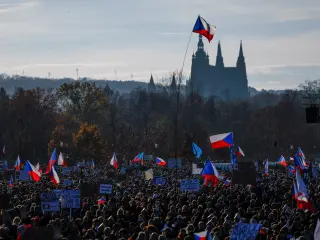
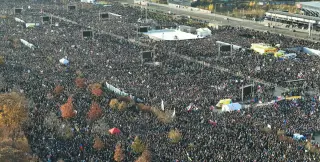
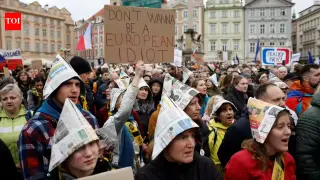
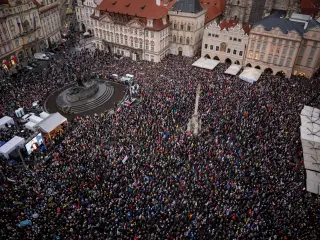
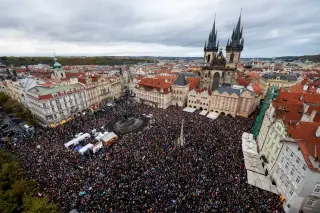
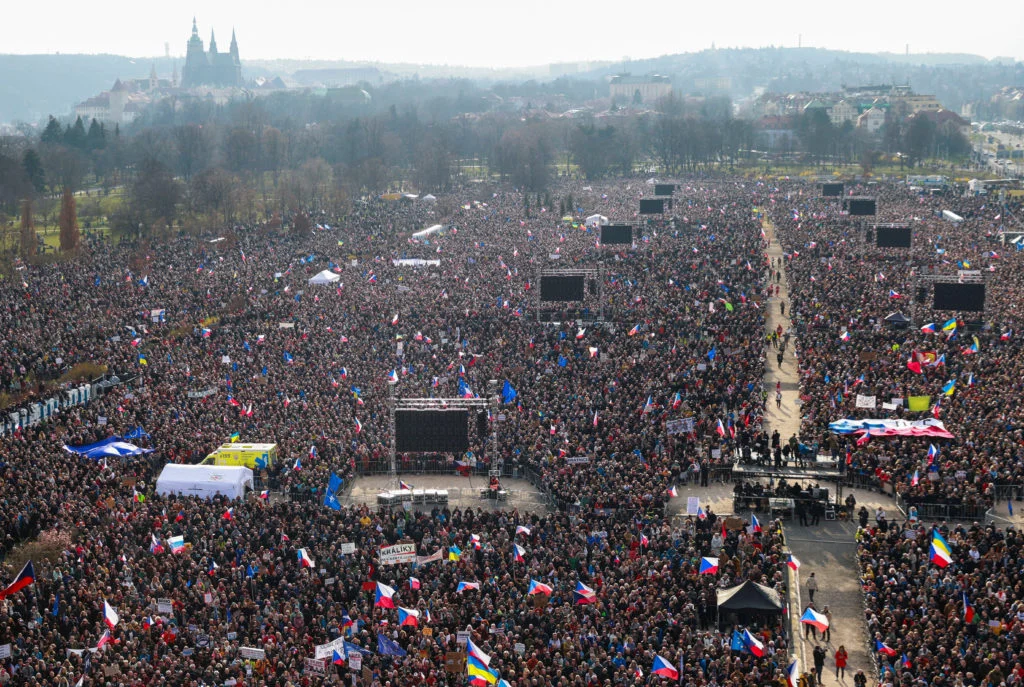
Hundreds of thousands of Czechs gathered in Prague on November 15 to protest a government plan to replace public media license fees with state budget funding. Organizers estimate 350,000 to 600,000 attendees, making it potentially the largest demonstration since the 1989 Velvet Revolution. Critics argue the move, which cuts broadcaster budgets by 15%, threatens editorial independence, while Prime Minister Andrej Babiš insists the change is a modernization that preserves press freedom.
Hundreds of thousands gathered in Prague on November 15 to protest a bill replacing license fees with state budget funding for public media. Organizers claim 350,000 to 600,000 attendees, potentially the largest crowd since 1989. The government denies seeking control, while critics fear political influence similar to Hungary and Poland.
Thousands of Czechs protested in Prague on October 25 against Prime Minister Andrej Babiš’s government plan to replace public media license fees with state budget allocations. The legislation, fast-tracked in an overnight parliamentary vote at 4:36 a.m., would cut funding for Czech Television and Radio by 15%. Critics warn this move threatens media independence, mirroring authoritarian trends in Hungary and Slovakia, while the government claims it improves transparency. Public media staff have announced a strike for November 3, and a larger rally is scheduled for November 15.
Thousands protested in Prague on October 25 against a bill to replace public media license fees with state budget allocations. The legislation, fast-tracked by Prime Minister Andrej Babiš’s coalition at 4:36 a.m., would cut broadcaster funding by 15%. Critics fear state control, while the government claims it ensures transparency. Staffers plan a strike on November 3, and a larger rally is scheduled for November 15.
Thousands of Czechs protested in Prague on October 25 against a government plan to replace public media license fees with state budget allocations. The move, fast-tracked by Prime Minister Andrej Babiš's coalition at 4:36 a.m., would cut broadcaster funding by 15%. Critics fear it mirrors authoritarian media control in Hungary and Slovakia, while the government claims it ensures transparency. Staffers plan a strike on November 3, and a larger rally is scheduled for November 15.
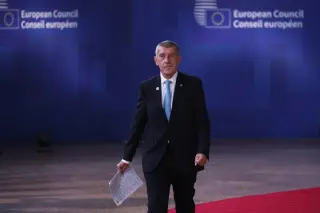
The pro-Western opposition has retained control of the Czech Senate following the October 9, 2026 elections, despite significant gains by the party of Prime Minister Andrej Babis. Babis, who cast his vote in Pruhonice, subsequently attended the EU summit in Brussels on October 15-16. The opposition's hold on the upper house ensures a check on the government, while Babis's party expanded its influence in the lower chamber. This outcome maintains the current political balance in Prague, with the opposition blocking major legislative changes in the Senate. The results reflect a divided electorate, with Babis's party gaining ground in local and lower house races but failing to capture the Senate majority. The EU summit attendance by Babis highlights the ongoing diplomatic engagement of the Czech government despite domestic political tensions. The Senate's continued opposition control is seen as a stabilizing factor for Czech EU relations. No new developments were reported beyond the election results and Babis's recent activities. The opposition's strategy focused on maintaining its institutional power, while Babis's campaign emphasized local and national representation. The outcome underscores the resilience of the pro-Western bloc in the upper chamber. Future legislative battles will likely center on the interplay between the government's lower house majority and the opposition's Senate control. The election results were confirmed by official counts, with no major disputes reported. The political landscape in Czech Republic remains dynamic, with the opposition poised to continue its role as a counterweight to the executive branch. The EU summit provided a platform for Babis to discuss regional cooperation, despite the domestic political friction. The Senate's composition will influence upcoming policy debates, particularly on EU integration and domestic reforms. The opposition's retention of control is a significant outcome for Czech political stability. The election results were widely covered by international media, highlighting the importance of the Czech Senate in the broader European context. The pro-Western opposition's success in the Senate is a key indicator of the political mood in Czech Republic. The outcome will shape the government's ability to implement its agenda in the coming months. The Senate's role in checking the government's power remains a central feature of Czech politics. The election results were a testament to the opposition's organizational strength and voter support. The political dynamics in Czech Republic continue to evolve, with the opposition and the government navigating a complex landscape. The EU summit attendance by Babis was a notable event, reflecting the government's international engagement. The Senate's composition will have long-term implications for Czech policy and EU relations. The opposition's control of the Senate is a crucial factor in the political balance of power. The election results were a significant milestone in Czech political history. The opposition's success in the Senate is a key indicator of the political mood in Czech Republic. The outcome will shape the government's ability to implement its agenda in the coming months. The Senate's role in checking the government's power remains a central feature of Czech politics. The election results were a testament to the opposition's organizational strength and voter support. The political dynamics in Czech Republic continue to evolve, with the opposition and the government navigating a complex landscape. The EU summit attendance by Babis was a notable event, reflecting the government's international engagement. The Senate's composition will have long-term implications for Czech policy and EU relations. The opposition's control of the Senate is a crucial factor in the political balance of power. The election results were a significant milestone in Czech political history.
Czech Prime Minister Andrej Babiš’s coalition government survived a second no-confidence motion in parliament, with only 83 votes cast in favor, falling 18 votes short of the 101 required to remove the cabinet. The vote occurred less than two weeks before local and senate elections, following a three-day debate over the government’s proposed 2027 budget, which includes a deficit of 386 billion koruna (approximately €15.8 billion), the second-largest in the country’s history. Critics also raised concerns about Babiš’s alleged unresolved conflict of interest. The opposition’s failure to topple the government leaves Babiš’s coalition in power ahead of the upcoming elections.
President Petr Pavel has filed a competency lawsuit with the Czech Constitutional Court to determine who decides on the president’s participation in international duties, after Prime Minister Andrej Babiš announced Pavel would not join a July delegation to Ankara for the NATO summit. Pavel argues that representing the country abroad is a presidential prerogative, while the government cites practicality and defence-spending concerns. The Beştepe summit is scheduled for July 7–8, with NATO members under pressure to meet defence commitments set at last year’s Hague summit.
PM Andrej Babiš blocked President Petr Pavel from attending the NATO summit in Ankara, triggering a constitutional dispute over who represents the Czech Republic abroad and highlighting a power struggle between the president and his government.
President Petr Pavel filed a constitutional suit against Prime Minister Andrej Babiš to challenge his decision not to include the president in the government delegation to the NATO summit in Ankara, arguing it violates the president’s constitutional powers. The Constitutional Court will hear the case, framed as a dispute over separation of powers. Pavel notes he has attended all NATO summits since taking office, while Babiš cites differences for this year and points to defense spending debates (about 1.8% of GDP, below the 2% target).
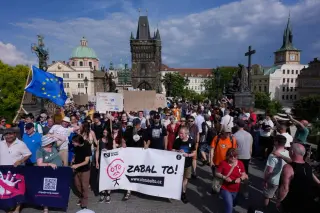
Thousands of protesters gathered in Prague to denounce Prime Minister Andrej Babiš’s government plan to overhaul funding for public broadcasters, a move critics say would threaten their independence and raise concerns over media freedom and democracy in the Czech Republic.
Tens of thousands gathered at Prague’s Letná Park, with organizers estimating up to 200,000, to protest Prime Minister Andrej Babiš's new coalition. They warned the government threatens democracy and could steer the Czech Republic toward autocracy, opposing his stance on Ukraine, backing a Russian-style foreign-agent law, and raising concerns about plans to fund public broadcasters—alongside immunity votes that keep Babiš from standing trial until 2029.
U.S. President Donald Trump expressed high expectations for Czech Prime Minister Andrej Babiš, particularly regarding the reconsideration of the F-35 fighter jet deal, which was previously approved by the Czech government but faced criticism from Babiš's party. Despite campaign promises to review costly defense acquisitions, Babiš's government appears to be moving forward with the purchase, emphasizing involvement of Czech industry. The deal reflects broader European doubts about the F-35 due to U.S. policies.
Andrej Babiš's victory in Czech elections signals a potential shift in EU-Czech relations, with Babiš likely to maintain pro-EU stances despite anti-EU rhetoric, and possibly forming alliances with Hungary's Orbán to influence EU policies, while supporting Ukraine and criticizing the Green Deal.