
Eisenkot’s Coalition Bid Hinges on Ultra-Orthodox Compromise and Liberman’s 2018 Draft Law
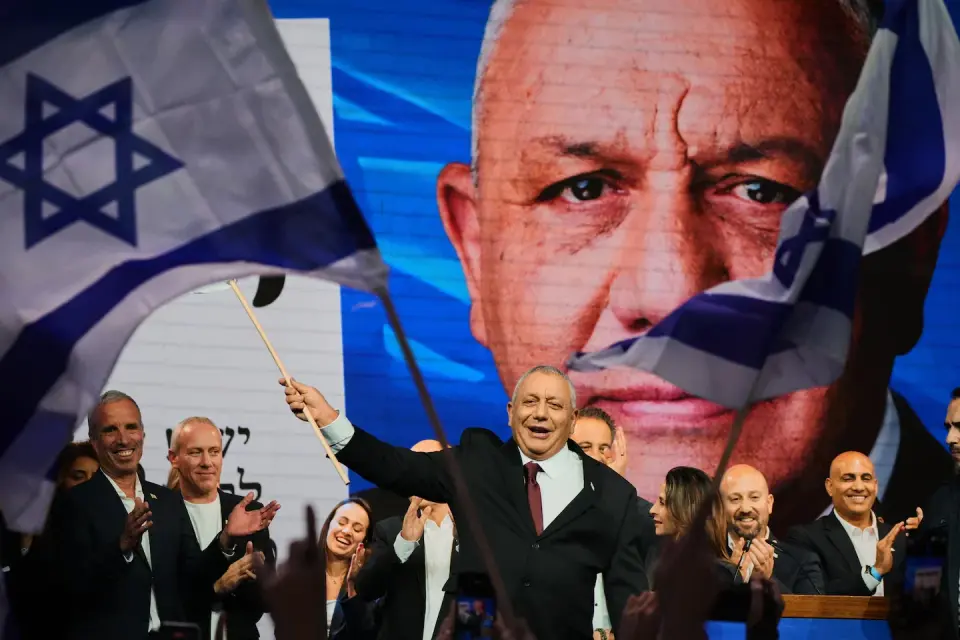
Israeli opposition leader Gadi Eisenkot is pursuing a coalition with ultra-Orthodox parties to replace Prime Minister Benjamin Netanyahu, a move requiring significant concessions on military conscription. Yisrael Beytenu chairman Avigdor Liberman has lifted his veto on cooperation with religious parties, signaling willingness to compromise while maintaining support for universal service. The potential agreement centers on revisiting Liberman’s 2018 draft law, which proposed gradual recruitment targets and financial penalties for yeshivas, rather than the stricter personal sanctions outlined in a 2025 proposal. However, the 2018 framework may not meet current military manpower needs following the October 7, 2023 attacks. Liberman rejects a government dependent on Arab parties, arguing that cooperation with ultra-Orthodox factions is necessary to prevent a return to Netanyahu’s rule. The outcome remains uncertain as Eisenkot must reconcile conflicting demands between Zionist and religious partners.
Key points
- Gadi Eisenkot has received a mandate to form a government and is negotiating with ultra-Orthodox parties to build a coalition.
- Avigdor Liberman lifted his veto on cooperation with religious parties, opening the door for coalition talks.
- Liberman’s 2018 draft law, which focused on financial penalties and recruitment targets, is being considered as a basis for compromise.
- The 2018 proposal differs from a 2025 draft by avoiding personal sanctions against individual yeshiva students.
- Liberman argues that a government dependent on Arab parties is unacceptable and would harm national security.
- The 2018 framework may not provide sufficient manpower for the IDF given post-October 7 requirements.
Background
The October 27, 2026 election resulted in a deadlock, with neither the Netanyahu-led coalition nor the opposition bloc securing the 61 seats needed for a majority. This stalemate positioned ultra-Orthodox and Arab parties as critical kingmakers. Prior to the election, the conscription crisis for ultra-Orthodox men had become the central political issue, with 72% of Israelis supporting universal drafting. The opposition bloc, despite ideological fractures, united to challenge Netanyahu, but faced significant hurdles in forming a stable government without relying on parties they had previously excluded.
How outlets are covering it
The Washington Post emphasizes the political necessity for Eisenkot to backtrack on universal conscription pledges to secure a coalition, highlighting the tension between his campaign promises and the reality of governing. The Jerusalem Post provides a detailed technical comparison between Liberman’s 2018 draft law and a 2025 proposal, noting that while the 2018 law is less stringent on personal sanctions, it includes a mechanism to terminate exemptions if recruitment targets are missed. The Jerusalem Post also highlights Liberman’s argument that a government dependent on Arab parties is a greater threat to security than compromising with ultra-Orthodox factions. Both sources agree that the 2018 framework may be inadequate for current military needs but differ in focus: The Post focuses on the political maneuvering, while the Jerusalem Post analyzes the legislative details and their implications for manpower.
Why it matters
The ability to form a government without relying on ultra-Orthodox or Arab parties is a key test of Israel’s political stability. A failure to reach a compromise could lead to another election or a government dependent on parties that many Israelis view as incompatible with national security. The conscription issue is not just a political debate but a matter of national defense, as the IDF faces increased manpower requirements following the October 7 attacks. The outcome of these negotiations will determine whether Israel can move past the Netanyahu era or remain in a state of political deadlock.
What to watch
Eisenkot must now determine if he can reach agreements with ultra-Orthodox parties that satisfy both Zionist partners demanding substantial military enlistment and religious parties seeking to preserve exemptions. The wording of any proposed legislation remains unknown, and it is unclear if the 2018 framework will be adopted or modified. Liberman has not specified which provisions of his original framework are nonnegotiable, and ultra-Orthodox parties have not clarified their stance on conscription legislation for a potential Eisenkot-led government. The next steps will involve intensive coalition negotiations, with the possibility of a new election if a stable government cannot be formed.
- Israeli opposition eyes deal with ultra-Orthodox Jewish parties to oust Netanyahu The Washington Post
- Liberman bashed Netanyahu’s enlistment bill. The one he put on the table is weaker The Times of Israel
- Liberman's 2018 haredi draft law explained and compared The Jerusalem Post
- Eisenkot's Path to Power Demands Compromise. Will Lieberman Block It? Haaretz
- From ‘unforgivable’ to ‘idiot’: Cracks deepen in Eisenkot’s anti-Netanyahu bloc ynetnews
Want the full story? Read the original reporting
Read on The Washington Post