
Flávio Bolsonaro Surrenders Passports After Conceding Lula’s Victory
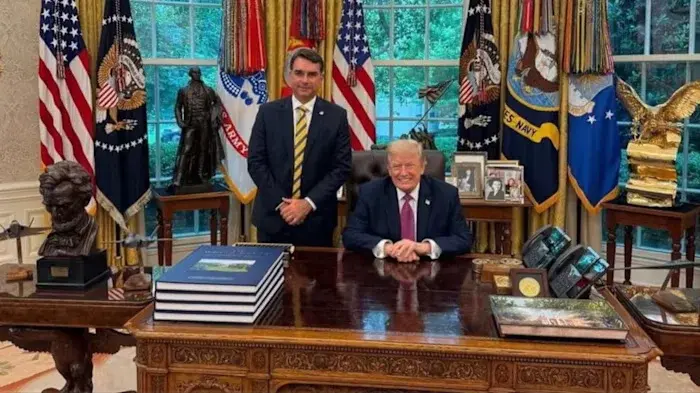
Brazilian Senator Flávio Bolsonaro surrendered his passports and was banned from leaving the country following his defeat in the presidential election to Luiz Inácio Lula da Silva. The order, issued by Supreme Court Justice Alexandre de Moraes, stems from a money-laundering investigation. Bolsonaro’s party conceded the result, though he initially sought to annul it, citing campaign abuses. Trump criticized the vote extension, while regional leaders acknowledged Lula’s win.
Key points
- Flávio Bolsonaro was ordered to surrender all passports, including a diplomatic one, within 24 hours by Supreme Court Justice Alexandre de Moraes.
- The order is linked to a federal police investigation into a suspected £680m money-laundering scheme involving lawyer Willer Tomaz.
- Lula da Silva won the runoff with 51.75% of the vote, defeating Bolsonaro’s 48.25% by a margin of 4.4 million votes.
- Bolsonaro’s Liberal Party conceded defeat on Monday, though Bolsonaro initially demanded the election be annulled due to alleged vote-buying.
- US President Donald Trump criticized the two-hour voting extension as 'strange' but stated the US does not take sides in the result.
Background
This follows Lula’s historic fourth-term victory, which reversed a first-round deficit. Previous coverage noted Bolsonaro’s initial refusal to concede and the tight margin, which was the closest in modern Brazilian history. The current passport seizure is part of ongoing legal scrutiny of the Bolsonaro family, including Jair Bolsonaro’s 27-year sentence for plotting a coup.
How outlets are covering it
The Financial Times emphasizes Bolsonaro’s public compliance with the passport order and his pivot to seeking disqualification of Lula’s ticket, noting the weak legal basis for his claims. The Guardian highlights the specific legal details of the money-laundering probe and Bolsonaro’s initial resistance to conceding, noting that allies advised him to drop the annulment demand. Both sources agree on the core facts but differ in emphasis: FT focuses on the political fallout and Trump’s comments, while Guardian focuses on the judicial and legal mechanics of the passport seizure.
Why it matters
The passport seizure signals the end of Bolsonaro’s political immunity, as his Senate term ends in 2027, exposing him to potential prosecution. It also marks a significant shift in US-Brazil relations, as Trump’s criticism of the election process contrasts with regional leaders’ acceptance of Lula’s victory, potentially affecting future diplomatic and trade relations.
What to watch
Bolsonaro faces potential criminal charges once his Senate immunity expires in January 2027. His legal team may pursue further challenges to Lula’s ticket, though analysts view these as long shots. Lula will face a conservative Congress and must navigate fiscal realities while consolidating his fourth term.
- Flávio Bolsonaro says he was ordered to surrender passport Financial Times
- Brazil: defeated Flávio Bolsonaro ordered to surrender passports The Guardian
- Brazil wonders: Where on earth is Flavio Bolsonaro? Reuters
- Flavio Bolsonaro has passports canceled after missing deadline to turn them in to Brazil police The Times of Israel
- Brazil Court Probes Foreign Support for Bolsonaro Campaign Bloomberg.com
Want the full story? Read the original reporting
Read on Financial Times